

Can a Solid State Relay be used in a wind power system?
Hey there! I'm a supplier of solid state relays, and I often get asked if these nifty devices can be used in wind power systems. Well, let's dive right in and find out.
First off, what's a solid state relay (SSR) anyway? It's an electronic switching device that uses semiconductor components to perform the same function as a traditional electromechanical relay. Instead of using moving parts like contacts, SSRs rely on things like thyristors, triacs, and transistors to control the flow of electricity. This gives them some advantages over their mechanical counterparts, like faster switching speeds, longer lifetimes, and less electrical noise.
Now, let's talk about wind power systems. These systems are all about converting the kinetic energy of the wind into electrical energy. They typically consist of a wind turbine, a generator, and a control system. The wind turbine captures the wind's energy and turns it into mechanical energy, which the generator then converts into electricity. The control system is responsible for regulating the operation of the turbine and generator, making sure everything runs smoothly and efficiently.

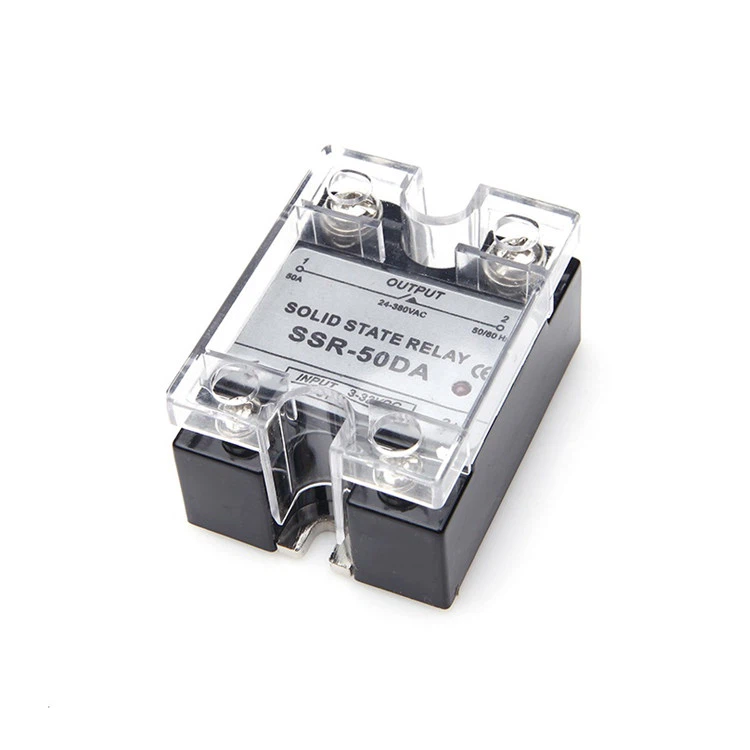
So, can an SSR be used in a wind power system? The short answer is yes! In fact, SSRs can play a crucial role in several aspects of a wind power system.
One of the main applications for SSRs in wind power systems is in the control of the generator. The generator in a wind turbine produces alternating current (AC), but this AC needs to be converted into direct current (DC) before it can be stored in batteries or fed into the electrical grid. This conversion is typically done using a rectifier, and SSRs can be used to control the switching of the rectifier. By using SSRs, the switching can be done more quickly and precisely, which helps to improve the efficiency of the conversion process.
Another application for SSRs in wind power systems is in the protection of the electrical components. Wind turbines are often located in harsh environments, where they are exposed to high winds, lightning, and other weather conditions. These conditions can cause electrical surges and other problems that can damage the electrical components in the system. SSRs can be used to protect these components by quickly disconnecting them from the power source in the event of an electrical surge or other problem. This helps to prevent damage to the components and ensures the reliability of the wind power system.
SSRs can also be used in the control of the pitch of the wind turbine blades. The pitch of the blades refers to the angle at which they are positioned relative to the wind. By adjusting the pitch of the blades, the amount of power that the turbine can generate can be controlled. SSRs can be used to control the motors that adjust the pitch of the blades, allowing for precise and efficient control of the turbine's operation.
There are different types of SSRs that can be used in wind power systems. For example, if you need an SSR with an AC input and a DC output and also comes with an LED indicator, you can check out our Solid State Relay Ac Input Dc Output With Led. These are great for applications where you need to convert AC to DC and also have a visual indication of the relay's status.
If space is a concern in your wind power system setup, our Mini Solid State Relays might be the perfect choice. They are compact in size but still pack the same functionality as larger SSRs, making them ideal for installations where there's limited room.
And for applications that require high current handling, our Solid State Relay 40A is a solid option. It can handle a relatively large amount of current, which is useful in parts of the wind power system where high power is involved.
Of course, like any component in a wind power system, SSRs need to be carefully selected and installed to ensure they work properly. When choosing an SSR for a wind power system, it's important to consider factors like the voltage and current requirements, the switching speed, and the environmental conditions. It's also important to make sure the SSR is compatible with the other components in the system.
In addition to the technical considerations, cost is also an important factor. While SSRs may be more expensive than traditional electromechanical relays, they often offer better performance and longer lifetimes, which can result in lower overall costs in the long run.
So, if you're involved in the design, installation, or maintenance of a wind power system, I highly recommend considering using SSRs. They can offer significant benefits in terms of efficiency, reliability, and protection.
If you're interested in learning more about our SSRs and how they can be used in your wind power system, or if you're ready to start a purchase negotiation, don't hesitate to reach out. We're here to help you find the right SSR solutions for your specific needs.
References
- "Wind Energy Systems: Design, Analysis, and Application" by Dr. Gary L. Johnson
- "Power Electronics for Renewable Energy Systems, Transportation and Industrial Applications" by Ned Mohan