

Hey there! As a supplier of 4 - Pin Automotive Relays, I often get asked about how to test these little but crucial components for functionality. So, I thought I'd share some insights on this topic.
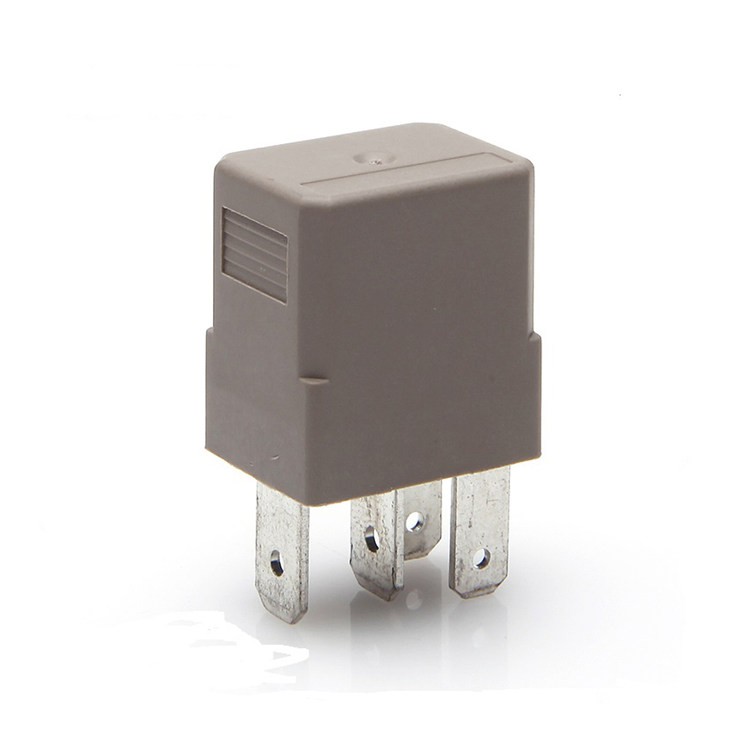
First off, let's understand what a 4 - Pin Automotive Relay is. It's a switch that uses an electromagnet to control a high - current circuit with a low - current signal. These relays are widely used in vehicles for various functions like controlling the headlights, fuel pumps, and more. If you're looking for specific types, you can check out our 12 Volt Car Relay, 12V Automotive Relay 4 - Pin, and 12V 4 Pin Automatic Relay.
Tools You'll Need
Before we start testing, you'll need a few tools. A multimeter is a must - have. It'll help you measure voltage, resistance, and continuity. You'll also need a power source. For most automotive relays, a 12 - volt battery can do the trick. Some extra wires for making connections are also handy.
Identifying the Pins
The first step in testing a 4 - Pin Automotive Relay is to identify the pins. Usually, two of the pins are for the coil, and the other two are for the switch contacts. The coil pins are the ones that, when powered, create the magnetic field to operate the relay. The switch contacts are what open and close the circuit.
There's no universal standard for pin numbering, but a common setup is that the coil pins are adjacent to each other, and the switch contacts are also next to each other. You can refer to the relay's datasheet if you're not sure which pins are which.
Testing the Coil
Let's start by testing the coil. Set your multimeter to the resistance (ohms) setting. Touch the probes of the multimeter to the two coil pins of the relay. You should get a reading. A typical 12 - volt automotive relay coil will have a resistance in the range of 50 - 200 ohms.
If you get a reading of infinity, it means there's an open circuit in the coil, and the relay is likely faulty. On the other hand, if you get a reading of zero ohms, it could indicate a short circuit in the coil. In either case, the relay probably won't work as it should.
Testing the Switch Contacts
Next up, we'll test the switch contacts. First, make sure the relay is not powered. Set your multimeter to the continuity setting. Touch the probes to the two switch contact pins. You should get an open circuit indication (no beep on most multimeters).

Now, connect the coil pins to a 12 - volt power source. When you do this, the relay should click, indicating that the switch contacts have closed. Check the switch contact pins again with the multimeter on the continuity setting. You should now get a closed - circuit indication (a beep).
If the relay doesn't click when you power the coil, or if the switch contacts don't show the expected continuity changes, the relay might be defective.
Testing with a Load
Another way to test the relay is by using a load. You can use a small light bulb or a resistor as a load. Connect the load to the switch contact pins of the relay. Then, connect the coil pins to a 12 - volt power source.
When you power the coil, the load should turn on. If it doesn't, there's a problem with the relay. This test gives you a more real - world scenario of how the relay will perform in an actual automotive circuit.
Troubleshooting
If you find that the relay is not working, there are a few things you can do. First, double - check your connections. Make sure the wires are properly attached to the pins and that there are no loose connections.
If the connections are fine, the problem could be with the power source. Check the voltage of your battery or power supply to make sure it's providing the correct voltage.
Sometimes, the relay might just be dirty or corroded. You can try cleaning the pins with a contact cleaner. Use a small brush to gently clean the pins and remove any dirt or corrosion.
Final Thoughts
Testing a 4 - Pin Automotive Relay for functionality is not that complicated if you have the right tools and know what you're doing. By following these steps, you can quickly determine if a relay is working properly or if it needs to be replaced.
At our company, we take pride in providing high - quality 4 - Pin Automotive Relays. If you're in the market for these relays or have any questions about testing or using them, we'd love to hear from you. Whether you're a DIY enthusiast or a professional mechanic, we can offer the products and support you need.
If you're interested in purchasing our relays or want to discuss your specific requirements, feel free to reach out to us. We're here to help you find the best solutions for your automotive needs.
References
- General automotive repair manuals
- Datasheets of 4 - Pin Automotive Relays