

Yo! As a power relay supplier, I get asked a lot about the differences between European and American standard power relays. It's a pretty common question, especially for folks who are in the electrical engineering field or just someone looking to buy the right relay for their project. So, let's dig into it and break down the key distinctions.
Physical Design and Dimensions
First off, let's talk about the physical stuff. European and American standard power relays often have different designs and dimensions. European relays tend to follow the metric system, which means they're designed with millimeters as the unit of measurement. This makes them a great fit for electrical systems that are set up around the metric standard. American relays, on the other hand, are based on the imperial system, using inches and other imperial measurements.
This difference in measurement systems might not seem like a big deal at first, but it can cause some headaches when you're trying to integrate a relay into a system. For example, if you're in Europe and you've got a panel designed for metric - sized components, using an American relay could be a real challenge in terms of fitting it properly.

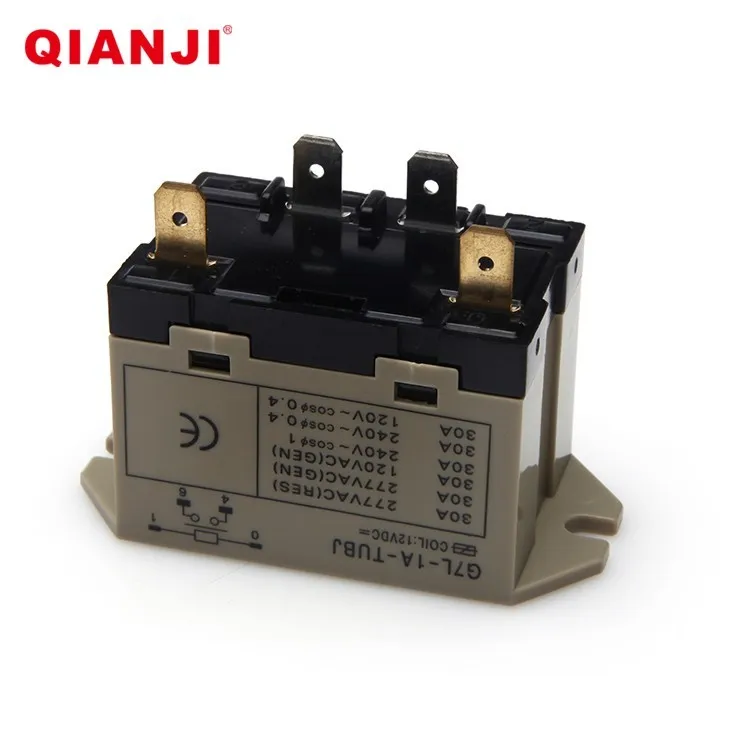
Electrical Ratings
One of the most important differences lies in the electrical ratings. American power relays typically come with higher voltage and current ratings right out of the box. This is because the electrical infrastructure in the United States often operates at higher voltage levels, like the common 120V or 240V, and many industrial applications may require large amounts of current.
European relays, conversely, are usually designed for lower voltage systems. In Europe, the standard household voltage is 230V, and industrial applications may have different requirements compared to the US. So, European relays are optimized for the specific electrical environment in Europe.
If you're working on a project that needs a high - power relay, you might want to check out our Heavy Duty Relay 24V 100A. It's a solid option that can handle some pretty heavy loads, no matter whether you're in Europe or the US.
Coil Voltages
Coil voltages are another point of difference. American relays commonly have coil voltages of 12V, 24V, 48V, etc., which are well - suited to the American electrical system. European relays, while they also offer some of these common coil voltages, are more likely to have a wider range of options that are tailored to the European electrical grid.
For instance, if you need a relay with a 24V coil, we've got the 24v 80a Relay. It can be used in both European and American systems, depending on your specific needs.
Safety Standards
Safety is a huge deal when it comes to power relays, and European and American standards have their own unique takes on it. In Europe, relays are required to meet the CE (Conformité Européene) marking requirements. This means that the relays have gone through a series of tests to ensure they meet European safety, health, and environmental protection standards.
In the United States, relays need to comply with UL (Underwriters Laboratories) standards. UL tests and certifies products to ensure they're safe for use in the American market. These different safety standards can affect not only the design and manufacturing of the relays but also their acceptance in different regions.
Contact Materials and Configurations
The contact materials and configurations used in European and American relays can also vary. European relays often use materials and designs that are more focused on long - term reliability and low - maintenance operation. They might use high - quality metals and advanced plating techniques to reduce the risk of contact wear and corrosion.
American relays, while also reliable, may have different contact configurations that are more optimized for the specific electrical loads and switching requirements in the US. For example, some American relays might be designed to handle high - inrush currents, which are common in certain types of American electrical equipment.
If you're looking for a more general - purpose relay with a lower current rating, our Relay 12v 25a could be a good choice. It's got solid contacts that can stand up to regular use.
Regulatory and Certification Requirements
Beyond the safety standards, there are other regulatory and certification requirements. In Europe, there are strict regulations regarding electromagnetic compatibility (EMC). Relays need to be designed in such a way that they don't interfere with other electrical devices in the vicinity and can operate properly in an environment with other electromagnetic sources.
In the US, the Federal Communications Commission (FCC) has regulations related to radio frequency emissions. Relays need to meet these requirements to ensure they don't cause any interference with radio or communication systems.
Cost Considerations
Cost is always a factor when you're buying power relays. Generally speaking, European relays might be a bit more expensive due to the strict regulatory requirements and the use of high - quality materials. However, this also means that you're getting a product that's likely to be very reliable and long - lasting.
American relays can sometimes be more cost - effective, especially if you're looking for a basic relay for a simple application. But you still need to make sure that the relay meets your specific requirements in terms of electrical ratings and safety.
Which One Should You Choose?
So, which type of power relay should you go for? It really depends on your specific application. If you're working on a project in Europe, it's usually a good idea to choose a European - standard relay to ensure compatibility with the local electrical infrastructure and to meet the regulatory requirements.
If you're in the US, an American - standard relay is likely to be the better choice. But if you're working on an international project or a system that needs to be flexible, you might want to consider relays that are designed to meet both European and American standards.
As a power relay supplier, we've got a wide range of options to suit your needs. Whether you're looking for a high - power relay for an industrial application or a small relay for a DIY project, we can help you find the right one.
Contact Us for Your Relay Needs
If you're interested in learning more about our power relays or if you want to get a quote for your project, don't hesitate to reach out. We're always here to answer your questions and help you make the best decision. Whether it's a European - standard relay, an American - standard one, or something else entirely, we've got the expertise and the products to meet your requirements.
References
- Electrical Engineering Handbook: This comprehensive handbook provides in - depth information on power relays and electrical standards in different regions.
- UL and CE official documentation: These official sources offer detailed information on the safety and regulatory requirements for power relays in the US and Europe respectively.