

In the realm of electrical engineering, power delay relays play a crucial role in controlling the flow of electricity and ensuring the proper functioning of various electrical systems. As a prominent supplier of 8 - Pin Power Delay Relays, I often encounter inquiries regarding the maximum operating frequency of these devices. In this blog post, I aim to delve into this topic in detail, providing a comprehensive understanding of the factors that influence the maximum operating frequency of an 8 - Pin Power Delay Relay.
Understanding 8 - Pin Power Delay Relays
Before we discuss the maximum operating frequency, it is essential to have a clear understanding of what an 8 - Pin Power Delay Relay is. An 8 - Pin Power Delay Relay is an electromechanical device that is designed to introduce a time delay in the switching of an electrical circuit. It consists of a coil, contacts, and a timing mechanism. When the coil is energized, the contacts are either opened or closed after a preset time delay.
These relays are widely used in a variety of applications, including industrial automation, power distribution systems, and home appliances. They are particularly useful in situations where a delayed action is required to protect equipment, synchronize operations, or control the sequence of events.
Factors Affecting the Maximum Operating Frequency
The maximum operating frequency of an 8 - Pin Power Delay Relay is not a fixed value and can be influenced by several factors. Let's take a closer look at these factors:
1. Mechanical Design
The mechanical design of the relay plays a significant role in determining its maximum operating frequency. The moving parts of the relay, such as the contacts and the armature, have a certain inertia. When the relay is operated at a high frequency, these moving parts need to move back and forth rapidly. If the frequency is too high, the mechanical components may not be able to keep up with the rapid changes, leading to contact bounce, wear and tear, and ultimately, a reduction in the relay's lifespan.
For example, relays with larger and heavier moving parts generally have a lower maximum operating frequency compared to those with smaller and lighter components. The materials used in the construction of the contacts also affect the relay's performance at high frequencies. High - quality contact materials, such as silver - alloy contacts, can provide better conductivity and resistance to wear, allowing the relay to operate at higher frequencies.
2. Coil Characteristics
The coil of the relay is another important factor. The coil has an inductance, and when a voltage is applied to it, the current in the coil does not rise instantaneously. The time it takes for the current to reach its steady - state value is determined by the coil's time constant (τ = L/R, where L is the inductance and R is the resistance).
If the operating frequency is too high, the coil may not have enough time to fully energize or de - energize between successive operations. This can result in incomplete switching of the contacts and erratic behavior of the relay. Relays with lower inductance coils can generally operate at higher frequencies because the current in the coil can change more quickly.
3. Timing Mechanism
The timing mechanism of the relay is responsible for introducing the time delay. There are different types of timing mechanisms, such as mechanical, electromechanical, and electronic.
Mechanical timing mechanisms, which rely on springs and gears, are relatively slow and have a limited maximum operating frequency. Electromechanical timing mechanisms, which use a combination of electrical and mechanical components, offer better performance but still have some limitations. Electronic timing mechanisms, on the other hand, can provide very precise and fast timing, allowing the relay to operate at higher frequencies.
4. Load Conditions
The type and magnitude of the load connected to the relay also affect its maximum operating frequency. Resistive loads are generally easier to switch compared to inductive or capacitive loads. Inductive loads, such as motors and solenoids, can generate back - EMF (electromotive force) when the current is interrupted. This back - EMF can cause arcing at the contacts, which can damage the contacts and reduce the relay's ability to operate at high frequencies.
Capacitive loads, on the other hand, can cause high inrush currents when the contacts are closed. These high inrush currents can also lead to contact damage and limit the maximum operating frequency of the relay.
Typical Maximum Operating Frequencies
Based on the above factors, the maximum operating frequency of an 8 - Pin Power Delay Relay can vary widely. In general, relays with mechanical timing mechanisms may have a maximum operating frequency in the range of a few hertz to tens of hertz. For example, a simple mechanical time - delay relay might have a maximum operating frequency of around 10 Hz.
Relays with electromechanical timing mechanisms can typically operate at frequencies up to a few hundred hertz. Electronic - based 8 - Pin Power Delay Relays, which offer the fastest and most precise timing, can operate at frequencies up to several kilohertz. Some high - performance electronic relays can even operate at frequencies in the tens of kilohertz range.
Applications and Considerations
When selecting an 8 - Pin Power Delay Relay for a specific application, it is crucial to consider the required operating frequency. For applications that require high - speed switching, such as in some industrial automation processes or high - frequency power supplies, an electronic relay with a high maximum operating frequency should be chosen.
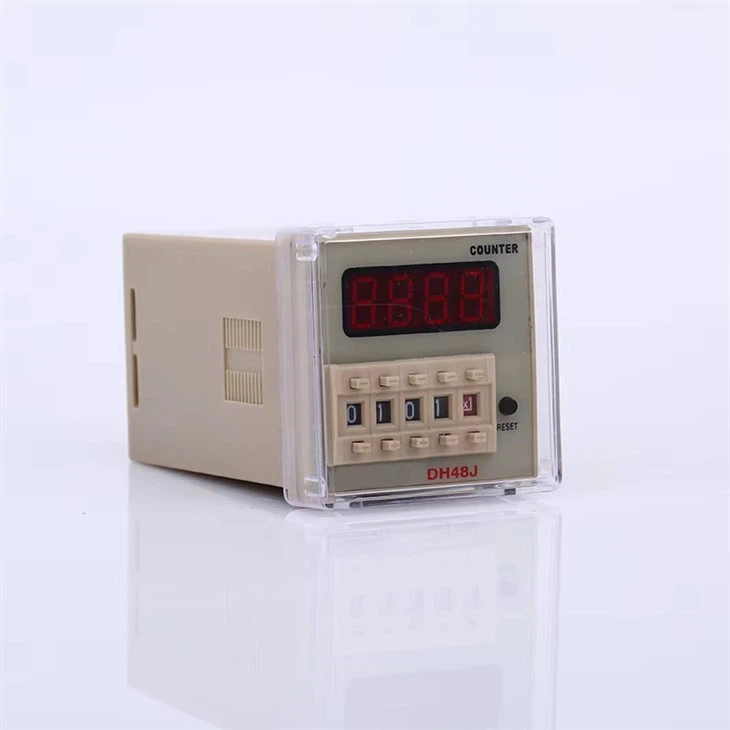

On the other hand, for applications where a slow and reliable time delay is sufficient, such as in some home appliances or simple control circuits, a mechanical or electromechanical relay may be a more cost - effective option.
It is also important to note that operating a relay close to its maximum operating frequency can reduce its lifespan. Therefore, it is recommended to select a relay with a maximum operating frequency that is significantly higher than the actual operating frequency required by the application to ensure reliable and long - term operation.
Our Product Range
As a supplier of 8 - Pin Power Delay Relays, we offer a wide range of products to meet the diverse needs of our customers. Our Power Time Delay Relays are designed to provide accurate and reliable time delays in various applications. They are available with different timing ranges and maximum operating frequencies to suit different requirements.
We also offer Small Time Counting Relay options for applications where space is limited. These relays are compact in size but still offer excellent performance and reliability.
For those looking for high - performance electronic relays, our Electronic Range 8 - Pin Relay series is an ideal choice. These relays are capable of operating at high frequencies and provide precise timing control.
Contact Us for Purchase and Consultation
If you are in the market for 8 - Pin Power Delay Relays or have any questions regarding the maximum operating frequency or other technical aspects of our products, we encourage you to get in touch with us. Our team of experts is ready to assist you in selecting the right relay for your specific application. Whether you need a relay for a small - scale project or a large - scale industrial installation, we can provide you with the best solutions.
References
- Dorf, R. C., & Bishop, R. H. (2016). Introduction to Electric Circuits. Wiley.
- Terman, F. E. (1955). Electronics and Radio Engineering. McGraw - Hill.
- Boylestad, R. L., & Nashelsky, L. (2013). Electronic Devices and Circuit Theory. Pearson.