


You may not think so, but relay socket DIN rail has four cool benefits: fast installation, better safety, easy maintenance, and saving money.
You can put in and change relays fast, which saves time and work when fixing things.
Clear terminal layouts make wiring easy, even if you are new to it.
Many people say relay socket DIN rail is simple to use and works well for many tasks.
These things help you spend less on repairs and keep your system working well.
Key Takeaways
Relay socket DIN rails help you install relays fast. You can also replace relays quickly. This saves time and keeps the system working longer.
They work with many relay types and ways to mount them. This gives you more choices for projects and spaces.
Safety features keep you and your system safe. These include finger-safe designs, strong insulation, and certifications.
Screw terminals and tidy wiring make fixing things easier. They also help stop wiring problems from happening.
Extra things like LED indicators and noise suppression help the system work better. They also make it easier to find and fix problems.
Compatibility
Universal Pin Configurations
You want your electrical projects to run smoothly. Relay socket DIN rail helps you do that by supporting many pin configurations, including the popular 8-pin design. This means you can use different types of relays without worrying about fit. Many relay sockets work with both 5-pin and 11-pin relays, too. You do not need to buy new sockets every time you change your relay type. This flexibility saves you time and money.
Relay socket DIN rail also works with relays from many brands. For example, you can use relays from FINDER, BREMAS, LÜTZE, and IDEC. These brands offer a wide range of relay series that fit DIN rail sockets. You can see in the chart below how many relay series each manufacturer offers for DIN rail sockets:
This wide compatibility makes it easy for you to find the right relay for your project.
Multiple Mounting Options
Relay socket DIN rail gives you many ways to mount your relays. You can choose the best option for your space and needs. Here is a table that shows the most common mounting options and their advantages:
|
Mounting Option |
Description & Advantages |
|---|---|
|
PCB Mount |
Compact, easy to add to circuit boards, cost-effective for small spaces. |
|
Socket Mount |
Lets you replace relays quickly without soldering. |
|
DIN Rail Mount |
Standard, easy to arrange and maintain, great for control panels. |
|
Panel Mount |
Attaches directly to panels, easy to see and reach. |
|
Surface Mount |
Good for high-density setups, saves space. |
|
Flange Mount |
Very secure, handles vibration and shock well. |
|
Through Hole Mount |
Strong and reliable, good for tough jobs. |
|
Chassis Mount |
Fixes to the frame, works well in harsh places like cars or planes. |
You can see that relay socket DIN rail fits many different setups. You can use it in factories, cars, or even home projects. This flexibility means you do not have to worry about changing your whole system when you switch relays or mounting styles.
Safety & Durability
Certified Protection
You want your electrical system to be safe and work well. Relay socket DIN rail products follow strict safety rules. Many types have UL and cUL safety marks. These marks mean the sockets pass hard tests for voltage and heat. You also get IEC 60664-1 insulation, which helps stop electric shock. Most relay sockets are finger-safe. This lets you touch the socket without danger, even if it is on.
Tip: Always look for safety marks like UL or TÜV on your relay socket DIN rail. These marks show the product follows world safety rules.
Here is a table that shows how relay socket DIN rail is safer than other choices:
|
Aspect |
DIN Rail Relay Socket Features and Benefits |
|---|---|
|
Safety Standards |
Meets IEC 60664-1 insulation, UL/cUL certifications for safe voltage and temperature ratings |
|
Mechanical Reliability |
Lasts for at least 10,000 uses, so it breaks less often |
|
Electrical Connection Types |
Screw, push-in, and spring terminals; screw terminals are best in places with lots of shaking |
|
Mounting Standardization |
Works with TH35 DIN rail, so it is easy and safe to install |
|
Environmental Protection |
IP20+ protection keeps out dust and water in cars and power plants |
|
Quality Assurance |
Made by ISO 9001-certified suppliers and follows RoHS 3 rules to keep out harmful stuff |
You can see that relay socket DIN rail gives you better safety than other relay sockets.
Robust Materials
You need strong parts for your system to last a long time. Relay socket DIN rail uses polyamide for strength and insulation. Polyamide stands up to heat and chemicals. It keeps your socket safe in hard places like factories or cars. The socket can handle high voltages, often up to 10A at 300VAC. You also get dust and water protection, with IP20 or better ratings.
Many relay sockets follow rules from Europe and OSHA. These rules make sure the sockets work in machines, elevators, and even medical tools. You get things like forced-guided contacts and wide contact gaps. These features help keep your system safe, even if something fails.
|
Standard or Feature |
Details |
|---|---|
|
Governing Directives |
European Machinery Directive 2006/42/EC, OSHA CFR 1910 |
|
Relevant Standards |
DIN EN 50205, IEC/EN 61810, IEC 60204, EN 60204, EN ISO 13849 |
|
International Approvals |
TÜV, UL, cUL |
|
Durability Features |
High breakdown voltage (≥ 4 KV), high creeping distance (≥ 5.5 mm), IP67 protection |
|
Applications |
Emergency stop modules, safety doors, elevators, robots, rail signaling |
Relay socket DIN rail is known for being safe and strong. You can trust your system to last and keep you safe.
Maintenance
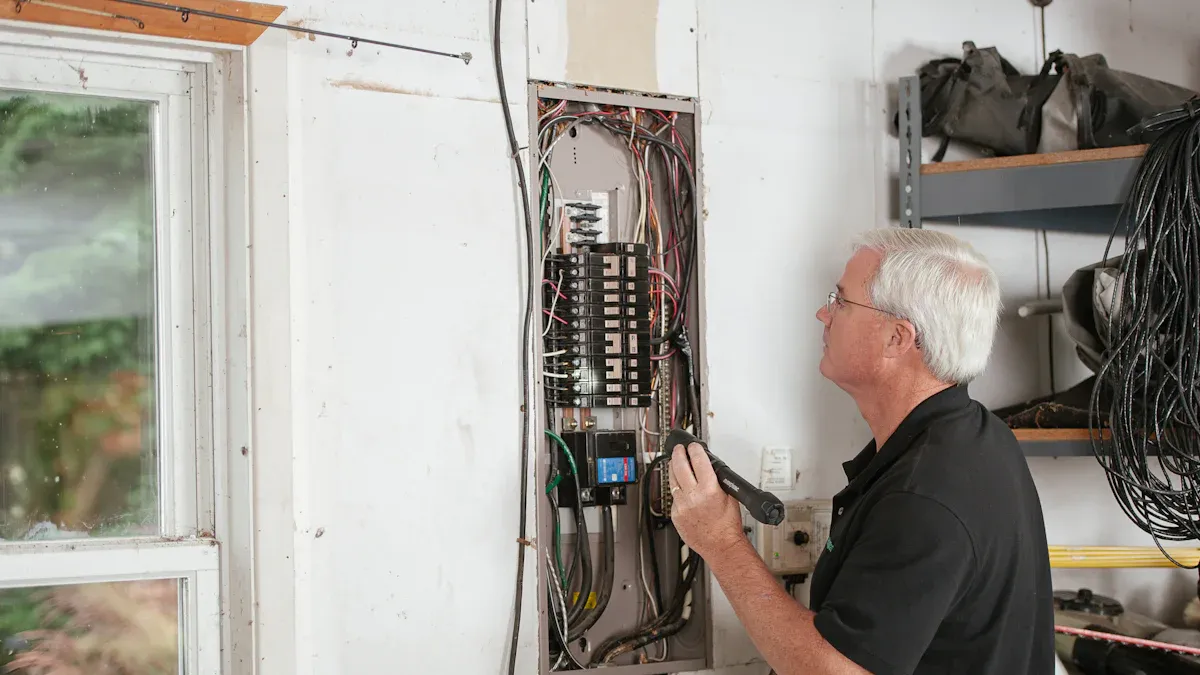
Screw Terminals
You want wiring to be easy and work well. Screw terminals on relay socket DIN rail help with this. You put each wire in and tighten a screw. The screw holds the wire against metal. This works for many wire sizes and gives a strong hold. DIN rail mounting keeps wires neat and tidy. It is easy to see and find each wire. Your control panel looks clean and organized.
DIN rail terminal blocks save space and are easy to use.
You can add, fix, or change wires without much trouble.
The simple layout helps you find problems fast and make fewer mistakes.
Tight wire ends mean fewer loose wires and less fixing.
Tip: Always make sure your wires are tight in the screw terminals. Loose wires can cause trouble or stop your system.
Easy Relay Replacement
You do not want to wait long when changing a relay. Relay socket DIN rail lets you swap relays fast. You do not need to rewire anything. You can snap the socket on or off the rail quickly. You do not need tools for this. This saves time and keeps your system running.
|
Maintenance Aspect |
Traditional Relay Socket |
Relay Socket (including DIN rail) |
|---|---|---|
|
Power must be turned off |
Yes |
Yes |
|
Exposure to live terminals |
Higher |
Lower |
|
Need to rewire during swap |
Yes |
No |
|
Risk of loose mounting |
Higher |
Lower |
|
Use of removal tools |
Sometimes |
Recommended |
Relay socket DIN rail helps keep you safe. You touch live parts less and the socket stays in place better. This makes fixing things faster and safer.
Sometimes, relays can get too hot. For example, a relay may burn out if the fan filter is dirty and the cabinet gets hot. You can stop this by cleaning the fan and checking the heat often. Check your system and label wires to find problems early. Always turn off power and wear safety gear when working.
Note: Good care helps your relay socket DIN rail last longer and saves money on repairs.
Relay socket DIN rail Features
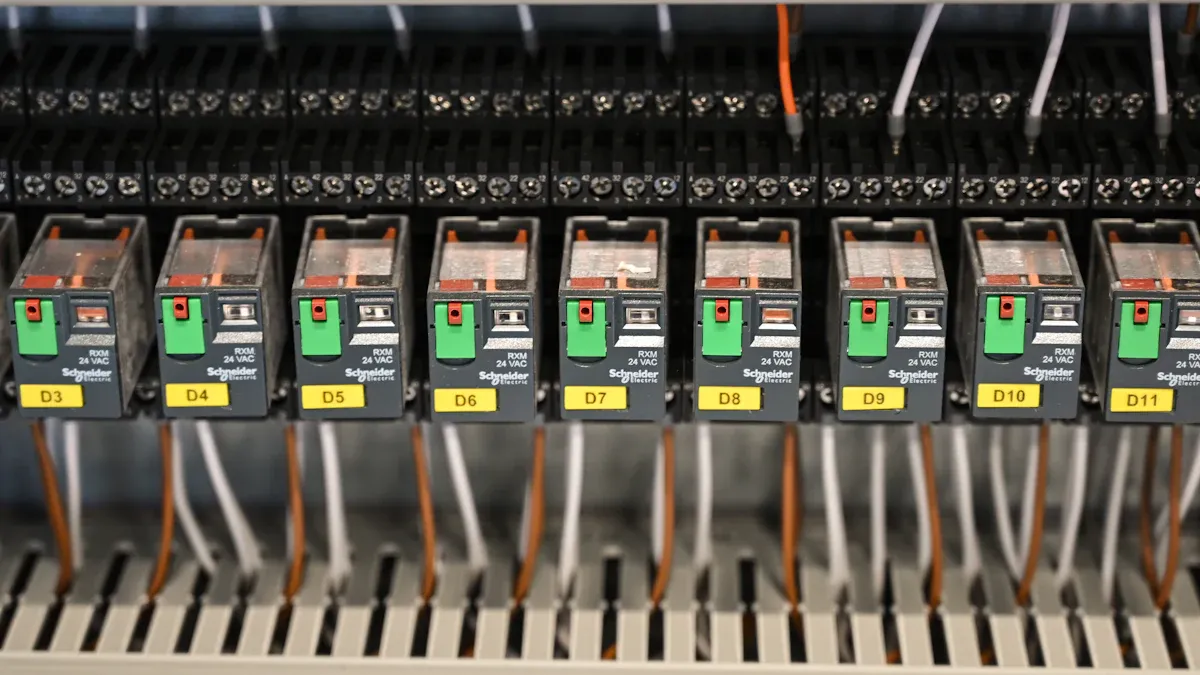
Enhanced Functionality
You can make your control panel work better with the right relay socket DIN rail features. Many have coil indication LEDs. These LEDs let you see if the relay is working right away. You can spot problems fast. Some sockets have EMC suppression. This helps block electrical noise. It keeps your system steady and working well.
You will also find jumper links and timer modules. Jumper links help you connect wires easily. This makes wiring neat and simple. Timer modules let you control when a relay turns on or off. You can set the time for just a few seconds or many hours. This helps you match the relay's action to what you need.
Here is a table showing some common enhanced features:
|
Feature |
What It Does |
How It Helps You |
|---|---|---|
|
Coil indication LED |
Shows relay status instantly |
Quick troubleshooting |
|
EMC suppression |
Reduces electrical noise |
More stable operation |
|
Jumper links |
Bridges connections easily |
Cleaner wiring, less work |
|
Timer modules |
Controls relay timing |
Flexible automation |
|
Compact design |
Saves space in your panel |
More room for other devices |
Tip: Pick sockets with LED indicators and EMC suppression if you want to check things fast and make fewer mistakes.
Customization Options
You can pick from many options to fit your project. Relay socket DIN rail products come in different mounting ways, pin counts, and terminal types. You can choose screw terminals for strong holds. Spring terminals are good for quick wiring. Modular designs let you swap relays without rewiring. This saves time and money.
Here are some ways you can change your setup:
Pick mounting styles like panel, flange, or DIN rail to fit your space.
Choose pin counts like 4, 5, 8, 11, or 14 for the right job.
Pick materials that can handle tough work, like metal or composite.
Use modular sockets for easy upgrades and less downtime.
|
Customization Option |
Description |
Benefit to You |
|---|---|---|
|
Mounting methods |
Panel, flange, DIN rail |
Easy installation, fewer mistakes |
|
Pin configurations |
4, 5, 8, 11, 14 pins |
Right fit for your application |
|
Terminal types |
Screw, spring, wire leads |
Faster wiring, less labor |
|
Modularity |
Swap relays without rewiring |
Less downtime, lower costs |
You can also find eco-friendly materials and local manufacturing. These choices help you save money and get parts you can trust.
Customization makes relay socket DIN rail a smart pick for many jobs, like factories or building automation.
You can make things safer by picking relay sockets that fit your space, like hot, dusty, or shaky places.
Designs that are small and can be changed help you keep things neat and put parts in quickly.
Changing relays fast means your system stops less and works better.
Easy-to-read labels and good lessons help people fix things safely and with less trouble.
Relay socket DIN rail accessories must follow tough safety rules. These features help lower danger and save money by making your electrical system work better. You spend less over time because putting in and fixing parts is easier, and automation helps everything run smoother.
FAQ
What is a relay socket DIN rail?
A relay socket DIN rail lets you mount relays quickly in control panels. You snap the socket onto a metal rail. This setup keeps your wiring neat and makes relay changes fast.
Can you use any relay with a DIN rail socket?
You can use many types of relays. Most DIN rail sockets fit common pin layouts, like 8-pin or 11-pin. Always check the relay's size and pin pattern before you buy.
How do you replace a relay on a DIN rail socket?
Turn off the power first. Pull the old relay straight out of the socket. Push the new relay into place. You do not need to rewire or use special tools.
Why do relay socket DIN rails improve safety?
Relay socket DIN rails use finger-safe designs and strong insulation. You touch live parts less. Safety marks like UL or TÜV show the product meets strict rules.
What features should you look for in a relay socket DIN rail?
Look for LED indicators, EMC suppression, and strong materials. These features help you spot problems, reduce noise, and keep your system running longer.
See also
Procurement Guide for Three Phase Solid State Relays: 2025 Buying Tips
3 Phase SSR Solid State Relay: Complete 2025 Engineering Guide
Choose the appropriate time relay: Ultimate 2025 Selection Guide
Automotive Relays and Fuses: Complete Guide to Car Electrical Parts
What are the expert-recommended brands of miniature circuit breakers