

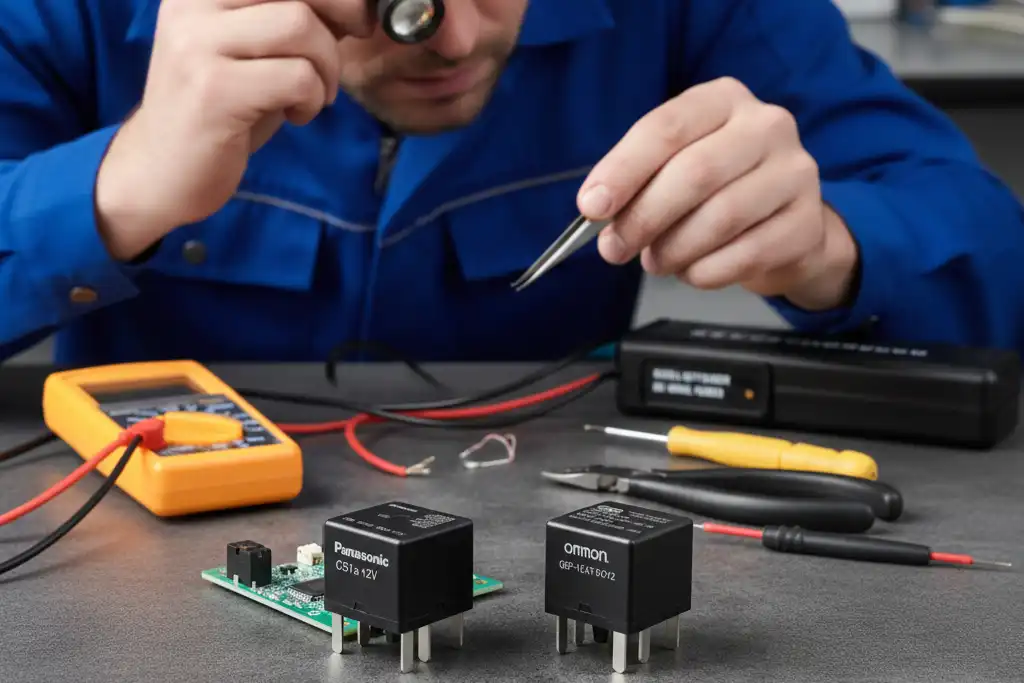
The fastest way to spot a fake automotive relay is to check the packaging, look for security features, and buy only from trusted sources. You can often tell the difference with a few quick visual checks. Using real parts keeps your vehicle safe and reliable.
Tip: Trust your eyes and hands. Small details often reveal if a relay is genuine or not.
Key Takeaways
Check the relay's box. Look for bright colors and neat glue lines. See if there is a warranty card. These things can help you find fake relays.
Check the part number and logo in the maker's catalog. This helps you know if the relay is real and fits your car.
Look at how the relay is made. Real relays feel strong and have smooth edges. They also have safety marks.
Watch out for cheap prices. If a relay is much cheaper, it could be fake. Always check prices from trusted stores.
If you are not sure if a relay is real, ask the maker or an expert. They can tell you if the relay is real.
Check Automotive Relay Packaging
When you want to know if your automotive relay is real or fake, start by looking at the packaging. The box and labels can tell you a lot about the part inside. Here is how you can check the packaging step by step.
Packaging Features
You should first look at the color of the box. Real automotive relay boxes usually have a bright and even color. Fake boxes may look faded or have colors that do not match the brand's usual style. Hold the box under a light and check if the color looks right.
Next, check how the box is put together. Most real boxes use clean glue lines. The edges should stick together well, and you should not see glue leaking out. If you see messy glue or the box feels loose, this can be a sign of a fake
Some brands include a warranty card or a small instruction sheet inside the box. Take a moment to look for these. If the box is missing these items, you should be careful. Real automotive relay packaging often includes these extras to show the part is genuine.
Tip: Always keep the box and any cards that come with your relay. You may need them if you want to return the part or check its
authenticity later.
Labeling and Printing
Look closely at the labels and printing on the box. Real automotive relay packaging uses clear and sharp printing. The letters and numbers should be easy to read. If you see blurry text, smudges, or missing information, this is a red flag.
Check for important details like the brand name, part number, and manufacturing date. These should match the information from the brand's website or catalog. If you notice spelling mistakes or strange fonts, the relay might be fake.
You can use this simple checklist when you inspect the packaging:
|
What to Check |
What to Look For |
Warning Signs |
|---|---|---|
|
Box Color |
Bright, even, matches brand |
Faded, uneven, wrong color |
|
Glue Application |
Clean, neat, no leaks |
Messy, loose, glue visible |
|
Warranty Card/Insert |
Present, matches brand |
Missing, looks cheap |
|
Label Printing |
Sharp, clear, no errors |
Blurry, smudged, missing info |
If you follow these steps, you can spot many fake automotive relay parts before you even open the box. Careful checking helps you avoid problems and keeps your vehicle safe.
Verify Branding and Codes
When you check the branding and codes, you can spot a fake relay. This helps you before you put it in your car. You just need to follow some easy steps. Compare what you see with the official information from the maker. Doing this keeps your car safe. It also helps you stay away from parts that do not work well.
Part Numbers and Logos
First, look at the part number and logo on the relay. Every real relay has a part number that matches the brand's records. You should see this number printed or stamped on the relay. The logo should look clear and have no smudges.
You can use the maker's online catalog to check the part number. Most brands have a tool for this. You can enter the part number or your car's details. The tool will show if the relay fits your car and if the number is real. Some catalogs let you print a list of parts you need. These catalogs do not sell parts. They help you see what a real relay should look like.
Here is a table that shows what you can find in a parts catalog:
|
Feature |
Description |
|---|---|
|
Parts Lookup Catalog |
Lets you search for automotive relay part numbers and compare details. |
|
Search by Vehicle Info |
Enter your car's details to find the correct relay for your model. |
|
Printable List |
Make a list of needed parts for reference. |
|
Not an Ordering System |
Used for searching, not for buying parts directly. |
|
Additional Resources |
Find links to parts stores or help sites for more information. |
Tip: Always check the part number and logo with the official catalog. If you see anything different, do not use the part.
Security Labels and QR Codes
Many real relays have extra security features. Look for holographic labels, serial numbers, or QR codes. These can be on the relay or the box. These features help you see if the relay is real.
Holographic labels shine and change color in the light. Fake ones use plain stickers that do not change.
Serial numbers are special for each relay. You can enter these numbers on the brand's website to check if the relay is real.
QR codes can be scanned with your phone. When you scan the code, it should take you to the maker's site or a page that proves the relay is real.
If you do not see these security features, or if the QR code does not work, be careful. Real brands use these features to keep you safe from fakes.
Note: If you are not sure, contact the maker's customer service. They can help you check the codes and tell you if your relay is real.
By doing these steps, you can make sure the branding and codes are right. This helps you stay away from fake parts and keeps your car safe.
Inspect Build Quality
You can learn a lot about a relay by looking at its build quality. Start with the outside. Hold the relay in your hand and check the casing. Real relays use strong plastic with a smooth finish. The color should look even and match the brand's usual style. If you see a relay with faded or uneven color, you should be careful. Some fake relays use plastic that feels thin or bends too easily.
Tip: Shine a light through the casing. Genuine relays often have a certain level of transparency, but not too much. If you can see right through the plastic, it may be a fake.
Relay Casing and Color
Check the weight of the relay. Real relays feel heavier because they use quality materials. Run your finger along the edges. You should feel smooth lines and no sharp spots. Look at the paint or markings. The color should cover the relay evenly. If you see rough edges or spots where the paint is missing, this is a warning sign.
Here is a quick checklist to help you:
Consistent color and flexibility in plastic parts
Smooth edges with no sharp or rough spots
Uniform construction and clear markings
You should also look for certification marks. These marks show that the relay meets safety standards. Some common marks include SEMA, DOT, or SAE. These marks mean the relay passed important tests.
Internal Patterns and Materials
If you want to check further, you can open the relay. Look inside for crosshatch patterns or special designs. Real relays use these patterns to make the relay stronger. Fake relays often skip these details. You may see thin wires or cheap metal inside a fake relay.
Here is a table to compare real and fake relays:
|
Aspect |
Counterfeit Products |
Authentic Products |
|---|---|---|
|
Material Quality |
Low-grade steel, weak plastic |
Industry-standard materials |
|
Safety Compliance |
Rarely tested for safety |
Rigorously tested and certified |
|
Cost |
Cheaper, but risky |
Higher, reflects quality and safety |
|
Public Safety Risk |
High risk of failure |
Designed for safety and reliability |
You should always choose a relay that feels solid and looks well-made. This helps keep your car safe and working well.
Assess Price and Seller
Price Red Flags
You can spot a fake automotive relay by looking at the price. If you see a relay that costs much less than others, you should be careful. Low prices often mean the product is not real. Sellers sometimes use cheap prices to trick buyers. You should compare prices from different stores. If one price stands out as much lower, this is a warning sign.
Here are some things to watch for:
Prices that are much lower than the average
Sellers who offer big discounts for no reason
Listings with no details about the product
No return policy or warranty
You can use the three Ps to help you decide: Person, Place, Price. Check who is selling the relay, where they are selling it, and how much it costs. If any of these seem strange, you should look for another seller.
Tip: If a deal looks too good to be true, it probably is. Always ask questions before you buy.
Trusted Sources
You should buy relays from trusted sources. Good sellers have clear contact information and answer your questions. You can check reviews online to see what other buyers say. Stores that sell car parts for a long time are usually safe. You can also buy from the brand's official website or from certified dealers.
Here is a simple list to help you find trusted sellers:
Look for sellers with good reviews and ratings.
Choose stores that offer a warranty or return policy.
Buy from official brand websites or certified dealers.
Ask for proof of authenticity before you buy.
You keep your car safe when you buy from trusted sources. You avoid problems and get real parts that last longer.
What to Do If Unsure
Sometimes, you may still feel unsure about your automotive relay, even after checking packaging, branding, and build quality. You do not have to guess. You can take extra steps to protect your car and your safety.
Contact Manufacturer
You can reach out to the relay manufacturer for help. Most brands have customer service teams ready to answer questions about their products. When you contact them, give as much detail as possible. Share the part number, serial number, and photos of the relay and its packaging.
Tip: Save all receipts and packaging. These items help the manufacturer check your relay faster.
Manufacturers face challenges in tracking every part. Modern supply chains are complex. Sometimes, data about the origin of parts is missing or incomplete. It can be hard for brands to follow a relay through every stage of production. Even so, you should expect clear answers about authenticity and safety. If the manufacturer cannot confirm your relay, ask for advice on what to do next.
Here are some things to keep in mind when you contact the manufacturer:
Supply chains can be complicated, which may cause errors.
Brands may not always have full information about every part.
You should expect transparency and clear answers.
If you do not get a clear answer, ask for more help.
Seek Expert Help
If you still have doubts, you can ask an expert to check the relay. Many auto shops and mechanics have the right tools and knowledge. They can test the relay and tell you if it is real or fake.
You may see experts use these tools and steps:
Gather tools like a multimeter, relay tester, power supply, jumper wires, and wiring diagrams.
Follow safety steps. Make sure the power is off, use insulated tools, and avoid short circuits.
Inspect the relay visually for signs of damage or poor build.
Test for continuity with a multimeter.
Apply power to the relay and check its function.
Use a relay tester for a final check.
Note: You should never guess when it comes to car parts. If you feel unsure, always ask for help from someone with experience.
By following these steps, you can make sure your relay is safe and real. You protect your car and everyone who rides in it.
You can protect your car by following these steps to check if a relay is genuine:
Inspect the relay for damage, burning smells, or missing clicks.
Test with a multimeter for coil resistance and contact continuity.
Swap with a known good relay if you are unsure.
Counterfeit relays can cause serious safety risks. Always buy from trusted sources and check part numbers. If you have doubts, ask an expert or contact the manufacturer. Experts use strict tests to ensure safety and quality.
FAQ
How can you quickly check if an automotive relay is fake?
Look at the packaging first. Check for clear printing, correct colors, and security labels. If anything looks off, like blurry text or missing warranty cards, you should not use the relay.
What should you do if the QR code on the relay does not work?
Try scanning the code with another phone. If it still does not work, visit the brand's website and enter the serial number. You can also contact customer support for help.
Can you test a relay at home without special tools?
Yes, you can use a multimeter to check for continuity. Listen for a clicking sound when you apply power. If you do not hear a click or see strange readings, the relay may be bad.
Why is it risky to buy relays from unknown sellers?
Unknown sellers may offer fake or unsafe relays. These parts can fail and cause damage to your car. Always buy from trusted stores or certified dealers.
What signs show a relay might be counterfeit?
You might see faded colors, rough edges, or missing security features. The price may be much lower than normal. If the relay feels light or flimsy, it could be fake.
Dimensions and specifications of the relay socket: 2025 Selection Guide
Automotive Relay SPDT Guide 2025: Wiring Diagrams & Applications
Universal Automotive Relay Panel Installation Guide 2025
Automotive Relay Kit Guide 2025: Selection & Installation Tips