

You often deal with wiring problems in new PCB projects. A miniature relay makes things less complicated. It saves space and makes the system more reliable. You can add these relays to cars, factories, and home devices. Engineers and hobbyists pick them for good performance and safety. Many projects use miniature relays now. They last longer and fit well in small designs.
Automotive: headlights, fuel pumps, HVAC systems
Industrial: motor control, conveyor systems, robotics
Home Appliances: air conditioners, washing machines, ovens
Renewable Energy: solar inverters, battery management systems
Automation: PLCs, control panels, safety circuits
Key Takeaways
Miniature relays make wiring easier in PCB projects. They help reduce how complicated the wiring is. They also save space on the board. These relays make circuits more reliable. They protect circuits from dust and moisture. They also guard against electrical spikes. Using miniature relays lets you build smaller designs. You can fit more parts in a small space. Always follow best practices when picking and installing relays. This helps your project last longer. Miniature relays work well with microcontrollers. This makes them good for many uses.
Common 5V PCB Wiring Issues

Wiring complexity
When you build a 5V PCB, you see many wires. Each new wire makes things harder. You have to plan where each trace goes. If traces cross, it can cause problems. Thin traces might get hot or lose voltage. You need to add fuses and diodes for safety. These protect your board from voltage spikes. Bad grounding can make noise and errors happen. If you forget decoupling capacitors, voltage noise can reset chips or mess up data.
Tip: Use a strong ground plane and put decoupling capacitors close to your chips. This helps your circuit work better.
Connection reliability
Good connections are very important for your PCB. Loose wires or weak soldering can break fast. This can make the circuit stop working or act strange. If you do not protect your board, spikes and surges can hurt it. Always check if each connection is strong and stable.
Small traces make the circuit weak.
Bad grounding causes more noise.
No protection devices can damage your board.
Space limitations
There is not much room on a PCB. Big relays take up too much space and make wiring tough. You need to fit lots of parts in a small spot. PCB relays are smaller and lighter than big contactors. You can put them right on the board to save space. This lets you use the area better. Miniature relay designs make wiring easier and your equipment smaller.
Note: Small relays help you build tiny and better devices.
Soldering errors
Soldering mistakes can ruin your work. You might miss a spot or make a bridge between traces. These mistakes can cause shorts, open circuits, or bad operation. You should check every solder point and test the board before using it.
Cold solder joints can break easily.
Solder bridges make wrong connections.
Too much heat can lift pads off the board.
You can stop many wiring problems by picking good parts and following smart steps. Miniature relay solutions make your design simpler and more reliable.
Miniature relay solutions
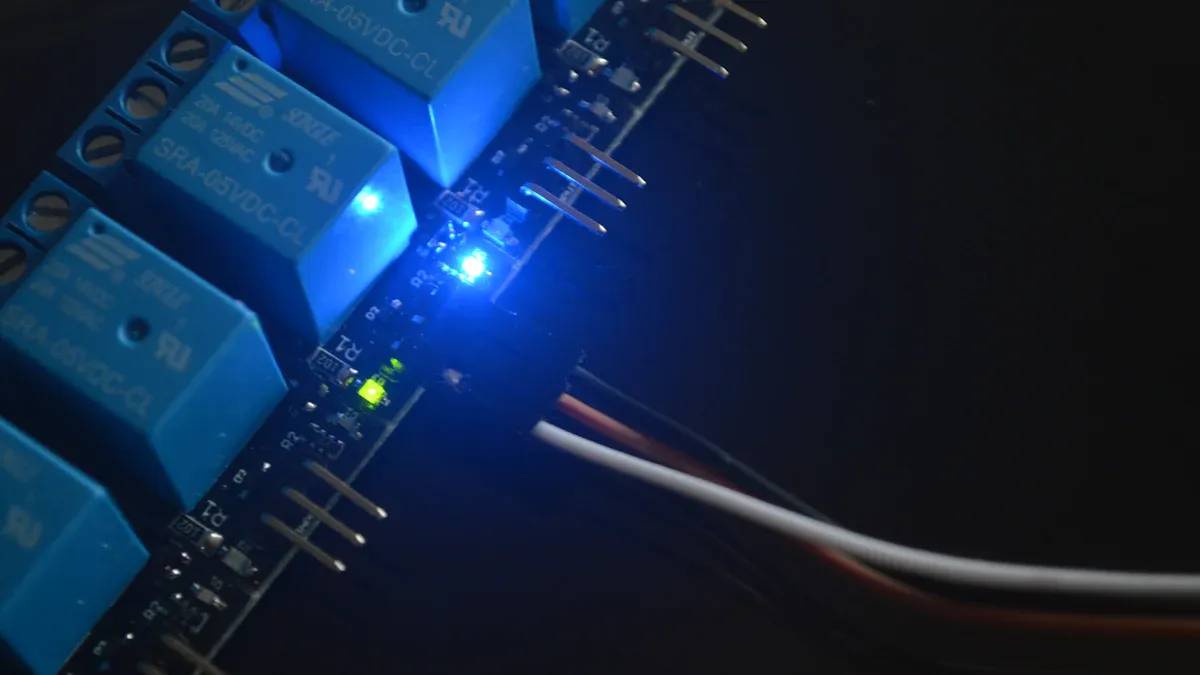
Simplified circuit design
You can make your circuit much simpler when you use a miniature relay. These relays are easy to connect and work well with microcontrollers. You do not need to add many extra wires or parts. This saves you time and reduces mistakes. You can see how different features help your design in the table below:
|
Feature |
Contribution to Circuit Design |
|---|---|
|
Easy to connect |
Simplifies integration into PCBs |
|
Strong loading capacity |
Supports higher power applications |
|
Low power consumption |
Reduces overall energy requirements |
A miniature relay can handle up to 10A at 250V. You can use them for both small and large loads. You do not need to worry about using thick wires or big traces if you follow good layout rules. This makes your PCB neat and safe.
Enhanced reliability
You want your project to last a long time. Miniature relays have sealed construction. This keeps dust and moisture out. The contacts stay clean and work well for years. You do not have to worry about arcing or heat damage. Here are some ways sealed relays improve reliability:
Hermetically sealed contacts block dirt and moisture.
Sealing lowers the risk of arcing, which keeps your circuit safe.
Magnets inside help control arcs and manage heat.
Most miniature relays last about 40,000 hours. That means you can run your project for almost five years without problems. The coil uses polyurethane copper wire, which resists heat and helps the relay last longer.
Compact footprint
You often need to fit many parts on a small PCB. Miniature relays take up less space than standard relays. Their slim shape lets you place more relays in the same area. You can use the extra space for other parts or make your device smaller. This helps you design smart and modern products.
Miniature relays use special coil assemblies and small parts to save space. You can plan your PCB better and avoid wasted room. You need to keep enough space between high-voltage and low-voltage traces. This keeps your board safe and working well.
Easy PCB integration
You can mount a miniature relay right on your PCB. This makes your project easier to build and test. You do not need to use big contactors or extra wires. You can follow these steps to connect a relay to a microcontroller:
Connect the VCC pin of the relay to the 3.3V or 5V pin on your board.
Connect the GND pin to the ground.
Connect the IN pin to a GPIO pin on your microcontroller.
You can use Python or another language to control the relay. Make sure you use the right wire colors to avoid mistakes. For example, use red for power, blue for signal, and green for ground.
Miniature relays can handle high currents if you use wide traces and keep enough space between contacts. You should not place relays near hot parts. This keeps your board cool and safe. You can mount relays as through-hole parts or use special mounts for extra support.
Tip: Miniature relays are popular in solar inverters, EV chargers, and many smart devices. Their small size and easy mounting help you finish your project faster.
Applications
Typical 5V PCB projects
Miniature relays are used in many 5V PCB projects. They let you control big devices with a small signal. Here are some ways people use them:
You can use a Raspberry Pi and a 5V relay to control motors and valves.
A thermistor can turn on a fan or heater when it senses a set temperature.
You can switch the relay to power a receiver in a remote control project.
Relays help you safely connect low-voltage circuits to high-voltage appliances in home automation.
These examples show you can do hard tasks with easy wiring.
Before-and-after scenarios
If you build a PCB without a relay, you need lots of wires and parts. This makes your board messy and hard to fix. Adding a relay makes your design much cleaner. The relay keeps your control circuit safe from the device you switch. You can control more devices with less work.
|
Component |
Description |
|---|---|
|
Relay Module |
4 Channel Solid State Relay Module |
|
Design Flexibility |
Two footprints let you pick what fits best |
|
Key Component |
Uses SSR G3MB, 10k 0603 Resistor, BC847 SMT Transistor, Hi-Link Power supply |
|
Circuit Functionality |
Lets you control AC devices with a simple transistor driver |
|
Application |
You can operate 4 devices from 4 different pins |
|
Testing |
Always check your 5V power supply and connections before testing |
You can find guides to connect a relay to an Arduino. You only need a transistor to control the relay. This setup lets you switch AC appliances with a small DC signal.
User feedback
Many people say relays make their projects last longer. You do not have to worry about some relay types wearing out. This means your board fails less and lasts longer. You also avoid problems like oxidation and arcing, which can hurt regular relays. Faster switching helps your project work well, especially when timing matters. Users like how relays keep circuits safe and easy to use.
Tip: You can use relays in communication, remote control, and microcontroller projects. They make wiring simple and your system strong.
Miniature relay integration tips
Relay selection
You want to pick the right relay for your project. Start by checking the coil voltage and current ratings. Make sure they match your control circuit. Look at the contact configuration, such as normally open (NO) or normally closed (NC), to fit your switching needs. Think about the type of load you will control. Some loads, like motors, need special contact materials. Consider these steps when you choose a relay:
Check voltage and current ratings for both coil and contacts.
Choose the right contact configuration (NO, NC, or changeover).
Match the relay to your load type (resistive or inductive).
Decide if you need fast switching or high frequency.
Measure the space on your PCB and pick a DIP or SMD package that fits.
Make sure the relay provides enough isolation between control and load sides.
Think about the environment. Will your board face heat, moisture, or vibration?
Look at the relay's lifetime and how many cycles it can handle.
Check the response time if your project needs quick action.
See if you need extra features like latching or built-in protection.
Installation best practices
You can make your relay last longer and work better by following good installation steps:
Use a stable DC voltage that matches the relay coil rating. This keeps the relay from overheating or failing.
For inductive or capacitive loads, add a snubber circuit. This protects the contacts from arcing and voltage spikes.
Place the relay away from hot parts on the PCB. Heat can shorten relay life.
Keep enough space between high-voltage and low-voltage traces. This prevents shorts and keeps your board safe.
Seat the relay firmly on the PCB to avoid stress or damage.
Tip: Sealed relays block dust and moisture, so they work well in tough environments.
Troubleshooting
If your relay does not work, you can follow these steps to find the problem:
Look at the relay and board for damage, loose wires, or corrosion.
Use a multimeter to check the coil resistance and see if the relay clicks when powered.
Test the contacts for continuity and measure their resistance.
Check the control and load circuits for correct voltage and current.
Remove the relay and test it on a bench if you still have issues.
You can solve most problems by checking each part step by step. This helps you keep your miniature relay working well in your project.
You can fix lots of wiring problems in your 5V PCB projects by using a miniature relay. Good materials and smart designs give you strong anti-interference and make the relay last longer. Your circuits work better and break down less. You also save space inside your device. These relays fit well in small places:
|
Feature |
Description |
|---|---|
|
Compact and Lightweight |
Miniature relays take up less room, so they are great for crowded electronic systems. |
|
Space-saving Design |
Their tiny size makes them perfect for small devices that need lots of parts close together. |
You can find out more and get better at using relays with these links:
Relay Basics: Technology
Fundamentals of Relays (Movable Contacts)
Technical FAQ for Relays
Sensor Application Examples: Practical Solutions for Engineering Challenges
Troubleshooting Relay Circuits: A Practical Guide for Electrical Engineers
You can make your next PCB project simpler, safer, and stronger if you use miniature relays.
FAQ
What is a miniature relay?
A miniature relay is a small switch that you control with electricity. You use it to turn devices on or off in your PCB projects. It saves space and makes wiring easier.
Can you use a miniature relay with a microcontroller?
Yes, you can. Most miniature relays work well with microcontrollers like Arduino or Raspberry Pi. You only need a simple driver circuit to connect them.
How much current can a miniature relay handle?
You can find miniature relays that handle up to 10A at 250V. Always check the datasheet for the exact rating. Using the right relay keeps your project safe.
What are the main benefits of using a sealed relay?
Sealed relays keep out dust and moisture. This helps your circuit last longer and work better in tough places.
How do you test if a relay works?
Listen for a click when you power the coil.
Use a multimeter to check if the contacts open and close.
Test the relay outside your circuit if you have problems.