


A solid state relay lets you control powerful parts of your 3D printer or CNC machine with just a small signal. You can turn on a heated bed, motor, or pump safely and easily. This device improves how your machine works by making it faster, more reliable, and safer. If you want your equipment to last longer and run better, using a solid state relay can help.
Key Takeaways
Solid state relays help you control strong machines in 3D printers and CNC machines with a small signal. This makes things safer and more efficient.
These relays switch on and off faster than mechanical relays. This helps control the heat for beds and extruders better. It also makes print quality better.
Solid state relays work quietly. This makes your workspace quieter and nicer. It is good for working at night or with other people around.
Using solid state relays makes your machines more reliable. They do not have moving parts. They can work for millions of cycles without breaking.
Solid state relays can help you save money on repairs and upkeep. They do not need to be replaced as often as mechanical relays.
Function
Control signals
A solid state relay can be turned on with a small signal. This makes it simple to control big parts in your 3D printer or CNC machine. You do not need much power to use the relay. Most relays work with low voltage and current. For example, some use 5V for control and 2A for load. Some relays can use a wide range of voltages, like 90-280V AC. The input current can be between 6.5mA and 18mA.
|
Control Voltage |
Load Current |
|---|---|
|
5V |
2A |
|
Control Voltage Range |
Minimum Input Current |
Maximum Input Current |
|---|---|---|
|
90-280V AC |
6.5mA |
18mA |
These numbers show you can use simple boards or microcontrollers to control bigger devices. This keeps your machine safe and helps it work well.
Switching loads
A solid state relay can switch high-power loads without touching them. You can use it to control heated beds, motors, or pumps. These relays are good for automation. They handle high loads and switch quickly and reliably.
You can use them for motors and other strong parts.
They last longer because there are no moving parts.
Solid state relays make heat when they work. You need to manage this heat. The relay's load depends on the temperature and how much heat it makes. Good heat control stops overheating and damage.
|
Specification |
Details |
|---|---|
|
Relay Type |
G3NA-210B-UTU |
|
Control Voltage Range |
5 - 24v DC |
|
Load Voltage Range |
24 - 240v AC |
Solid state relays protect your control electronics from high voltage. You can trust them to handle big currents and voltages. This is important for heated beds and other strong devices.
Solid state relay benefits
Reliability
You want your 3D printer or CNC machine to work each time. A solid state relay helps make this happen. It does not have moving parts like a mechanical relay. This means it does not wear out from turning on and off. Solid state relays last much longer than mechanical relays. In factories, mechanical relays might last for 1.3 million cycles. But you may need to change them more than once a year. A solid state relay can switch many times and still work.
Dirt or water will not stop the relay from working.
The relay keeps working in places with shaking or heat changes.
This makes your machine more reliable. You save time and money on fixing it.
Speed
A solid state relay switches much faster than a mechanical relay. It uses electronic parts, so it reacts quickly. Mechanical relays work at 50 to 60 times per second. A solid state relay can switch 1,500 to 2,000 times per second.
|
Relay Type |
Typical Switching Speed |
|---|---|
|
Solid State Relay |
1.5 to 2 KHz |
|
Mechanical Relay |
50 to 60 Hz |
Fast switching helps you control heated beds and extruders well. The relay can turn the heater on and off quickly. This keeps the temperature steady. Your prints come out smooth and your machine works better.
Tip: Fast switching also helps with vacuum tables and coolant pumps. You get better control and smoother work.
Silent operation
Mechanical relays make a loud click when they turn on or off. This sound comes from their moving parts. A solid state relay is silent. It uses electronic switches, so you hear nothing. This makes your workspace quiet and less distracting.
Many people like how quiet their machines are with these relays.
You can use your machine at night or with others nearby.
Safety
Safety is very important with high-power machines. A solid state relay makes your setup safer in many ways. It does not make sparks or arcs when switching. This lowers the chance of fire, especially with heated beds or strong motors.
|
Feature |
Mechanical Relays |
Solid State Relays |
|---|---|---|
|
Arcing |
Yes |
No |
|
Noise |
Click sound when activated |
Silent |
|
Reliability |
Prone to failure |
More reliable |
|
Switching Speed |
Slower |
Faster |
|
Inductive Load Handling |
Can cause voltage spikes |
Handles without arcing |
|
Lifespan |
Shorter |
Longer |
You also avoid problems like contact bounce, which can cause errors. With fewer things that can break, your machine is safer and more dependable.
Note: Always check the relay's ratings and install it the right way. Too much load or bad connections can still cause problems, even with a solid state relay.
Applications
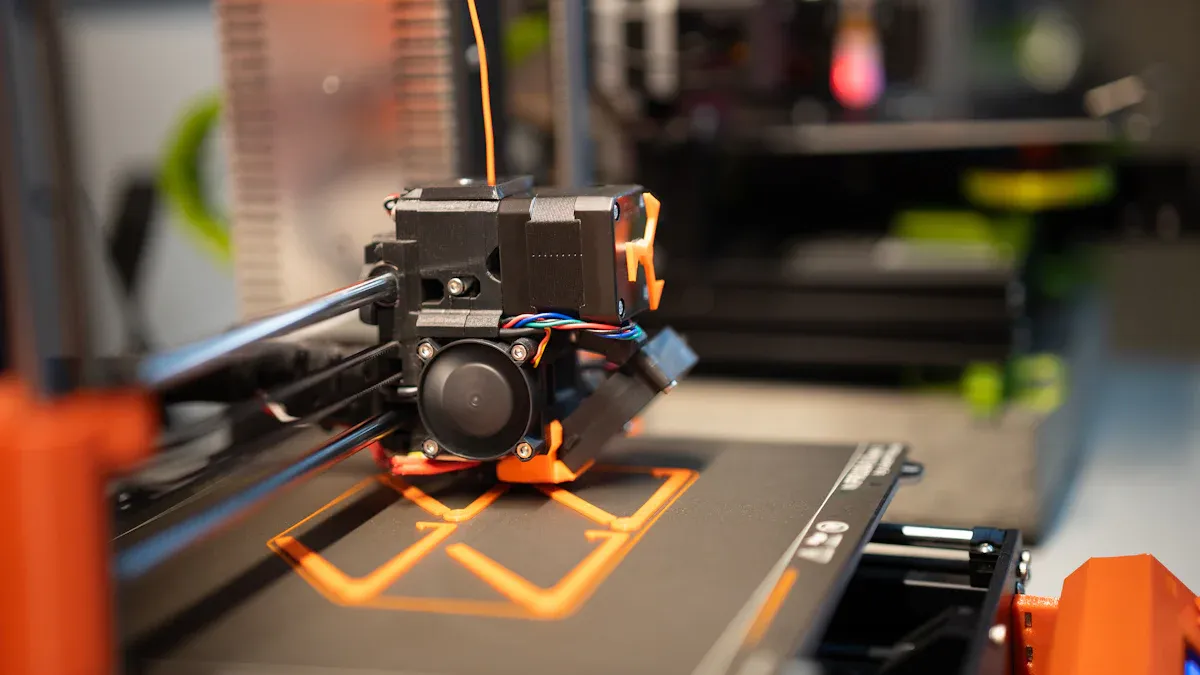
3D printers
You can find a solid state relay in many modern 3D printers. This device helps you control parts that need a lot of power, such as heated beds and extruders. You only need a small signal from your control board to turn these parts on or off. This makes your printer safer and easier to use.
Heated beds: Keep your print surface at the right temperature for better print quality.
Extruders: Maintain steady heat for smooth filament flow.
High-speed switching: Change the power quickly to keep temperatures stable.
The band heater is a 220V part but the PID only runs on 12V. Therefore the SSR connects the 12V PID with the 220V heater. The PID powers the SSR on and off if needed. When it is on then 220V are connected to the band heater and it gets warm. If the relay is off, the band heater isn't connected to 220V and ergo is powered down. The idea is to control a high power device (Heater) with a low power device (PID).
You get precise temperature control with this setup. Your prints come out better because the heat stays steady. You also avoid problems like overheating or sudden drops in temperature.
CNC machines
You will also see solid state relays in CNC machines. These machines often need to control big devices like vacuum tables, coolant pumps, and motors. The relay lets you use a small signal from your controller to manage these heavy loads.
Vacuum tables: Hold your workpiece in place during cutting.
Coolant pumps: Keep your tools cool and prevent damage.
Motor control: Run high-power motors for cutting and shaping.
Dust collection: Turn on dust systems only when needed.
A solid state relay helps you manage power for each part. You get fast, reliable switching without noise or wear. This means your CNC machine works longer and needs less maintenance. You also get better control over power, which is important for tasks that need steady force or speed.
|
Application |
Benefit of SSR Use |
|---|---|
|
Vacuum Table |
Reliable holding power |
|
Coolant Pump |
Quick, safe switching |
|
Motor Control |
Precise power regulation |
|
Dust Collection |
Efficient, on-demand operation |
You can trust your machine to run smoothly and safely. The relay works with your control system to give you the best results every time.
Solid state relay vs mechanical relay
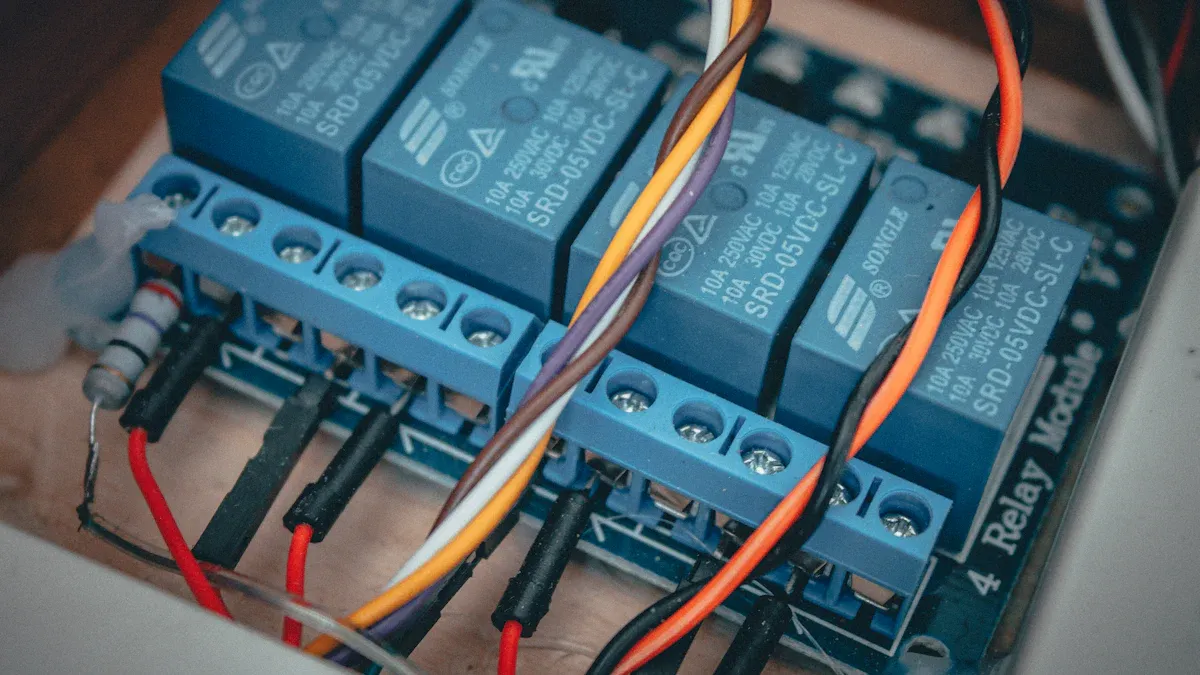
Performance
Solid state relays and mechanical relays work very differently. Solid state relays can switch on and off much faster. You can see the speed difference in this table:
|
Relay Type |
Switching Speed |
|---|---|
|
Solid State Relay |
About 50 ns |
|
Mechanical Relay |
About 50 ms |
Fast switching helps you control heaters and motors better. Solid state relays also make no sound when they work. Mechanical relays make a clicking noise every time they switch. This means your machine is quieter with a solid state relay.
Solid state relays use less power to work. They only need a little energy. Mechanical relays need more power because of their moving parts. Here are more ways they are different:
|
Feature |
Solid State Relay (SSR) |
Electromechanical Relay (EMR) |
|---|---|---|
|
Power Consumption |
Very low, just a few milliwatts |
Higher, uses more power |
|
Noise Generation |
Silent |
Makes a clicking sound |
|
Isolation |
Great electrical isolation |
Gets worse over time |
|
Shock/Vibration Resistance |
Very strong |
Can break easily |
|
Lifespan |
Lasts millions of cycles |
Lasts hundreds of thousands of cycles |
|
Harsh Environment |
Works well |
Has trouble |
|
Positional Sensitivity |
Not sensitive |
Needs to be in the right position |
Reliability
You want your 3D printer or CNC machine to last a long time. Solid state relays help with this because they have no moving parts. They do not wear out fast. They can last for millions of times turning on and off. Mechanical relays have parts that touch each other. These parts wear down and break after a while. They may only last for hundreds of thousands of times before you need a new one.
SSRs do not have parts that wear out, so they can switch on and off many times during their life.
Solid state relays also save you money on repairs. They do not need much care. Mechanical relays need to be checked and replaced more often. This costs more money.
Many new 3D printers and CNC machines use solid state relays.
They work well even in places with dust or shaking.
You get stronger machines and less time fixing them.
If you want a quiet, fast, and easy-to-care-for machine, a solid state relay is a good choice.
When you put a solid state relay in your 3D printer or CNC machine, you get lots of good things. You can count on it to work well for a long time. It does not break easily if the machine shakes or gets bumped. You save money because it is small and simple to take care of. You can check how it works right away and control it better. Your machine becomes safer and works better. It will last longer too. Try using a solid state relay in your next project. Your machine will run smoother and be safer.
FAQ
What is a solid-state relay?
A solid-state relay is an electronic switch. You use it to turn high-power devices on or off with a small control signal. It has no moving parts.
Why should you use a solid-state relay in a 3D printer?
You get faster, quieter, and more reliable switching. Solid-state relays help you control heated beds and extruders safely. You also avoid wear and tear from moving parts.
Can you replace a mechanical relay with a solid-state relay?
Yes, you can often swap them. Make sure the solid-state relay matches the voltage and current your machine needs. Always check the wiring and ratings before you install it.
Do solid-state relays need cooling?
Solid-state relays can get hot during use. You may need a heat sink or fan to keep them cool. Always check the relay's temperature when your machine runs for a long time.