


Wondering about the application scenarios of relays in your daily life? Here are the top 10 ways relays are used that you can find almost everywhere:
Industrial automation
Automotive systems
Home appliances
Power system control
Telecommunication equipment
Building automation and HVAC
Motor control
Scientific setups
Industrial control systems
Energy management
A relay is a simple switch. It uses electricity to open or close a circuit. Relays work behind the scenes to control machines. They help protect equipment and make things automatic. Relays keep factories working, cars safe, and homes comfortable. Around the world, relays are very important. In 2022, the relay market was worth over $6.7 billion. Experts think it will almost double in the next ten years. Look at the table below to see the application scenarios of relays and how they help big industries:
|
Application Scenario |
Description |
|---|---|
|
Energy Infrastructure |
Relays watch and protect circuits. They help power move smoothly. |
|
Automotive Applications |
Relays turn power on and off. They help manage batteries in electric cars. |
|
Industrial Automation |
Relays help control and automate processes. They are used a lot in older systems. |
You can see relays almost everywhere. They help make hard systems work safely and well. When you learn about the application scenarios of relays, you will see why they are so important in today's technology.
Key Takeaways
Relays are very important in factories. They help control machines and processes. This makes things safer and work better.
In cars, relays control power for important jobs. They help with things like starting the car and turning on lights. This keeps the car safe and working well.
Home appliances use relays to switch high power. This lets things like fridges and washing machines work safely and well.
Relays are important in power systems. They protect circuits and help fix electrical problems fast.
Telecommunication equipment uses relays to switch signals. This helps keep calls and data clear and working right.
Building automation uses relays to control lights and HVAC. This saves energy and makes people more comfortable.
Relays are needed for motor control. They help small and big motors work safely in many ways.
In science labs, relays help control equipment and collect data. This makes experiments safer and more reliable.
Industrial Automation Applications
Industrial automation is found in many places. You see it in factories, warehouses, and food plants. Relays are very important for making these places work well. Let's see how relays are used in different parts of industrial automation.
Machinery Control
When you go into a factory, you see many machines. Relays help control these machines. This makes sure everything is safe and on time.
Motor Starters
Big motors in factories need to start and stop often. Relays make this simple. When you press a button, a relay sends power to the motor. If there is a problem, the relay can turn off the power fast. This keeps the motor and people safe.
Conveyor Systems
Conveyor belts move things from place to place. Relays control when the belts start and stop. They also help change the speed or direction. If something goes wrong, relays can stop the belt quickly to keep people safe.
Tip: Relays can work with sensors. If a sensor finds a jam, the relay can stop the belt before anything breaks.
Process Automation
Factories use relays to make many steps automatic. You can use a small signal to control big machines. Relays keep you safe by keeping control and high voltage apart. They also work with PLCs to make sure each step happens in order.
Here are some main ways relays help in process automation:
They use small signals to control big circuits.
They keep you safe from dangerous voltages.
They work with control systems to make jobs automatic.
Why Relays Are Preferred
You may wonder why relays are used so much in industrial automation. Here are some reasons:
Control and isolation: Relays keep control circuits safe from high-power circuits.
Signal amplification: You can use a weak signal to run a big machine.
Protective circuits: Relays turn off equipment if there is a problem.
Automatic control: They work with sensors and PLCs to make things automatic.
Time control: Relays help with timing, like turning machines on and off at certain times.
Let's see how relays help factories work better:
|
Application Area |
Description |
Impact on Efficiency |
|---|---|---|
|
Manufacturing Automation |
Relays help run assembly lines and machines like conveyor belts. |
Throughput can go up by 20%. |
|
Energy Management |
Relays help manage power and use renewable energy. |
Response to grid problems is over 30% faster. |
|
Building Automation |
Relays control lights and HVAC for better energy use. |
Makes everything work more efficiently. |
You can see that relays in industrial automation help you work faster and safer. Relays let you control machines, protect equipment, and save energy with just a simple switch.
Automotive Application Scenarios of Relays
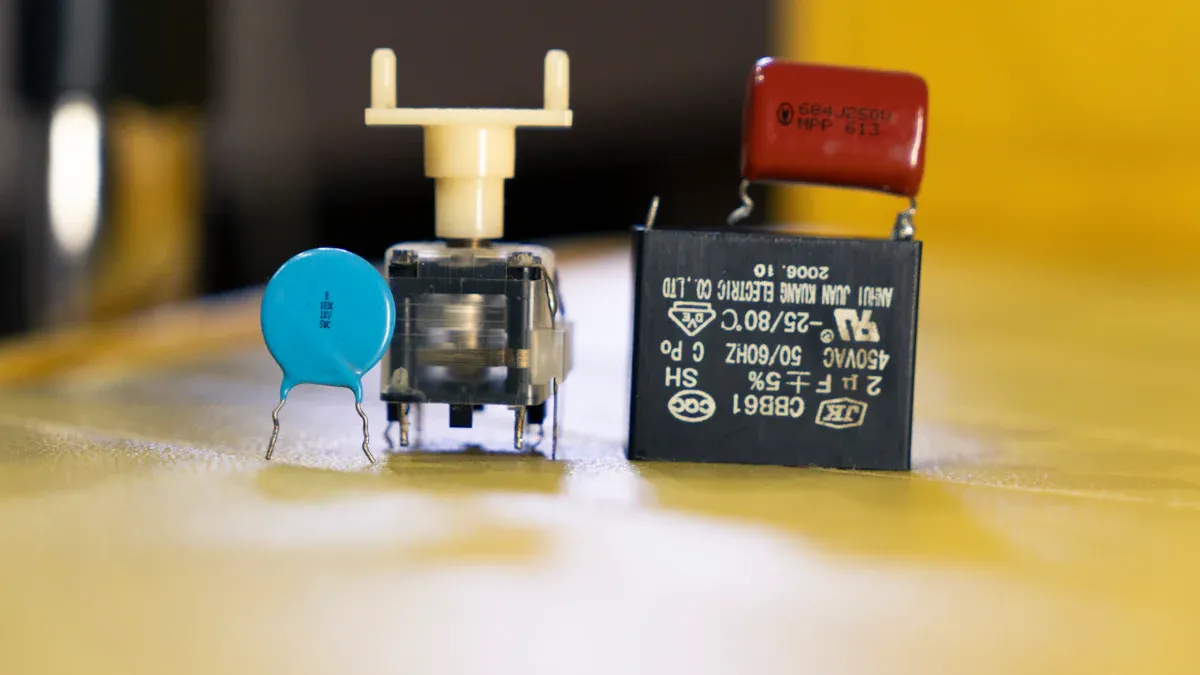
When you open a car's hood, you see relays at work. They help your car run well and stay safe. Let's look at how relays help your car every day.
Power Switching
Relays do hard jobs in your car's electrical system. They handle big currents so switches and wires do not get too hot.
Lighting Circuits
When you turn on your headlights, relays help them shine. They connect strong lamp circuits and stop switches from getting too hot. This gives you brighter lights and safer driving at night or in bad weather.
Ignition Systems
Starting your car is easy because relays help behind the scenes. They control when the ignition coil gets power. This makes sure your engine starts every time. Relays also help with fuel injectors and fuel pumps. The ECU uses relays to turn these parts on only when needed. This saves energy and protects your engine.
Some car systems that use relays are:
Fuel injectors
Fuel pumps
Ignition coils
Cooling fans
Relays let the ECU control these systems well. Your car runs better and you avoid big repair bills.
Safety and Security
Relays help keep you safe while driving. They control safety and security features in your car.
|
Functionality |
Description |
|---|---|
|
Airbag Deployment |
Relays make airbags work fast in a crash to protect you. |
|
Anti-lock Braking Systems (ABS) |
Relays help ABS stop wheels from locking up so you stay safe. |
|
Collision Detection |
Relays start safety steps if your car senses a crash. |
|
Immobilizer Systems |
Relays stop thieves from starting your car without the right key. |
|
High-Reliability Requirements |
Relays add backup and safety to important systems. |
Relays also help with alarms and door locks. They keep your car safe when you are not there.
Relay Advantages in Vehicles
Why do car makers use relays so much? Relays have many good points for car electronics.
Relays control big devices safely and well.
They protect the ECU from too much current.
Relays let the car decide when to turn things on or off.
Mechanical relays keep control circuits safe from high voltages.
Relays cost less and work well for big currents.
Here is a table comparing mechanical and solid-state relays in cars:
|
Feature |
Mechanical Relays |
Solid-State Relays |
|---|---|---|
|
Simplicity |
High |
Moderate |
|
Reliability in Switching |
High for large currents |
Very High |
|
Galvanic Isolation |
Yes |
No |
|
Switching Speed |
Slower due to moving parts |
Faster |
|
Resistance to Shock/Vibration |
Moderate |
High |
|
Cost-effectiveness |
High |
Moderate |
Relays help cars do tough jobs and protect important parts. They make driving safer and easier every day.
Home Appliance Applications
You use relays every day, but you might not see them. They are inside your refrigerator, washing machine, and other appliances at home. Relays help these machines work safely and do their jobs right.
High-Power Switching
Some appliances use a lot of electricity. Relays let them do this without putting you in danger.
Refrigerators
Your refrigerator keeps food cold by turning the compressor on and off. A relay controls when this happens. When the temperature goes up, the relay turns the compressor on. If it needs to stop, the relay shuts off the power. This fast switching keeps your fridge working well and saves energy.
Washing Machines
Washing machines use relays to run motors and heaters. When you start a wash, a relay sends power to the motor. Another relay can turn on the heater for hot water. If something is wrong, the relay can turn off the machine quickly. This keeps you safe and your clothes clean.
Tip: Relays in appliances help keep you safe from shocks. They keep high voltage away from the buttons you touch.
Timer and Delay Functions
Relays do more than just turn things on and off. They also help with timing. Time delay relays let appliances wait before starting or stopping. This makes sure everything happens in the right order.
Time delay relays control when their contacts open or close. After you press a button, the relay waits before turning on a motor or heater. This helps stop power surges and keeps your appliances working longer.
Here's a table showing how time delay relays help in different appliances:
|
Application |
Time Delay Relay Function |
|---|---|
|
Motor Start Control |
Delays motor start to avoid power surge |
|
Illumination Systems |
Turns lights on/off after a set delay |
|
Heating Elements |
Ensures regulated heating by delaying component activation |
You can find these timer functions in washing machines, ovens, and some lights at home.
Why Relays Are Used
Manufacturers use relays for many reasons. You get safer, smarter, and better appliances because of them.
|
Feature |
Description |
|---|---|
|
Safety |
Relays keep you safe by separating control from power. They shut off appliances fast in emergencies. |
|
Automation |
They let you control appliances from far away and set timers. |
|
Energy Efficiency |
Relays help save energy by managing power and stopping waste. |
Relays make your life easier. You can set your washing machine to start later. You can trust your refrigerator to keep food cold. In the application scenarios of relays, home appliances are special because they mix safety, automation, and saving energy. Next time you use an appliance, remember a relay is working to keep things running well.
Power System Control
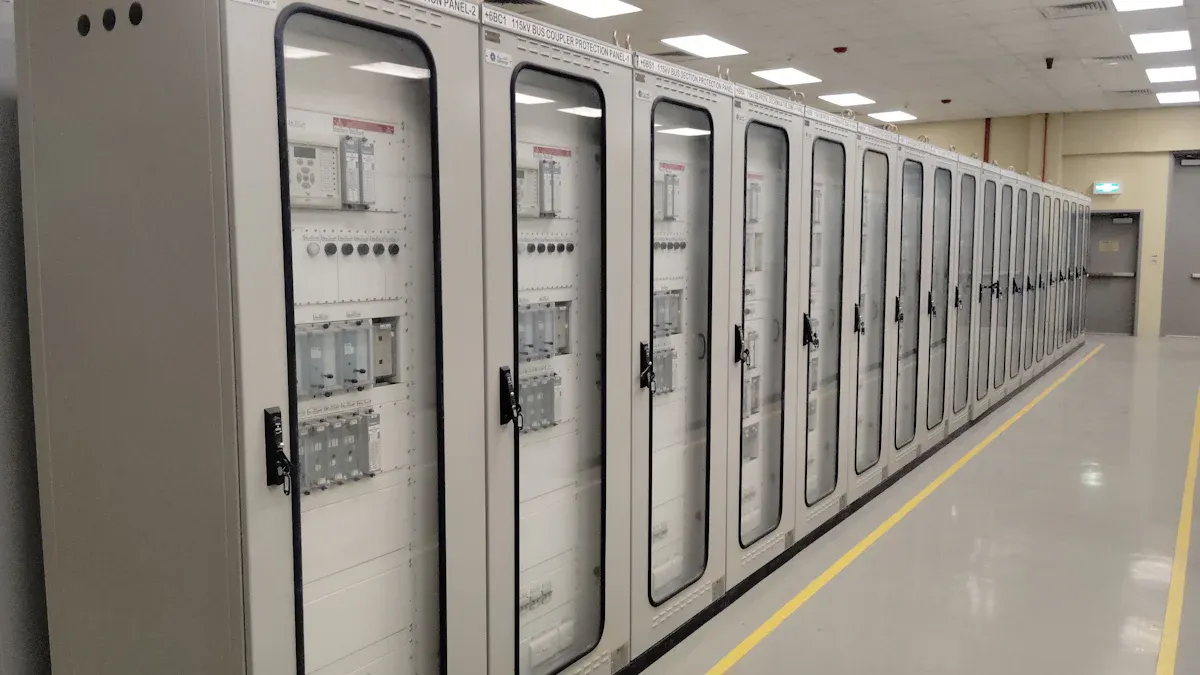
Relays work quietly in every power system. They help keep your lights on and your devices safe. Relays also help your city run smoothly. Let's see how relays control power systems and why they matter.
Circuit Protection
Relays are like guards for the electrical grid. They look for problems and act fast to keep things safe.
Overload Protection
Too much electricity can make wires hot and unsafe. Relays notice when this happens. They send a signal to circuit breakers to stop the power. This keeps wires from melting or catching fire. Relays use sensors called current transformers and potential transformers. These sensors help relays find trouble. If something is wrong, the relay acts in just a few milliseconds. Fast action keeps your home and equipment safe.
Relays find faults very quickly.
They trip breakers to stop damage.
Safety rules often need a fast response.
Grid Switching
Sometimes, part of the power grid must be turned off or switched. Relays do this job. If a storm knocks down a line, relays disconnect the broken part. They can also switch power to backup lines. This keeps the rest of the grid working. It helps stop blackouts.
Here's a table showing what relays do in power grids:
|
Role of Relays |
Description |
|---|---|
|
Enhancing Grid Stability |
Relays quickly isolate faults to keep the grid stable. |
|
Enhancing Grid Safety |
They disconnect circuits during failures to stop problems from spreading. |
|
Automation and Self-Healing |
Relays help the grid fix itself by switching to backups. |
|
Load Management |
They watch power use and control supply in real time. |
|
Distributed Energy Management |
Relays help add solar and wind power to the grid. |
|
Protection of Power Equipment |
They spot faults and disconnect equipment to prevent damage. |
Energy Management
Relays do more than protect. They help manage energy in smart ways. You see relays in charging stations for electric cars and inverters. They also work in power storage systems. Relays control when and how energy moves. During busy times, relays can turn off less important systems. This keeps hospitals and emergency services powered. Relays also help connect solar panels and wind turbines to the grid. They make sure everything works together.
Relays manage charging stations and storage systems.
They help with load shedding during busy times.
Relays support renewable energy like solar and wind.
Relay Benefits in Power Systems
Relays give you many benefits in power systems.
Safety relays protect machines and people. They can stop machines safely and act as emergency shutdowns.
Here are some reasons relays are valuable:
They stop equipment damage by acting fast.
They keep you safe by stopping dangerous faults.
They reduce downtime by finding and fixing problems quickly.
Relays last a long time and use little power. This makes them a smart choice for any power system. In the application scenarios of relays, power system control is special. Relays make sure your electricity is safe, stable, and always ready when you need it.
Telecommunication Equipment
You do not see relays in your phone or computer. Still, they help you talk and share information. Telecommunication equipment needs relays to keep signals moving. Relays help systems work without problems. Let's see how relays are used here.
Signal Switching
Relays switch signals in telecommunication systems. They let small signals control big circuits. This helps manage many calls and lots of data at once.
Telephone Exchanges
Long ago, telephone exchanges used relays to connect calls. When you dialed a number, relays moved lines to link your call. Your voice could travel far, even to another country. These relays handled thousands of calls every day. They made sure each call went to the right person. Signals did not get mixed up.
Data Routing
Relays also help send data to the right place. When you send a message or use the internet, relays guide the data. They act like traffic lights for signals. Relays tell signals when to stop or go. This keeps calls clear and internet fast.
Here's a table that shows how relays help with signal control in telecommunication:
|
Application |
Description |
|---|---|
|
Signal Control |
Use a small signal to manage a bigger circuit. |
|
Signal Repeater |
Refresh and send signals farther, like in old telegraph systems. |
|
Telephone Exchanges |
Manage calls and connections in phone networks. |
|
Logical Operations |
Perform simple logic tasks in early computers and switches. |
Tip: Relays protect your devices from too much voltage or current. They also keep your calls and data safe.
Remote Monitoring
Relays do more than switch signals. They help you watch and control telecom equipment from far away. This is called remote monitoring. You can check if a system works, find problems, and fix things without being there.
Here's how relays help with remote monitoring:
|
Feature |
Description |
|---|---|
|
Remote Monitoring |
Watch and control systems from a distance. |
|
Fault Indication |
Show when something goes wrong, so you can fix it fast. |
|
Power Quality Analysis |
Check if the power is steady and safe for your equipment. |
|
Control Modes |
Support different ways to control devices for smart operation. |
|
Automatic Linkage |
Work with sensors and other devices for full site monitoring. |
|
Service Life |
Last for up to 100,000 operations, so you don't have to replace them often. |
Relays also help smart grids. They connect and protect new energy sources, like solar or wind, in telecom networks.
Why Relays Are Essential
You may wonder why relays are so important in telecommunication. Here are some reasons:
Relays help send calls between phone lines and manage call forwarding.
They control who can use the network and how data moves.
In emergencies, relays connect you to help right away.
They test and watch lines to find and fix problems.
Relays control when devices connect or disconnect for safe data.
Relays make sure your calls, texts, and internet work every day. In the application scenarios of relays, telecommunication is special. It needs fast, safe, and reliable switching. Without relays, modern communication would not work.
Building Automation and HVAC
Relays work in buildings every day, even if you do not see them. They help control lights, heating, cooling, and security systems. Relays act like switches that move electricity to different devices. They turn equipment on or off, control power, and handle electrical loads. This keeps everything safe and working well.
Lighting Control
Lighting in buildings should be smart and simple to use. Relays make this happen. You can control lights from far away, set times for them, and save energy.
Automated Lighting
Think about walking into a room and the lights turn on by themselves. Relays help make this possible. You can set up lights to turn on or off at certain times or when sensors notice someone. This saves energy and makes things easier for you.
Here is how relays help with lighting:
|
Feature |
Description |
|---|---|
|
Remote Control |
You can turn lights on or off from far away. |
|
Automated Control |
You can set times for lights to work by themselves. |
|
Energy Optimization |
Relays help save energy by controlling when lights are on. |
Wireless lighting systems are easy to put in.
You can choose different light settings for each room.
Relays work well in old buildings because you do not need new wires.
Tip: Using relays for lighting helps you spend less on electricity and is good for the environment.
Emergency Lighting
Relays are important for emergency lights too. If the power goes out or there is an emergency, relays turn on backup lights right away. This keeps you safe because the building does not go dark. Relays make sure emergency lights only work when needed, so they last longer and use less power.
HVAC Equipment
Heating, ventilation, and air conditioning (HVAC) systems keep you comfortable all year. Relays control the electricity in these systems. They turn on heaters, air conditioners, and fans when needed. If too much current flows, relays stop it to protect the system. This keeps your equipment safe and helps it last longer.
Relays send power to different HVAC parts, making automation easy.
You get cool features like digital controls and remote use.
Relays help find problems, so you know when to fix things.
HVAC relays keep your building safe and comfortable.
Relays stop dangers before they cause harm.
If you want your HVAC to work well and save energy, relays are very important.
Security Systems
Building security is very important. Relays help run and watch over security systems. They act as switches that send signals between alarms, cameras, and door locks. You can control everything from one place. Maintenance teams use relays to check HVAC, lighting, and security at the same time. This makes your building safer and easier to take care of.
Relays let you:
Lock or unlock doors from far away.
Turn on alarms when sensors notice movement.
Connect cameras and lights for better watching.
Relays help you feel safe because you know your building is protected and works well.
Motor Control Application Scenarios of Relays
You see motors everywhere. They open your garage door, spin the drum in your washing machine, and run big machines in factories. Relays help you control these motors safely and easily. Let's look at how relays work with both small and large motors.
Small Motor Operation
You use small motors at home and in your car. Relays make these motors start and stop with just a push of a button or a flip of a switch. You don't have to handle high voltage or heavy wires. The relay does the hard work for you.
Here are some places where relays control small motors:
|
Device Type |
Typical Applications |
|---|---|
|
Motor Relays |
Low-power uses like home automation, car control systems, and signal-level control. You see them in window blinds, garage door openers, and even in some toys. |
When you press a button to open your garage, a relay sends power to the motor. The same thing happens when you close your car's windows or adjust your seat. Relays keep you safe by keeping the high voltage away from your hands.
Tip: Relays let you use small switches or even remote controls to run motors that need more power.
Large Motor Protection
Big motors need more protection. You find these motors in factories, elevators, and large air conditioners. Relays, called contactors, help you start, stop, and protect these powerful machines.
|
Device Type |
Typical Applications |
|---|---|
|
Contactors |
High-power jobs in factories, like running conveyors, pumps, and big HVAC systems. You also see them in commercial buildings for elevator motors and large air conditioning units. |
Relays do more than just turn motors on and off. They watch for trouble. If a motor gets too hot or draws too much current, the relay can shut it down right away. This keeps the motor from burning out and helps prevent fires.
Here's how relays help with large motors:
They give you early warnings if something is wrong, so you can fix it before it gets worse.
Relays stop the motor fast if there's a problem, which means less downtime and fewer repairs.
They help keep your workplace safe by stopping accidents before they happen.
You save money because you avoid big repairs and long stops.
Why Relays Are Used in Motor Control
You might wonder why relays are so popular for motor control. The answer is simple: they make your life easier and safer.
Relays let you control motors from a distance, even with a tiny switch or a computer.
They protect both the motor and the people using it.
Relays help you automate tasks, so machines can start or stop at the right time.
They keep high voltage away from control panels and switches.
Relays work with sensors and timers, so you can set up smart systems that run by themselves.
When you use relays for motor control, you get reliable machines, safer workplaces, and less stress. Whether you're running a small fan at home or a giant conveyor in a factory, relays make sure everything works just right.
Scientific and Experimental Setups
You might not think about relays when you walk into a science lab, but they play a big part in experiments and research. Relays help you control equipment, collect data, and keep everyone safe. Let's see how relays make scientific setups smarter and easier to use.
Test Benches
Test benches are special setups you use to try out engines, motors, or other devices. Relays help you run these tests without trouble. You can turn things on and off at just the right moment. This keeps your experiments safe and gives you better results.
Here's a table that shows how relays work in test benches:
|
Feature |
Description |
|---|---|
|
Relay Control |
You can turn each relay on or off automatically for set times. |
|
Customization |
You set how long each relay stays on during your experiment. |
|
Capacity |
You control up to 16 relays in different patterns for many uses. |
Relays let you set up your test bench just how you want. You can run engine tests for rockets or motors for robots. Relays help you collect accurate data and keep your setup safe. You don't have to worry about things overheating or running too long.
Tip: Test benches with relays make your experiments safer and more reliable. You get better data and fewer mistakes.
Here's how you use relays in test benches:
You test engines for rockets and other machines.
You design benches to keep experiments safe.
You collect exact performance data for your project.
Data Collection Systems
Relays help you gather data in science labs. You can use them to start and stop sensors, record measurements, or control cameras. If you want to measure temperature, pressure, or speed, relays make it easy. You set up your system so relays turn devices on only when needed. This saves power and keeps your equipment working longer.
Relays help you get the right data at the right time.
You can control many devices with just a few buttons.
Relays let you automate your data collection so you don't miss anything.
Imagine you're testing a new battery. Relays can turn on the charger, start the test, and record the results. You don't have to stand by the bench all day. The relays do the work for you.
Relay Use in Labs
Relays are everywhere in science labs. You use them to control lights, pumps, heaters, and more. If you want to run an experiment overnight, relays can turn things on and off while you sleep. You can set timers or use sensors to trigger relays. This means you get more done and stay safe.
Here are some ways relays help you in the lab:
You keep high voltage away from your hands.
You automate tests so you don't have to watch every step.
You protect equipment from damage by shutting it off fast.
Relays make your lab smarter. You spend less time worrying and more time discovering new things.
Relays help you run experiments, collect data, and stay safe. Whether you're testing engines or growing plants, relays make your scientific setup work better.
Industrial Control Systems
Industrial control systems keep factories, plants, and big machines running smoothly. You see these systems in places that make cars, food, or even power. Relays play a huge part in making sure everything works just right. Let's look at how relays help you with process automation, equipment safety, and more.
Process Automation
You want machines to do jobs without you watching every step. Relays make this possible. When you use relays, you can set up machines to start, stop, or change what they do-all by themselves. You press a button, and a relay sends power to the right machine. Sensors can tell relays when to turn things on or off. This means you get more work done with less effort.
Here are some ways relays help you automate processes:
Start and stop conveyor belts at the right time.
Control mixing machines in food factories.
Switch pumps on and off in water treatment plants.
Change machine speed or direction with just a signal.
Tip: Relays work with timers and sensors. You can set up a whole line of machines to run in order, so nothing gets missed.
Equipment Safety
You want your machines to last and your team to stay safe. Relays help you protect both. If something goes wrong, a relay can shut down a machine in seconds. This stops damage and keeps people safe from harm.
Relays watch for problems like:
Too much current or heat in a motor.
Doors or guards left open on a machine.
Emergency stop buttons pressed by workers.
When a relay finds trouble, it acts fast. It can cut power, sound an alarm, or send a warning to your control room. You avoid big repairs and keep everyone out of danger.
|
Safety Feature |
How Relays Help You Stay Safe |
|---|---|
|
Overload Protection |
Shut down machines before they overheat |
|
Emergency Stops |
Cut power instantly if needed |
|
Guard Monitoring |
Stop machines if doors are open |
Relay Role in Industrial Control
Relays are like the traffic cops of your control system. They decide which machines get power and when. You can use relays to:
Separate control circuits from high-power circuits.
Let computers or PLCs control big machines safely.
Add backup systems in case something fails.
You get more control and less risk. Relays let you build smart systems that run by themselves, protect your equipment, and keep your team safe. When you use relays in industrial control, you make your whole operation smoother and safer. That's why relays are a must-have in every modern factory.
Application Scenarios of Relays in Energy Management
When you think about saving energy and using power wisely, relays play a big part. You might not see them, but they help you use clean energy, avoid blackouts, and keep your lights on. Let's look at how relays work in energy management.
Renewable Integration
You see more solar panels and wind turbines every year. These sources give you clean energy, but they don't always make power at the same time you need it. Relays help you connect these sources to the grid safely. When the sun shines or the wind blows, relays switch on the right circuits. If there's too much power or a problem, relays disconnect the panels or turbines to protect your home and the grid.
Here's how relays help with renewable energy:
Switch solar panels or wind turbines on and off.
Protect the grid from too much or too little power.
Help batteries store extra energy for later.
Tip: Relays make it easy for you to add new energy sources to your home or business. You don't have to worry about safety or overloads.
Load Shedding
Sometimes, everyone uses a lot of electricity at once. This can overload the grid and cause blackouts. Relays help you avoid this by turning off less important devices when needed. This is called load shedding. For example, relays can turn off pool pumps or water heaters during peak hours. Hospitals and emergency centers stay powered because relays keep the most important systems running.
Check out this table to see how relays help with load shedding:
|
Device Type |
Load Shedding Action |
|---|---|
|
Water Heater |
Turns off during peak demand |
|
Pool Pump |
Delays operation to save energy |
|
Air Conditioner |
Cycles off to prevent overload |
|
Lighting |
Dims or switches off in some areas |
You get a steady supply of power, and the grid stays safe.
Why Relays Are Chosen
You might wonder why relays are so popular in energy management. Here are some reasons:
Relays act fast to protect your equipment.
You can control many devices from one place.
Relays help you save money by using energy only when you need it.
They work well with smart meters and home automation systems.
Relays last a long time and need little care.
Relays give you peace of mind. You know your home or business is safe, efficient, and ready for the future.
When you look at the application scenarios of relays, energy management stands out. Relays help you use clean energy, avoid blackouts, and keep everything running smoothly.
Relays are in many things you use, like cars and power grids. They help you control, protect, and make things automatic. Relays keep your systems safe and working well. When you choose a relay, think about what your project needs. Look at the table below for what to check:
|
Factor |
What to Look For |
|---|---|
|
Coil Voltage |
Make sure it matches your circuit voltage |
|
Load Voltage |
Pick one higher than your load needs |
|
Current Requirements |
Check if it can handle your current |
|
Durability |
Choose one that will last in your setup |
|
Environment |
Think about heat, wetness, and shaking |
If you pick the right relay, your system will work better every day!
FAQ
What is a relay and how does it work?
A relay is an electrical switch. You use a small current to control a bigger one. When you turn it on, it opens or closes a circuit. This lets you control big machines with just a tiny signal.
Where do I find relays in my daily life?
You see relays in cars, home appliances, and even in building lights. They help start motors, control lights, and protect devices. You probably use something with a relay every day without knowing it.
Why should I use a relay instead of a regular switch?
Relays keep you safe. You can control high-power devices from a safe distance. They also let you automate things, like turning on lights at a set time or starting a motor with a button.
Can relays help save energy?
Yes! Relays help you manage when devices turn on or off. You can use them to cut power to things you don't need. This saves energy and lowers your bills.
How do I choose the right relay for my project?
Tip: Check the voltage and current your device needs. Pick a relay that can handle more than your device uses. Make sure it fits your space and works in your environment.
Are relays hard to install?
Not at all. You just connect the control wires and the load wires. Always follow the instructions. If you feel unsure, ask an electrician for help.
Do relays last a long time?
Relays can last for thousands of cycles. If you use them right, they work for years. Solid-state relays last even longer because they have no moving parts.
See also
Clean the Contacts on the Relay: Ultimate 2025 Pro Guide
How to Avoid Relay Shaking: Complete 2025 Guide to Fix Jitter
Why Place a Capacitor on the Relay Coil? Circuit Protection Guide
How to Reduce Arcing on Relay Contacts: Engineer's Guide 2025