

Hey there! As a supplier of 12V Miniature Relays, I often get asked if these little guys are suitable for outdoor use. Well, let's dive right in and break it down.
First off, what are 12V Miniature Relays? They're basically small electrical switches that can be controlled by a low - voltage signal. These relays are super handy in a bunch of applications, like in automotive systems, home automation, and industrial control. You can check out our 12V Miniature Relay for more details.
Now, let's talk about the outdoor environment. The outdoors is a whole different ballgame compared to indoor settings. There are a bunch of factors that can affect how well a relay performs.
Temperature
One of the biggest challenges outdoors is temperature. It can get really hot during the day and freezing cold at night. Extreme heat can cause the internal components of the relay to expand, which might lead to misalignment and affect its operation. On the other hand, extreme cold can make the materials brittle, increasing the risk of breakage.
Most 12V Miniature Relays are designed to work within a certain temperature range. For example, a Standard DC 12V Relay might be rated for an operating temperature between -20°C to 70°C. If the outdoor temperature goes beyond this range, the relay's performance could be compromised.
Moisture
Moisture is another major concern. Rain, snow, and humidity can all take a toll on the relay. Water can seep into the relay, causing corrosion of the contacts. Corroded contacts increase the resistance, which can lead to overheating and eventually, failure of the relay.
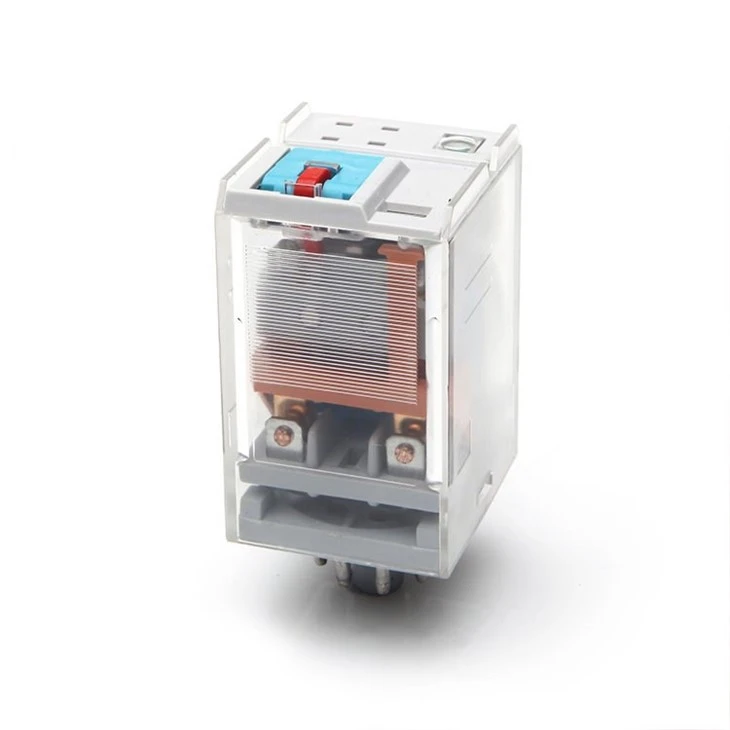
Some relays come with a certain level of protection against moisture. For instance, there are relays with a sealed enclosure that can prevent water from getting in. Our 12VDC10A Transparent Relay has a design that offers some protection, but it's still important to consider the level of moisture in the outdoor area where it'll be used.
Dust and Debris
Outdoor environments are full of dust, dirt, and other debris. These particles can get into the relay and interfere with its moving parts. If the dust accumulates on the contacts, it can also cause poor electrical conductivity.
To deal with dust and debris, you might need to choose a relay with a proper filtering mechanism or a sealed design. This can help keep the internal components clean and functioning properly.

Vibration and Shock
In outdoor settings, there can be a lot of vibration and shock. For example, if the relay is installed on a moving vehicle or in an area with heavy machinery, it'll be exposed to constant vibrations. These vibrations can loosen the internal connections of the relay, leading to intermittent operation or complete failure.
Relays need to be able to withstand a certain level of vibration and shock. Some relays are designed with special features to absorb or dampen these forces. When choosing a relay for outdoor use, it's important to look at its vibration and shock ratings.
So, Are They Suitable?
The answer isn't a simple yes or no. 12V Miniature Relays can be suitable for outdoor use, but it depends on a few things. If the outdoor environment is relatively mild, with stable temperatures, low humidity, and little dust and debris, then a standard 12V Miniature Relay might work just fine.
However, if the conditions are harsh, you'll need to look for relays with special features. For example, relays with a wider temperature range, better moisture protection, and higher vibration and shock resistance.
How to Choose the Right Relay for Outdoor Use
- Check the Ratings: Look at the temperature, humidity, vibration, and shock ratings of the relay. Make sure they match the conditions of the outdoor area where it'll be installed.
- Enclosure Type: Opt for a relay with a sealed or protected enclosure to keep out moisture, dust, and debris.
- Contact Material: Choose a relay with high - quality contact material that's resistant to corrosion. This can help ensure a longer lifespan, especially in a humid outdoor environment.
Conclusion
In conclusion, 12V Miniature Relays can be used outdoors, but you need to be careful about the environment they'll be in. By considering the factors we've talked about and choosing the right relay, you can ensure reliable operation.
If you're in the market for 12V Miniature Relays for your outdoor project, don't hesitate to reach out. We're here to help you find the perfect relay for your needs. Whether you have questions about our products or need advice on choosing the right one, we're just a message away. Let's start a conversation and see how we can work together to make your project a success.
References
- Relay Handbook, XYZ Publications
- Electrical Components for Outdoor Applications, ABC Press