

Hey there! As a supplier of Power Time Delay Relays, I often get asked a bunch of questions about these nifty little devices. One question that pops up quite a bit is, "Are power time delay relays resistant to dust?" Well, let's dive right into it and find out.
First off, let's understand what power time delay relays are. These are essential components in many electrical systems. They're used to control the timing of electrical circuits, allowing for precise operations. Whether it's in industrial machinery, home appliances, or even some automotive applications, power time delay relays play a crucial role. You can learn more about them on our website Power Time Delay Relays.
Now, back to the dust question. Dust is everywhere, right? It can find its way into the tiniest of spaces, and electrical components are not immune. When it comes to power time delay relays, their resistance to dust depends on a few factors.
Construction and Design
The way a power time delay relay is built has a huge impact on its dust resistance. High - quality relays are often designed with enclosures that provide some level of protection. For example, some relays come with sealed casings. These casings act as a barrier, preventing dust from getting inside the relay and interfering with its internal components.
Our 8 - Pin Power Delay Relay is a great example. It's designed with a sturdy enclosure that offers a decent level of protection against dust. The materials used in the construction are carefully chosen to withstand the elements, including dust. The pins are also well - protected, reducing the risk of dust accumulation that could cause short - circuits or other malfunctions.
Environmental Conditions
The environment in which the power time delay relay is used is another important factor. In a clean, controlled environment, such as a well - maintained industrial control room, the risk of dust exposure is relatively low. However, in more harsh environments like construction sites, mines, or factories with a lot of airborne particles, the relay is going to face a greater challenge.
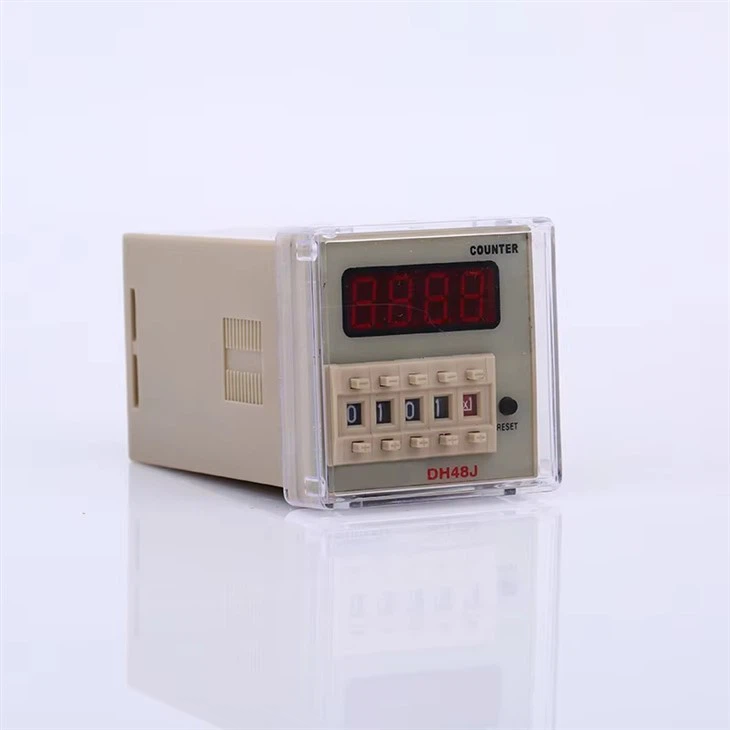

If a relay is constantly exposed to high levels of dust, even the most well - designed ones can eventually be affected. Over time, dust can build up on the contacts inside the relay. This can lead to increased resistance, which in turn can cause the relay to overheat or malfunction.
Maintenance
Proper maintenance can significantly improve the dust resistance of power time delay relays. Regular cleaning and inspection can help keep the relays in good working condition. For example, using compressed air to blow away any dust that has accumulated on the outside of the relay can prevent it from seeping inside.
We also offer Small Time Counting Relay, which, despite its small size, is still subject to dust issues. But with proper maintenance, it can continue to function reliably.
Testing and Certification
Reputable manufacturers test their power time delay relays for dust resistance. They use industry - standard tests to ensure that the relays can withstand a certain amount of dust exposure. Look for relays that have certifications related to environmental protection, such as IP (Ingress Protection) ratings. An IP rating indicates the level of protection against solid objects (like dust) and liquids. For example, an IP5X rating means that the relay is protected against the ingress of dust to a degree that it should not affect its normal operation.
The Bottom Line
So, are power time delay relays resistant to dust? Well, it's not a simple yes or no answer. High - quality relays with proper design, used in suitable environments, and maintained regularly can be quite resistant to dust. However, in extremely dusty conditions, even the best relays may need extra care.
If you're in the market for power time delay relays and are concerned about dust resistance, we're here to help. We've got a wide range of relays that are designed to meet different needs and environmental conditions. Whether you need a relay for a clean office environment or a harsh industrial setting, we've got you covered.
Don't hesitate to reach out if you have any questions or if you're interested in purchasing our power time delay relays. We're always happy to have a chat and help you find the right solution for your electrical system.
References
- Electrical Engineering Handbook: Covers general knowledge about electrical components including power time delay relays.
- Industry standards for environmental protection of electrical devices.