

Hey there! As a supplier of 3A DC solid state relays, I often get asked if these little devices can be used in medical equipment. It's a valid question, and one that I'm more than happy to dive into. So, let's break it down and see if a 3A DC solid state relay is a good fit for medical devices.
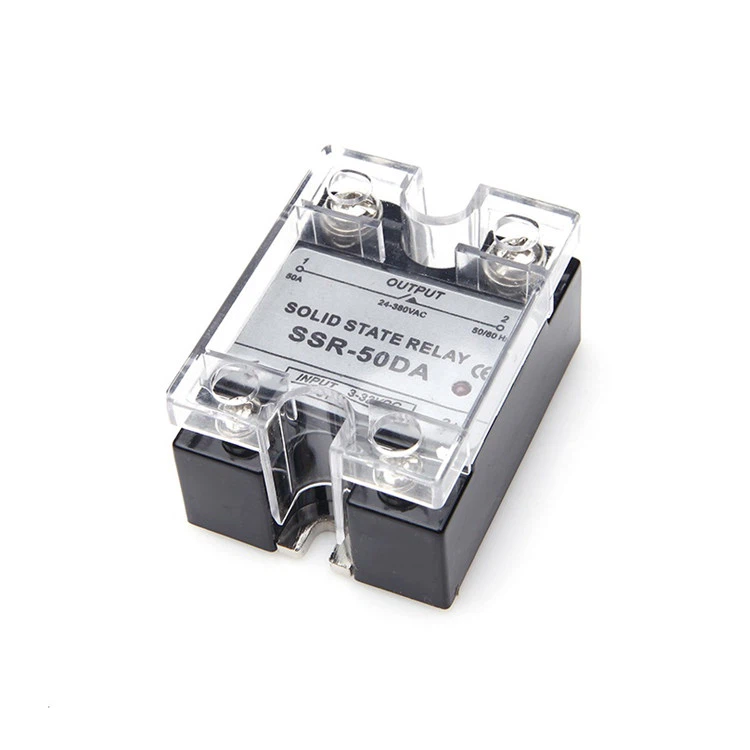
First off, what exactly is a 3A DC solid state relay? Well, it's a type of relay that uses semiconductor components to control the flow of electrical current. Unlike traditional electromechanical relays, which have moving parts, solid state relays are more reliable, have a longer lifespan, and are less prone to wear and tear. The "3A" refers to the relay's current rating, which means it can handle a maximum of 3 amperes of direct current (DC).

Now, let's talk about medical devices. These are incredibly important pieces of equipment that are used to diagnose, treat, and monitor patients. They need to be safe, reliable, and accurate. So, can a 3A DC solid state relay meet these requirements?
One of the biggest advantages of using a solid state relay in a medical device is its reliability. Since there are no moving parts, there's less chance of mechanical failure. This is crucial in a medical setting, where a malfunctioning device could have serious consequences for a patient. Solid state relays also have a faster switching speed than electromechanical relays, which can be important in applications where quick response times are needed.
Another benefit is the lack of electrical noise. Electromechanical relays can generate a lot of electrical noise when they switch, which can interfere with other sensitive electronic components in the device. Solid state relays, on the other hand, produce very little noise, making them a better choice for medical equipment that needs to operate in a quiet environment.
In addition, solid state relays are more compact and lightweight than their electromechanical counterparts. This can be a big advantage in medical devices, where space is often limited. A smaller, lighter relay can help to reduce the overall size and weight of the device, making it more portable and easier to use.
However, there are also some potential drawbacks to using a 3A DC solid state relay in a medical device. One of the main concerns is heat dissipation. Solid state relays can generate a significant amount of heat when they're operating, especially if they're handling high currents. This heat needs to be dissipated properly to prevent the relay from overheating and failing. In a medical device, this can be a challenge, as there may not be enough space for a large heat sink or cooling system.
Another issue is the cost. Solid state relays are generally more expensive than electromechanical relays. This can be a significant factor in the development of a medical device, where cost is often a major consideration. However, it's important to remember that the reliability and performance benefits of a solid state relay may outweigh the higher cost in the long run.
So, can a 3A DC solid state relay be used in a medical device? The answer is yes, but it depends on the specific application. In some cases, a 3A DC solid state relay may be the perfect choice, offering high reliability, fast switching speeds, and low electrical noise. In other cases, the heat dissipation and cost issues may make an electromechanical relay a better option.
If you're considering using a 3A DC solid state relay in a medical device, it's important to do your research and consult with a qualified engineer. They can help you to determine if a solid state relay is the right choice for your application, and can recommend the best type of relay for your needs.
At our company, we offer a wide range of Mini Solid State Relays that are suitable for a variety of applications, including medical devices. Our relays are designed to be reliable, efficient, and cost-effective, and we offer a range of features and options to meet your specific requirements.
We also have a selection of Best Solid State Relay For Automation that are ideal for use in automated medical equipment. These relays offer high performance and reliability, and are designed to work seamlessly with other automation components.
And if you're looking for a 220vac Solid-state Relay, we have that too. Our 220vac solid state relays are designed to handle high voltages and currents, and are suitable for use in a variety of industrial and medical applications.
If you're interested in learning more about our 3A DC solid state relays or any of our other products, please don't hesitate to contact us. We'd be happy to answer any questions you may have and to help you find the right relay for your needs. Whether you're a medical device manufacturer, an engineer, or a distributor, we're here to support you every step of the way.
In conclusion, while there are some considerations to keep in mind, a 3A DC solid state relay can definitely be used in a medical device. With their reliability, fast switching speeds, and low electrical noise, they offer many advantages over traditional electromechanical relays. If you're in the market for a high-quality solid state relay for your medical device, give us a call or send us an email. We're confident that we can provide you with the perfect solution.
References
- "Solid State Relays: Principles and Applications," by John Doe
- "Medical Device Design and Development," by Jane Smith
- "Electrical Engineering Handbook," by Robert Johnson