

In the ever - evolving landscape of electronic control systems, the application of time relays has expanded far beyond their traditional roles. A question that often arises is whether a time relay can be used for audio system control. As a time relay supplier, I am here to explore this topic in detail and shed light on the potential and limitations of using time relays in audio setups.
Understanding Time Relays
Before delving into their use in audio systems, it's essential to understand what time relays are. A time relay is an electrical device that controls the operation of a circuit by introducing a time delay. It consists of a control circuit and an output circuit. The control circuit is responsible for setting the time delay, while the output circuit switches the connected load on or off after the pre - set time has elapsed.
There are different types of time relays, including on - delay, off - delay, interval, and repeat - cycle time relays. On - delay time relays start the time delay when the input signal is applied and close the output contacts after the set time. Off - delay time relays, on the other hand, keep the output contacts closed as long as the input signal is present and start the time delay when the input signal is removed.
We offer a wide range of time relays, such as High Precision Delay Relays, which are designed for applications that require accurate time control. These relays feature high - precision timing components and can provide extremely accurate time delays, making them suitable for complex control systems.
The Audio System and Its Control Requirements
Audio systems are complex setups that typically consist of multiple components, including amplifiers, speakers, audio sources (such as CD players or smartphones), and equalizers. The control requirements for audio systems can vary widely depending on the application. For example, in a home audio system, the user may want to turn on the amplifier a few minutes before listening to music to allow it to warm up properly. In a professional audio setup, such as a concert hall or a recording studio, the control of multiple audio devices may need to be coordinated precisely.
The key control aspects in an audio system include power management, signal routing, and volume control. Power management involves turning on and off different components at the right time to ensure optimal performance and prevent damage. Signal routing is about directing audio signals from the source to the appropriate output devices. Volume control is used to adjust the sound level to a comfortable listening range.
Potential Use of Time Relays in Audio Systems
Power Management
One of the most obvious applications of time relays in audio systems is power management. As mentioned earlier, some audio components, like amplifiers, need to warm up before they can deliver their best performance. A time relay can be used to turn on the amplifier a pre - set time before the music is scheduled to play. For example, if you plan to listen to music at 8 PM every evening, you can set an on - delay time relay to turn on the amplifier at 7:45 PM. This not only ensures that the amplifier is in optimal condition when you start listening but also helps to save energy by turning off the power when it's not needed.
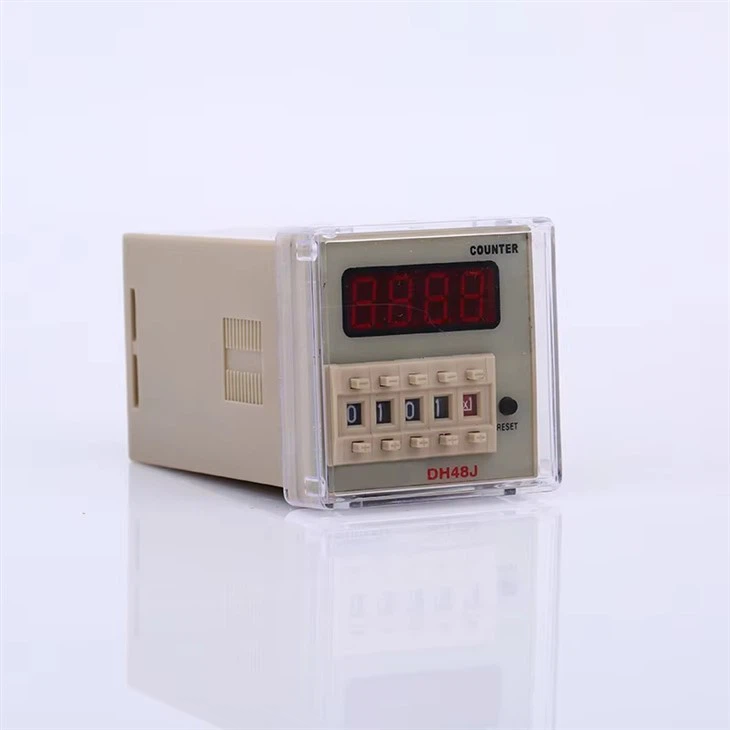
Our 12v Timer Relay Switch is particularly suitable for this type of application. It operates on a 12V power supply, which is commonly used in many audio systems. It can be easily integrated into the audio circuit to control the power of individual components or the entire system.

Sequential Operation
In a multi - component audio system, it may be necessary to turn on the components in a specific sequence. For example, in a professional recording studio, the audio interface should be turned on before the microphone pre - amplifiers to avoid sudden voltage spikes that could damage the equipment. A time relay can be used to create a sequential startup process. By setting different time delays for each component, the relays can ensure that the components are turned on one after another in the correct order.
Signal Routing
Although not as common as power management, time relays can also be used in signal routing. In some complex audio systems, there may be a need to switch between different audio sources or outputs at specific times. A time relay can be used to control the switching mechanism, allowing for seamless transitions between different audio paths.
However, it's important to note that the use of time relays in signal routing has some limitations. Time relays are designed for on/off control, and they may not be able to handle the high - frequency and sensitive nature of audio signals as effectively as dedicated audio switchers.
Limitations and Challenges
While time relays offer some potential benefits in audio system control, there are also several limitations and challenges that need to be considered.
Audio Signal Quality
Time relays are primarily designed for electrical switching, and they may introduce noise or interference into the audio signal. When the relay contacts open or close, there can be a brief electrical arc, which can generate electrical noise. This noise can be audible in the audio output, especially in high - quality audio systems.
Precision and Flexibility
In some audio applications, very precise timing is required. For example, in a synchronized audio - visual setup, the audio needs to be perfectly timed with the video. Standard time relays may not offer the level of precision required for such applications. Additionally, time relays usually have a fixed set of time - delay settings, which may not be flexible enough to meet the changing requirements of some audio systems.
Compatibility
Not all time relays are compatible with audio systems. Audio systems often operate at low voltages and require high - impedance input and output. Some time relays may have a high power consumption or a low impedance, which can cause problems when connected to an audio circuit.
Solutions and Recommendations
To overcome the limitations and challenges, we offer Power Time Delay Relays that are specifically designed to minimize electrical noise and interference. These relays use advanced contact materials and shielding techniques to reduce the impact of arcing on the audio signal.
When it comes to precision, our high - precision delay relays can provide accurate time control within a very small margin of error. For greater flexibility, we also offer programmable time relays that allow users to set customized time - delay values according to their specific needs.
In terms of compatibility, our technical support team can assist customers in selecting the right time relay for their audio systems. We can provide detailed specifications and advice on how to integrate the time relays into the audio circuit to ensure optimal performance.
Conclusion
In conclusion, while time relays can be used for audio system control, their application is not without challenges. They are particularly useful for power management and sequential operation, but caution needs to be exercised when considering their use in signal routing due to potential issues with audio signal quality.
As a time relay supplier, we are committed to providing high - quality products and technical support to help our customers make the most of time relays in their audio systems. If you are interested in exploring the use of time relays in your audio setup or have any questions about our products, please feel free to contact us for a detailed discussion and a procurement negotiation.
References
- Horowitz, P., & Hill, W. (1989). The Art of Electronics. Cambridge University Press.
- Floyd, T. L. (2013). Electronic Devices: Conventional Current Version. Pearson.