

Power time delay relays play a crucial role in industrial and electrical systems, especially when it comes to controlling the start - up time of motors. As a supplier of Power Time Delay Relays, I've witnessed firsthand how these devices contribute to the efficient and safe operation of motors across various applications. In this blog, I'll delve into the mechanisms by which power time delay relays control the start - up time of motors, their benefits, and why they are a must - have in many setups.
How Power Time Delay Relays Work
At the core, power time delay relays are electromechanical or solid - state devices designed to introduce a time delay in the operation of an electrical circuit. They consist of a coil, contacts, and a timing mechanism. When an electrical signal is applied to the coil, it creates a magnetic field that can either open or close the contacts after a pre - determined time delay.
The timing mechanism can be based on different principles. Some relays use mechanical components such as springs and gears to achieve the delay. These are often less precise but can be reliable in certain environments. On the other hand, solid - state relays utilize electronic circuits, usually based on capacitors and resistors, to control the timing. Electronic relays offer greater precision, flexibility, and can be easily adjusted to different time intervals.
Controlling Motor Start - up Time
When it comes to motors, power time delay relays are used to control the start - up process in several ways.

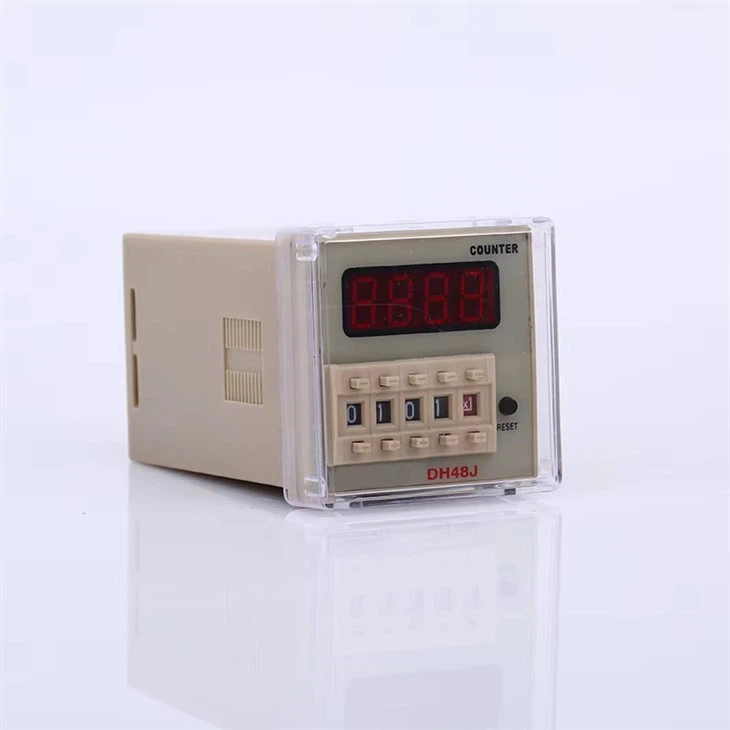
Soft Starting
One of the primary applications is to enable soft starting of motors. When a motor is started directly, it can draw a large inrush current, which may cause voltage drops in the electrical system and stress on the motor windings. A power time delay relay can be used to gradually apply power to the motor over a set period. For example, the relay can be configured to start by applying a reduced voltage to the motor. After a short delay, it can increase the voltage in steps until the motor reaches its full operating voltage. This soft start reduces the inrush current, extends the motor's lifespan, and minimizes the impact on the electrical grid.
Sequential Starting
In systems with multiple motors, power time delay relays are used for sequential starting. Instead of starting all the motors at once, which can overload the electrical supply, the relays can be set to start each motor at a specific time interval. For instance, in an industrial plant with several conveyor belt motors, the first motor can be started immediately, and then the subsequent motors can be started one by one after a short delay. This sequential starting ensures that the electrical load is distributed evenly over time, preventing voltage sags and system failures.
Delayed Starting
In some cases, motors need to be started after a certain event or condition has been met. Power time delay relays can be used to introduce a delay between the occurrence of an event and the start of the motor. For example, in a water pumping system, the relay can be set to start the pump motor a few minutes after a high - water level sensor is triggered. This delay can allow for additional water to accumulate or for other preparatory processes to be completed before the motor starts.
Benefits of Using Power Time Delay Relays for Motor Start - up
Energy Efficiency
By enabling soft starting and sequential starting, power time delay relays can significantly improve energy efficiency. Reducing the inrush current means that less energy is wasted during the start - up process. Additionally, by spreading the load over time, the overall energy consumption of the system can be optimized.
Equipment Protection
Motors are expensive pieces of equipment, and excessive inrush current and sudden starts can cause premature wear and tear. Power time delay relays protect motors from electrical stress, reducing the likelihood of motor failures and the need for costly repairs or replacements.
System Stability
In electrical systems, sudden large loads can cause voltage fluctuations and instability. Power time delay relays help maintain system stability by controlling the start - up of motors and ensuring that the electrical load is managed effectively. This is particularly important in sensitive industrial and commercial applications where a stable power supply is crucial.
Our Power Time Delay Relays
As a supplier of Power Time Delay Relays, we offer a wide range of products to meet different customer needs. Our relays are designed with high - quality materials and advanced technology to ensure reliability and precision.
We have 12v Timer Relay Switch options that are suitable for low - voltage applications, such as small motors in automotive or home automation systems. These switches are easy to install and can be adjusted to different time delays, providing flexibility for various setups.
Our 12 Volt Timer Relay products are also popular for their durability and performance. They are available in different configurations, including on - delay, off - delay, and interval timing, allowing customers to choose the right relay for their specific motor start - up requirements.
Why Choose Our Relays
- Quality Assurance: We adhere to strict quality control standards during the manufacturing process. Our relays are tested thoroughly to ensure that they meet or exceed industry standards.
- Technical Support: Our team of experts is always available to provide technical support and advice. Whether you need help with product selection or installation, we can assist you every step of the way.
- Customization: We understand that different applications may have unique requirements. That's why we offer customization options for our power time delay relays. We can modify the timing settings, contact ratings, and other features to suit your specific needs.
Contact Us for Procurement
If you're in the market for power time delay relays to control the start - up time of your motors, we'd love to hear from you. Our products offer the reliability, precision, and flexibility you need to optimize your motor start - up processes. Whether you're a small business or a large industrial enterprise, we have the right solution for you.
Reach out to us to discuss your requirements, get a quote, or learn more about our products. We're committed to providing you with the best products and services to ensure the success of your projects.
References
- Chapman, Stephen J. "Electric Machinery Fundamentals." McGraw - Hill Education, 2012.
- Fitzgerald, A. E., Kingsley, C., & Umans, S. D. "Electric Machinery." McGraw - Hill Education, 2003.
- Dorf, Richard C., and Svoboda, James A. "Introduction to Electric Circuits." Wiley, 2015.