

As a supplier of 4 - Pin Automotive Relays, I am often asked about how these small yet crucial components control the flow of electricity in automotive systems. In this blog post, I will delve into the working principles of a 4 - Pin Automotive Relay and explain its significance in modern vehicles.
Basic Structure of a 4 - Pin Automotive Relay
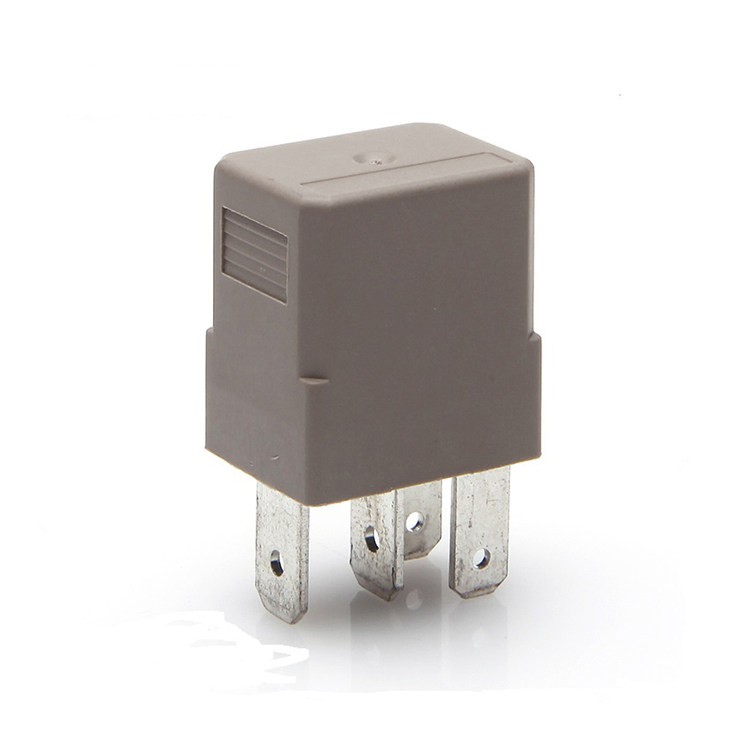
A 4 - Pin Automotive Relay typically consists of an electromagnet, a set of contacts, and a coil. The four pins are divided into two pairs with distinct functions. One pair is related to the coil circuit, and the other pair is for the load circuit.
The coil pins are used to energize the electromagnet. When an electrical current passes through the coil, it creates a magnetic field. This magnetic field is the driving force behind the operation of the relay. The load pins, on the other hand, are connected to the electrical load that needs to be controlled, such as a light, a motor, or a solenoid.
How the Relay Controls Electricity Flow
Let's start with the de - energized state of the relay. In this state, there is no current flowing through the coil. The contacts in the load circuit are either normally open (NO) or normally closed (NC). In a 4 - Pin relay, the most common configuration is a normally open contact. This means that when the relay is not energized, there is no electrical connection between the two load pins, and thus, no current can flow through the load.
When a voltage is applied to the coil pins, a current starts to flow through the coil. As the current passes through the coil, it generates a magnetic field around the coil. This magnetic field attracts a movable armature inside the relay. The movement of the armature causes the contacts in the load circuit to close. Once the contacts are closed, an electrical connection is established between the two load pins, allowing current to flow through the load.
For example, consider a situation where you want to control the headlights of a car. The low - power control circuit, such as the switch on the dashboard, can be connected to the coil pins of the relay. When you turn on the headlight switch, a small current is sent to the coil of the relay. This small current is sufficient to energize the coil and close the contacts in the load circuit. The load circuit, which is connected to the high - power headlight bulbs, then allows a large current to flow through the headlights, illuminating them.
Conversely, when the voltage applied to the coil pins is removed, the current through the coil stops. Without the magnetic field, the movable armature returns to its original position due to a spring mechanism. The contacts in the load circuit open again, interrupting the flow of current through the load. In our headlight example, when you turn off the headlight switch, the relay de - energizes, and the headlights turn off.
Advantages of Using a 4 - Pin Automotive Relay
One of the main advantages of using a 4 - Pin Automotive Relay is the ability to control a high - power load with a low - power control signal. This is extremely important in automotive applications because it allows the use of small, low - current switches and wiring in the control circuit. For instance, the switch on the dashboard can be designed to handle only a small amount of current, which is much safer and more reliable than directly connecting the high - power load to the switch.
Another advantage is the isolation between the control circuit and the load circuit. The relay provides electrical isolation, which means that any electrical noise or interference in the load circuit will not affect the control circuit. This isolation helps to protect the sensitive electronic components in the control circuit from damage caused by high - power surges or short - circuits in the load circuit.
Applications of 4 - Pin Automotive Relays
4 - Pin Automotive Relays are widely used in various automotive systems. In addition to controlling headlights, they are also used in controlling fuel pumps, cooling fans, power windows, and door locks.
In the case of a fuel pump, the relay ensures that the pump receives power only when the engine is running. The engine control unit (ECU) sends a signal to the coil of the relay. When the engine is started, the ECU energizes the relay, and the fuel pump starts to supply fuel to the engine. When the engine is turned off, the ECU de - energizes the relay, and the fuel pump stops.
For cooling fans, the relay is used to control the operation of the fan based on the engine temperature. A temperature sensor sends a signal to the ECU. When the engine temperature rises above a certain threshold, the ECU energizes the relay, and the cooling fan starts to run. Once the engine temperature drops below the threshold, the ECU de - energizes the relay, and the fan stops.
Different Types of 4 - Pin Automotive Relays
There are several types of 4 - Pin Automotive Relays available in the market, such as 12V Automotive Relay 4 - Pin, 4 - Pin 12V Automotive Relay, and 12V 4 Pin Automatic Relay. These relays are designed to operate at a specific voltage, usually 12V, which is the standard voltage in most automotive electrical systems.
The choice of the relay depends on the specific requirements of the application. For example, if you need to control a high - power load, you may need a relay with a higher current rating. On the other hand, if you are working in a space - constrained environment, you may choose a smaller - sized relay.
Quality and Reliability of Our 4 - Pin Automotive Relays
As a supplier of 4 - Pin Automotive Relays, we understand the importance of quality and reliability in automotive applications. Our relays are manufactured using high - quality materials and advanced production techniques. We conduct rigorous testing on each relay to ensure that it meets the highest standards of performance and durability.
Our relays are designed to withstand the harsh conditions in automotive environments, such as high temperatures, vibrations, and electrical noise. We also offer a wide range of relays with different specifications to meet the diverse needs of our customers.

Contact Us for Your Relay Needs
If you are in the market for high - quality 4 - Pin Automotive Relays, we would be more than happy to assist you. Whether you are an automotive manufacturer, a repair shop, or an individual enthusiast, we can provide you with the right relays for your applications. Contact us today to discuss your requirements and start a procurement negotiation.
References
- Bosch Automotive Handbook, 5th Edition
- Haynes Automotive Manuals
- Delco Remy Electrical Systems Guide