

As a supplier of 3A DC Solid State Relays, I often encounter questions from customers regarding the technical specifications of our products. One of the most frequently asked questions is about the off - state current of a 3A DC Solid State Relay. In this blog post, I will delve into the concept of off - state current, its significance, and how it relates to our 3A DC Solid State Relays.
Understanding the Off - State Current
The off - state current, also known as the leakage current, is the small amount of current that flows through a solid - state relay when it is in the off state. In an ideal relay, there would be no current flow when the relay is off. However, in real - world applications, due to the semiconductor nature of solid - state relays, a small amount of current can still pass through.
This current is typically very small, measured in microamperes (μA). It occurs because of the inherent characteristics of the semiconductor components used in the relay, such as the reverse leakage current of diodes and the leakage current through the isolation barrier.
Significance of Off - State Current
The off - state current is an important parameter for several reasons. Firstly, in applications where power consumption is a critical factor, even a small off - state current can contribute to overall power losses over time. For example, in battery - powered devices, minimizing the off - state current can significantly extend the battery life.
Secondly, in sensitive electronic circuits, the off - state current can cause interference or false triggering. If the leakage current is too high, it may be misinterpreted as a valid signal by the connected circuitry, leading to incorrect operation.
Off - State Current in 3A DC Solid State Relays
For our 3A DC Solid State Relays, the off - state current is carefully controlled during the manufacturing process. We strive to keep this current as low as possible to meet the requirements of various applications.
The off - state current of our 3A DC Solid State Relays is typically in the range of a few microamperes. This low value ensures that the relays consume minimal power when in the off state and do not cause significant interference in the connected circuits.

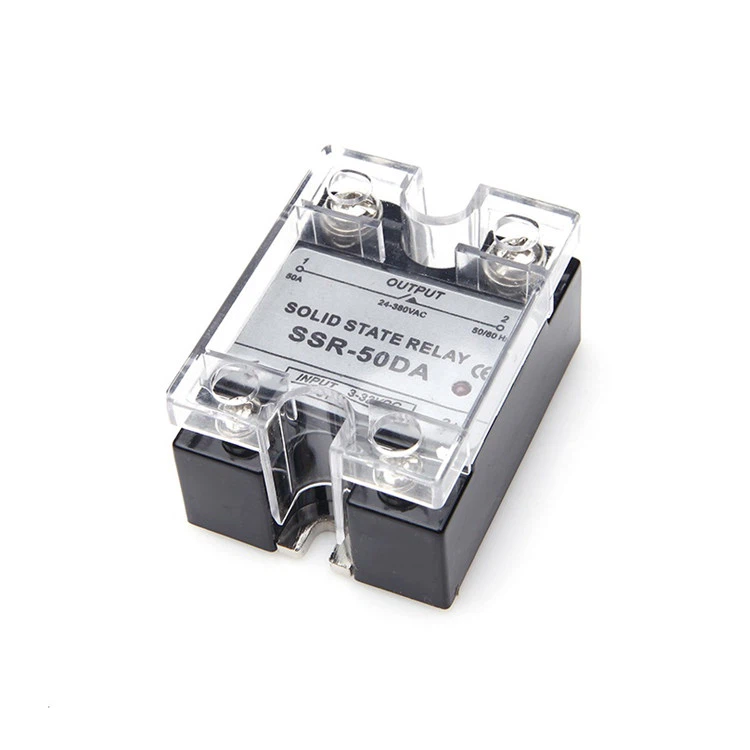
Factors Affecting Off - State Current
Several factors can affect the off - state current of a 3A DC Solid State Relay. Temperature is one of the most significant factors. As the temperature increases, the off - state current also tends to increase. This is because the semiconductor materials become more conductive at higher temperatures, leading to increased leakage current.
The applied voltage across the relay is another factor. Generally, as the voltage increases, the off - state current may also increase slightly. However, our relays are designed to maintain a relatively stable off - state current over a wide range of operating voltages.
Applications and the Role of Off - State Current
Our 3A DC Solid State Relays find applications in a variety of fields, such as automation, industrial control, and automotive electronics.
In automation systems, the low off - state current of our relays is crucial for energy - efficient operation. These systems often run continuously, and minimizing power consumption can lead to significant cost savings. You can learn more about the best solid - state relays for automation at Best Solid State Relay For Automation.
In automotive electronics, where space and power are at a premium, the small off - state current helps in reducing the overall power demand of the vehicle's electrical system.
Mini solid - state relays, which are a part of our product line, also benefit from low off - state current. These relays are often used in compact electronic devices where power efficiency is essential. Check out our Mini Solid State Relays for more information.
Comparison with Other Relays
When compared to mechanical relays, solid - state relays generally have a higher off - state current. However, they offer several advantages such as faster switching times, longer lifespan, and no moving parts, which make them more suitable for many modern applications.
In comparison to higher - current solid - state relays, our 3A DC Solid State Relays have a relatively lower off - state current. For example, a 100A Dc Solid State Relay may have a higher off - state current due to the larger semiconductor components and higher power handling capabilities.
Testing and Quality Assurance
At our company, we conduct rigorous testing on all our 3A DC Solid State Relays to ensure that the off - state current meets the specified standards. We use advanced testing equipment to measure the off - state current under different conditions of temperature and voltage.
Each relay is tested individually before leaving the factory, and only those that meet our strict quality criteria are approved for sale. This ensures that our customers receive reliable and high - quality products.
Conclusion
The off - state current of a 3A DC Solid State Relay is an important parameter that affects power consumption, interference, and the overall performance of the relay. Our company is committed to providing high - quality 3A DC Solid State Relays with low off - state current to meet the diverse needs of our customers.
If you are interested in our 3A DC Solid State Relays or have any questions regarding off - state current or other technical specifications, we encourage you to contact us for a procurement discussion. Our team of experts is ready to assist you in finding the right solution for your specific application.
References
- Solid - State Relay Handbook, published by industry experts.
- Technical papers on semiconductor device physics and solid - state relay design.