


You often see relay faults at industrial sites. The most common problems are sticking contacts, coil burnout, corrosion, and open circuits. These problems can stop machines. They can also mess up work schedules. Troubleshooting step by step helps you find and fix problems fast. This lowers downtime and keeps everyone safe.
Watching things closely in dangerous places helps you find dangers before they hurt people or break things.
|
Evidence |
Description |
|---|---|
|
HSEMS Impact |
Using systems like Health, Safety, and Environmental Management Systems (HSEMS) can lower injury rates and make safety better. |
|
Safety Management Systems |
Using Safety Management Systems (SMS) is linked to fewer injuries in the refining and petrochemical fields. |
Knowing the types of relays and how they break helps you fix them better.
Key Takeaways
Check and clean relays often to stop contacts from sticking and other problems. This helps machines work well.
Learn about relay types, like electromechanical and solid-state, to pick the best one for your job. This stops machines from breaking down.
Use simple steps to fix common relay problems, like coil burnout and corrosion. This makes repairs faster and cuts down on lost time.
Install relays the right way and control heat and moisture. This keeps relays safe and helps them last longer.
Write down all checks and repairs. This helps you see problems early and stop them from happening again.
Types of relays in industry
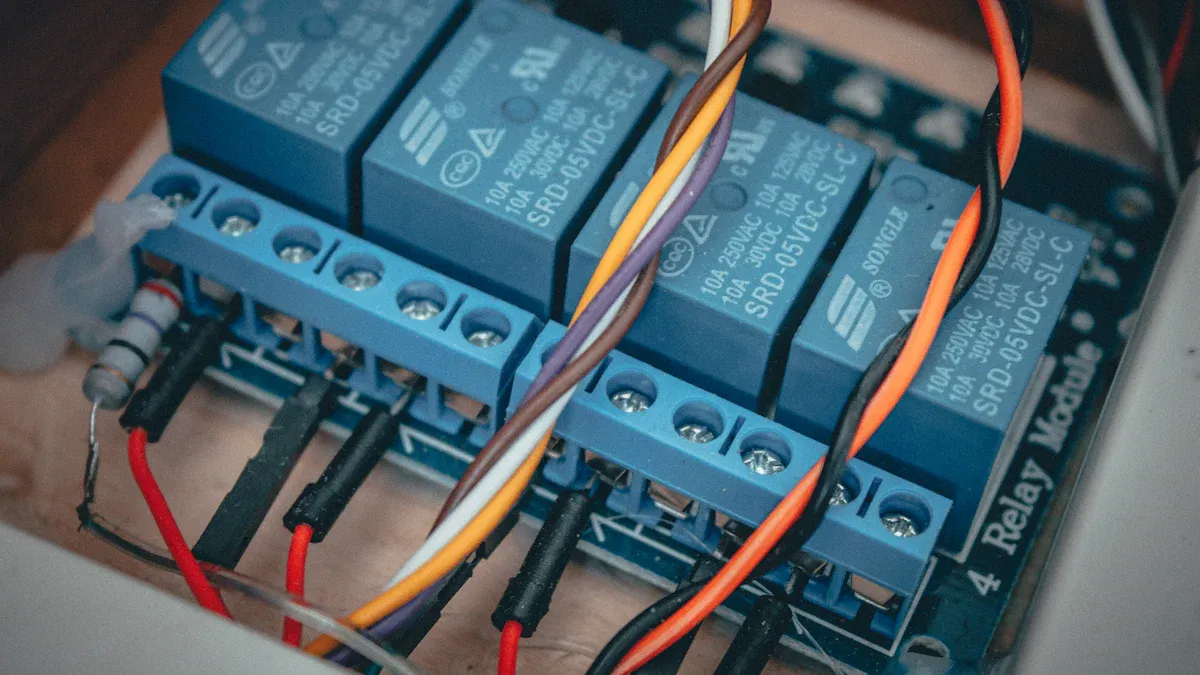
Relays help control machines and keep things safe. There are different kinds of relays in factories. Each relay type is good for certain jobs.
Electromechanical relays
Electromechanical relays have a coil and moving contacts. They are common because they are cheap and simple. These relays control motors, pumps, and conveyor belts. You can use them to turn things on or off. Reed relays are a special kind of electromechanical relay. They switch faster and last longer. But they can break if there is too much electricity.
Electromechanical relays: Good for most jobs and not expensive.
Reed relays: Switch fast and last long, but can break from sparks.
Solid state relays
Solid state relays use electronic parts, not moving contacts. They switch faster and keep electricity separated better. These relays are great for fast jobs, like robots or machines that move by themselves. They cost more at first, but they last longer and do not need much fixing. Solid state relays can break if too much electricity flows through them, so you need to protect them.
Solid state relays: Fast and strong, good for smart machines.
Used in lights, computer rooms, and green energy systems.
Safety relays
Safety relays make sure machines work safely. You use them where mistakes can hurt people, like emergency stops or safety doors. These relays check signals and stop machines if something is wrong. Safety relays need more wires, but they help stop accidents.
Safety relays: Very important for safety in dangerous places.
Used in cars, controllers, and power protection.
If you know the differences between relay types, you can find problems faster. You can pick the right test and fix things before machines stop.
|
Relay Type |
Advantages |
Limitations |
|---|---|---|
|
Electromechanical |
Easy to use, cheap, and works well |
Slower, wears out over time |
|
Solid State |
Fast, strong, keeps electricity apart |
Costs more, can break from surges |
|
Safety Relays |
Keeps people safe in risky jobs |
Needs more wires and circuits |
Relays are important in making things automatic. You use them to run motors, pumps, and conveyor belts. When you know how each relay works, you can fix problems fast and keep everything working.
Common relay faults
Relay faults can make machines stop and cause safety risks. You should know what signs to look for and what causes them. This helps you fix problems fast. Here are some common relay faults you might see in industrial sites.
Sticking contacts
Sticking contacts happen when relay contacts do not move right. The relay can get stuck in one spot. Dirt, debris, or too much electricity can cause this. Arcing can hurt the contacts and make them stick.
|
Symptoms of Sticking Contacts |
Operational Issues |
|---|---|
|
Relay stuck in the on position |
No power goes to the device |
|
Relay stuck in the off position |
Device may get too hot |
|
Dirt or debris on moving parts |
Arcing can damage contacts and stop work |
|
Damaged contact |
|
|
Electrical overload |
Troubleshooting steps:
Look for dirt or debris near the contacts.
Check for burned spots or arcing.
Clean the contacts with cleaner.
Replace contacts if cleaning does not help.
Make sure the relay is not overloaded.
Tip: Clean and check relays often to stop sticking contacts and save time.
Coil burnout
Coil burnout means the relay coil does not work anymore. You might smell burning or see the relay not switch. Too much current, heat, or wrong voltage can burn the coil.
Symptoms:
Relay does not turn on.
Coil feels hot or smells burnt.
No click when you turn on power.
Possible causes:
Too much current in the coil.
Wrong voltage used.
Bad cooling or blocked airflow.
Troubleshooting steps:
Use a multimeter to check coil resistance.
Make sure you use the right voltage.
Look for signs of overheating.
Replace the coil if it is broken.
Blocked pipes or radiators can make things too hot.
Pump problems can stop cooling and burn the coil.
Not taking care of machines can make overheating worse.
Corrosion and moisture
Corrosion and moisture can hurt relay parts. High humidity and dirty air can make metal rust and ruin insulation. Moisture can cause electricity to leak and make devices fail.
|
Evidence |
Description |
|---|---|
|
Corrosion and oxidation |
High humidity can make metal parts in relays rust and break, causing problems and safety risks. |
|
Insulation degradation |
Moisture can ruin insulation in relays, making it easier for electricity to jump and cause trouble. |
|
Electrical leakage |
Water inside solid state relays can make electricity leak, which can break devices, especially in wet places. |
|
Safety hazards |
High humidity can cause safety risks, stop work, and cost more to fix. |
|
Component degradation |
Moisture and dirty air can make harmful stuff that weakens relay parts and makes them work worse. |
Troubleshooting steps:
Look for rust or color changes on metal parts.
Check for water inside the relay.
Test insulation with a meter.
Dry the relay and clean rusty parts.
Make air flow better and lower humidity.
Note: Keeping relays dry and clean helps stop corrosion and moisture problems.
Loose connections and open circuits
Loose connections and open circuits can stop relays from working. Devices may not turn on or off like they should. Wires might be loose or broken.
Symptoms:
Relay does not switch.
Devices do not work.
Voltage drops or changes
.
Troubleshooting steps:
Set your multimeter to resistance and check coil terminals. If resistance is endless, the circuit is open.
Test if relay terminals connect with and without power.
Make sure the control signal matches the relay voltage.
Check for voltage drops in the load circuit to find loose wires.
Test the relay on a bench if you cannot find the problem at the site.
Tip: Tighten all wires and change broken ones to stop open circuits.
Solid state relay faults
Solid state relays do not have moving parts, but they can still break. Overheating and bad cooling are common problems. High current can make the relay too hot and stop it from working.
|
Relay Type |
Unique Failure Modes |
Key Characteristics |
|---|---|---|
|
Solid-State Relays (SSRs) |
Hard to cool, can get too hot with high current |
No moving parts, last longer, less wear |
|
Electromechanical Relays (EMRs) |
Contacts wear out, arcing, parts break |
Wear out faster, need more care, do not last as long |
Symptoms:
Relay does not switch or gets stuck.
Device does not work.
Relay feels hot.
Troubleshooting steps:
Look for signs of overheating.
Make sure cooling works well.
Use a thermal camera to find hot spots.
Change the relay if it breaks under load.
Make cooling better and lower current if needed.
Tip: Good design and regular checks help stop overheating in solid state relays.
Safety relay faults
Safety relay faults can be very dangerous. You might see operation faults, release faults, coil burning, contact welding, or humming. These problems can stop safety systems and put people at risk.
|
Fault |
Probable cause |
Countermeasures |
|---|---|---|
|
Operation fault |
Wrong coil voltage, bad wiring, no input signal, power drop, circuit voltage drop, voltage goes up, coil breaks |
Use the right voltage, check voltage at coil, test relay by itself |
|
Release fault |
Input signal off, sneak current, leftover voltage, delay, contact welding |
Check voltage at coil, look for welded contacts |
|
Coil burning |
Wrong voltage, wrong coil voltage, coil layers short |
Check voltage at coil, use right voltage |
|
Contact welding |
Too much load, switching too often, load circuit short, bad switching, relay is old |
Check load, count switches |
|
Contact failure |
Contacts rust, wear out, terminals move |
Check air, use right relay |
|
Abnormal contact consumption |
Wrong relay, load too small, no protection circuit |
Use right relay, add spark protection |
|
Humming |
Not enough voltage, power ripple, wrong voltage, slow voltage rise |
Check voltage at coil, check ripple |
Troubleshooting steps:
Check voltage at coil terminals.
Test relay with the right input signal.
Look for welded or worn contacts.
Use the right relay for the job.
Add spark protection if needed.
Safety relays keep people and machines safe. Fix faults fast to protect everyone.
Relay faults can happen for many reasons. Watch for signs like sticking contacts, coil burnout, corrosion, loose wires, overheating, and safety relay problems. Regular checks, cleaning, and care help you stop these problems and keep your site working well.
Troubleshooting process
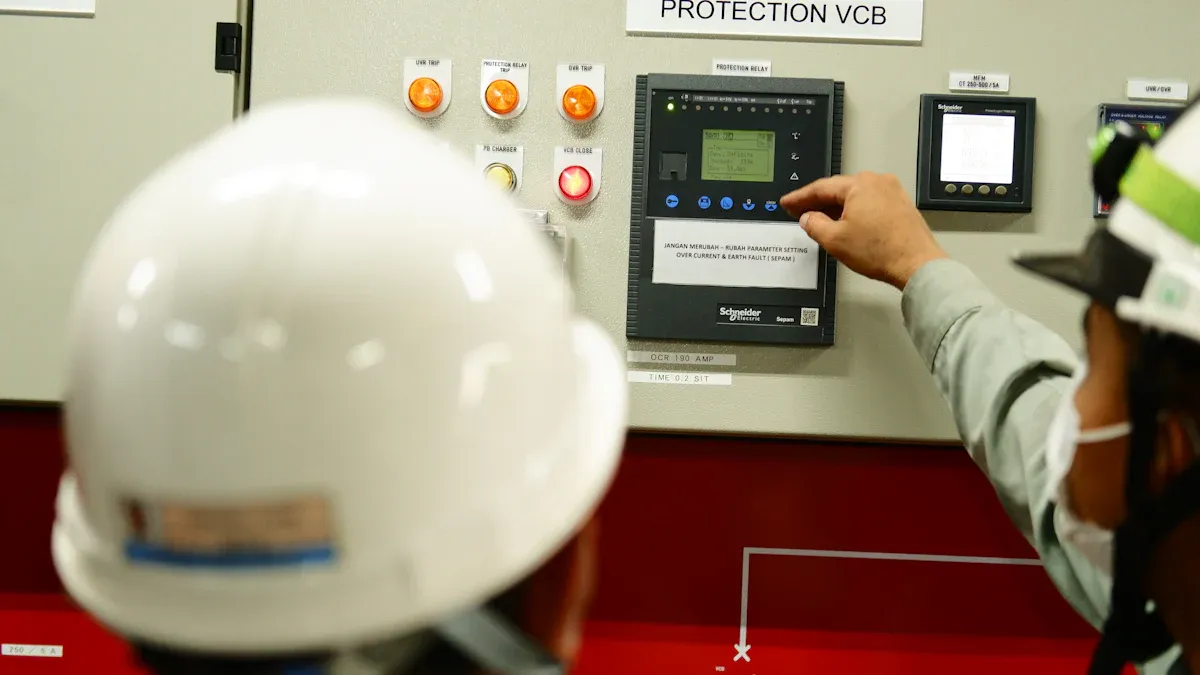
Observation and symptom identification
First, look closely at the relay and nearby equipment. Check for burn marks, rust, or loose wires. Listen for buzzing or clicking sounds. Smell for anything burning. Carefully touch the relay to see if it feels hot. Always be careful when touching. Write down everything you notice. This helps you remember all the details later.
Tip: Use your eyes, ears, nose, and hands to find clues. Careful checking helps you spot problems early.
Steps for symptom identification:
Look for damage, heat, or strange noises.
Use all your senses to gather clues.
Write down every problem you find.
Defining the problem area
After you find symptoms, figure out where the problem is. Think about how the equipment should work. Make a list of all the problems you see. Do not just focus on the first thing you notice. Write down all possible causes. Decide which cause is most likely. Test each idea until you find the real problem.
Best practices:
Learn how the equipment should work.
List all symptoms before fixing anything.
Think of all possible causes and test them one by one.
Safety tip: Never use your hands to check for leaks. This can hurt you badly.
Testing and diagnostic tools
You need the right tools to test relays. Some tools help you find faults fast. Others let you test relays in the field or in the shop.
|
Diagnostic Tool |
Advantages |
|---|---|
|
Protective Relay Testers |
Pretend there is a fault to check relay response. |
|
Multi-Function Relay Testers |
Test many relay types with one tool. |
|
Portable Relay Testers |
Easy to carry for testing outside. |
|
Secondary Injection Testers |
Test relay without changing the main system. |
Component replacement
If you find a broken part, you need to change it. No clicking sound, contacts not moving, or burn marks mean new parts are needed. Use a multimeter to check coil resistance. Make sure the power supply gives the right voltage. Test the relay in normal conditions before you finish.
Checklist for replacement:
Check coil resistance with a meter.
Make sure the power supply has the right voltage.
Look for broken parts or burn marks.
Test the relay to see if it works right.
Retesting and verification
After fixing or changing a relay, test everything again. Check the relay model and wiring. Look at settings and diagrams. Use test signals and watch how the relay works. Make sure the relay can trip breakers and send signals to control systems. Write down your results and get approval before using the relay again.
|
Step |
Description |
|---|---|
|
Inspection and Documentation |
Check relay model, ratings, and wiring. Look at diagrams. |
|
Functional Testing |
Use test signals and watch for correct work. |
|
Trip Circuit Testing |
Make sure relay can trip breakers. |
|
Communication Check |
Test relay signals with control systems. |
|
Final Reports |
Write down results and get approval. |
|
Checklist Before Commissioning |
Make sure all tests and settings are done before starting. |
Note: Careful retesting keeps your system safe and working well.
Preventive best practices
Regular inspection and cleaning
Relays last longer when you check and clean them often. Dust, dirt, and water can build up and cause trouble. Clean relay contacts and test sensors on a set schedule. Cleaning and adding oil stops dirt from causing problems. Change old or broken parts before they fail. Training helps workers spot problems early.
|
Maintenance Activity |
Frequency Recommendation |
|---|---|
|
Visual Inspections |
Do these often, based on how things run |
|
Functional Testing |
Do these sometimes, to make sure things work |
|
Performance Assessments |
Do these when needed, to catch problems |
Tip: Using smart tests and data helps you find weak relays before they break.
Proper installation and wiring
Install relays and wires the right way to stop problems. Not enough voltage makes the armature shake and spark. Hot and wet places make coils wear out faster. Broken springs or worn parts make relays work badly. Shaking can loosen wires, and chemicals can hurt metal. Follow wiring guides, use good parts, and check wires during checks.
Use the right voltage to stop shaking.
Keep relays safe from heat and shaking.
Seal boxes to keep out chemicals.
Test and watch systems often.
Environmental controls
Control heat and wetness to protect relays. Sensors watch for changes and help you act fast. Wet air causes rust and breaks parts, costing more money. Use dehumidifiers, heaters, and air systems to keep things steady. Seal equipment well and use the right rating to block water.
Use heaters and air systems to control heat and wetness.
Seal boxes to keep out water.
Add heaters to stop water drops inside.
Note: Watching the environment helps you stop expensive problems and keeps work going.
Documentation and records
Good records help you stop problems from coming back. Writing things down shows what was fixed and helps you see patterns. Organized notes remind you to check and change parts. Careful logs help you plan fixes and stop breakdowns. When you keep good records, you can fix small problems before they get big.
Write down what you fix for each relay.
Plan checks using old records.
Use notes to find and fix repeating problems.
Keeping good records helps you stop trouble and keep systems safe and working well.
Relay faults can make things unsafe and break equipment. They can also cause systems to stop working. If you follow steps to fix problems, you can fix things faster. This helps save money and time. Checking relays often helps you find problems like rust and too much heat early.
Preventive maintenance helps you find dangers before things break.
Regular checks help machines keep working.
New relay types, like solid-state relays and AI upgrades, make relays work better and safer.
|
Feature |
Benefit |
|---|---|
|
Microprocessor Integration |
Does many protection jobs, works better |
|
Remote Access |
Watch from anywhere, saves money on repairs |
|
AI and ML Enhancements |
Finds problems smarter, helps fix before breaking |
Learn new things and practice often to keep
your site safe and working well.
FAQ
What tools do you need to test relays?
You need a multimeter, relay tester, and screwdriver. Use a thermal camera to check for overheating. These tools help you find faults fast.
How often should you inspect relays?
Check relays every month. Clean contacts and look for rust or dirt. Write down what you find. Regular checks help you catch problems early.
Can you fix a relay with sticking contacts?
Yes. Clean the contacts with contact cleaner. Remove dirt and debris. If cleaning does not help, replace the contacts. Always turn off power before you start.
What causes relay coils to burn out?
Too much current or wrong voltage burns coils. Poor cooling also causes overheating. Use the right voltage and keep the area cool to protect coils.
How to Avoid Relay Shaking: Complete 2025 Guide to Fix Jitter
Why Place a Capacitor on the Relay Coil? Circuit Protection Guide
How to Reduce Arcing on Relay Contacts: Engineer's Guide 2025
Why Place a Diode on the Relay Coil? Complete Flyback Protection Guide