

You need to choose the right relay. Match its type and specs to your load, control signals, and where you use it. If your machine stops because the relay fails, you may have costly downtime and need quick repairs. Choosing the right relay affects safety and how well things work. If you choose the wrong relay, you could experience overheating, bad switching, or even damage your equipment.
Matching voltage and current ratings to your system prevents failures.
Picking the right contact material and coil resistance enhances performance.
Keeping your relay in good shape can reduce downtime and save money.
You will receive a helpful guide to choose the right relay for your needs.
Key Takeaways
Make sure the relay's voltage and current fit your system. This helps stop problems and keeps things safe.
Pick the right relay type for your job. Use electromechanical for big loads. Use solid-state for lots of switching.
Look at things like temperature, humidity, and vibration. This helps the relay work well where you put it.
Test control signals and how often you switch. This makes sure everything works together and stops early damage.
Use a relay checklist to help you avoid mistakes. This keeps your system working well and safe.
What is a relay and why relay selection matters

Relay basics
A relay helps you control electrical circuits. It works like a switch. You can turn devices on or off from far away. You use a small signal to control big voltages or currents. This keeps you safe and protects your equipment. Relays help you follow safety rules. They keep control circuits and power circuits apart.
Most relays have four main terminals. These are coil, common, normally open (NO), and normally closed (NC). The coil connects to a low-power source. When you send a signal to the coil, it makes a magnetic field. This field moves the switch inside the relay. You can use different relays for different jobs. For example, you can start machines in factories, control car lights, or manage power in substations.
Here are some main jobs of a relay:
You control big voltages or currents with small signals.
You keep circuits apart for safety and remote control.
You automate switching in safety systems and machines.
Risks of poor relay choice
If you pick the wrong relay, you can have big problems. You must match the relay to your job and follow safety rules. Using the wrong relay can break your equipment or cause danger.
|
Consequence Type |
Description |
|---|---|
|
Underrated Relay |
Contacts can stick together, fail early, cause fire, damage motors, or make motors hard to start |
|
Overrated Relay |
Costs more, protects motors poorly, switches badly, wastes space |
You can avoid these risks by checking relay ratings. Make sure you use the right relay for your job. Always pick relays that meet safety rules for your area. If you choose well, your equipment stays safe and your system works smoothly.
Identify application requirements
You need to know what your application needs before picking a relay. This step stops expensive mistakes. It also makes sure your relay works safely and well.
Define load (AC/DC, voltage, current)
First, check what kind of power your load uses. Is it AC or DC? AC and DC loads have different voltage and current ratings. Look at the table below to compare:
|
Aspect |
AC Loads |
DC Loads |
|---|---|---|
|
Current Rating |
Generally lower |
Generally higher |
|
Switching Circuit Ratings |
Different specifications needed |
Different specifications needed |
|
Load Ratings |
Varies by application |
Varies by application |
|
Operation |
One FET with diode |
Two FETs in parallel |
Check if the relay can handle the highest voltage and current. If you skip this, your relay might fail early or work unsafely.
Control signal compatibility
Your relay must match your control system. Some relays need a certain voltage to turn on or off. Use this table to see how voltage changes the relay state:
|
Mode |
Voltage Across Relay |
Relay State |
|---|---|---|
|
Output-Low |
4.5V or 3.7V |
Turns on |
|
Input Mode |
Close to 0V |
Turns off |
|
Output-High |
1.5V or 1.2V |
Unknown |
Tip: Always test your relay with your control signals first. Make sure each digital input and output works as you expect.
Switching frequency and lifespan
Think about how often your relay will switch. High switching frequency can wear out some relays faster. Electromechanical relays are good for low-frequency jobs. Solid-state relays last longer with high-frequency switching. The table below shows how long relays usually last:
|
Relay Type |
Mechanical Life (cycles) |
Electrical Life (cycles) |
|---|---|---|
|
Electromechanical Relays |
100,000 - 1,000,000 |
100,000 - several million |
|
Reed Relays |
Hundreds of millions |
N/A |
|
Solid-State Relays |
Hundreds of millions |
N/A |
Environmental and physical constraints
Your relay must survive where you use it. Check temperature, humidity, vibration, and space. Use this table to help you choose:
|
Constraint |
Description |
|---|---|
|
Operating Environment |
Temperature, humidity, corrosive substances, vibration |
|
Mechanical Durability |
Relay's operational lifespan and ability to withstand frequent switching |
|
Surge Current Durability |
Ability to handle maximum inrush current without damage |
Note: Many people forget to check voltage stability and connection strength. Loose connections or high humidity can cause problems. Good maintenance and climate control help your relay last longer.
Relay types overview
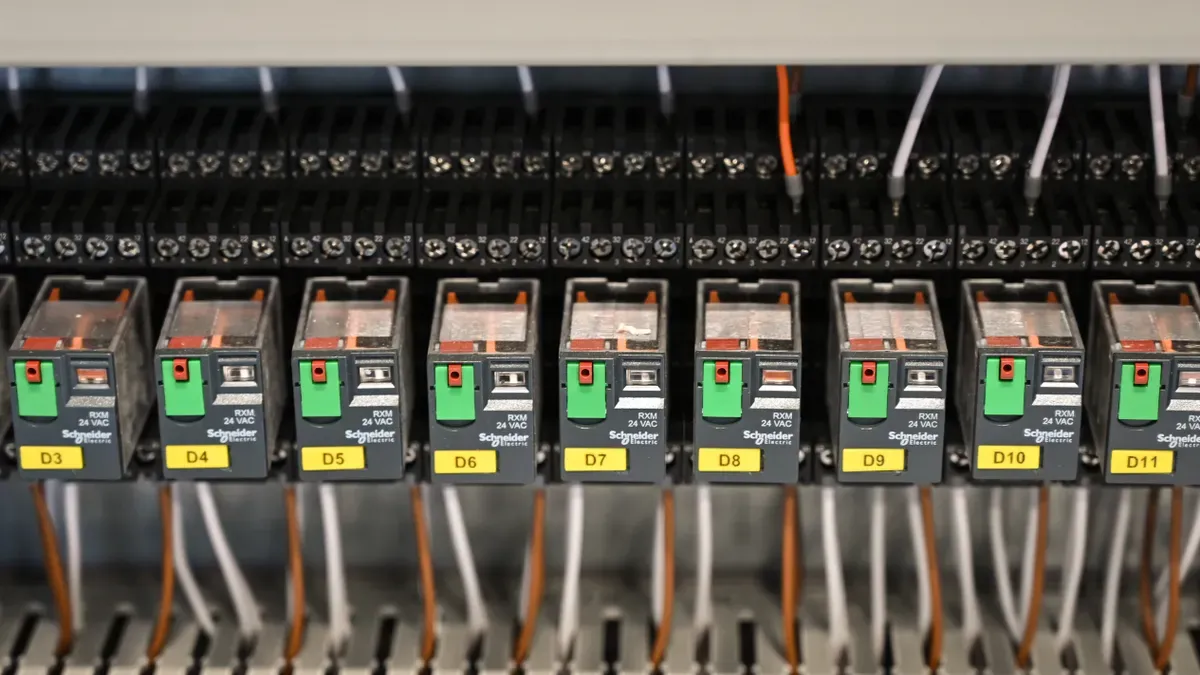
When picking a relay, you should know the main types. Each type works in its own way. Some are better for certain jobs than others. Your project will help you choose the right relay.
|
Relay Type |
Advantages |
Disadvantages |
Typical Applications |
|---|---|---|---|
|
Electromechanical Relay |
High switching capacity, robust, reliable |
Moving parts can wear out, slower switching speed |
General applications, high voltage/current |
|
Reed Relay |
Fast response, high reliability, good isolation |
Limited switching power |
Telecommunications, automotive, medical |
|
Solid State Relay (SSR) |
Faster switching, longer life, silent operation |
Sensitive to voltage spikes |
Motor control, industrial automation |
|
FET Relay |
Extremely fast switching, low power consumption |
Limited current/voltage ratings |
High-frequency, low-power applications |
Electromechanical relays
Electromechanical relays are used in many places. They have moving parts that open and close contacts. These relays can handle big voltages and currents. You can use them for motors, lights, and power systems. They last a long time but can wear out from use. If you need to switch heavy loads, this relay is a good choice.
Reed relays
Reed relays have thin metal reeds inside a glass tube. They switch on and off very quickly. They also keep circuits well separated. You see them in phones, cars, and medical tools. Reed relays are best for fast and reliable switching. They cannot handle large amounts of power.
Solid state relays (SSR)
Solid state relays do not have moving parts. They use electronics to switch circuits. SSRs switch faster and last longer than electromechanical relays. You find them in motor controls and factory machines. SSRs are good for quick and quiet switching. They need protection from voltage spikes in tough places.
FET relays
FET relays use field-effect transistors to switch circuits. They switch extremely fast and use little energy. You can use them in test gear or for switching signals. FET relays are not for high power or voltage. They are best for small and quick jobs.
Tip: Your project decides which relay you need. For fast switching, try solid state or reed relays. For heavy loads, use electromechanical relays. Always pick the relay that fits your system.
Choose the right relay: key selection criteria
When you pick a relay, you need to look at many things. Each thing helps you find the best relay for your job. This guide helps you make sure your relay works safely and well.
Contact configuration and ratings
Check the contact setup and ratings before picking a relay. Contact ratings show how much current and voltage the relay can handle. Switching capacity tells you if the relay can stop the current without breaking. High-power jobs need relays with higher ratings than your load. This stops problems from strong currents or sparks.
Here is a table that shows common contact setups and ratings for industrial relays:
|
Relay Type |
Characteristics |
|---|---|
|
Electromechanical Relays |
Bigger contact points, shorter lifetimes, good price for factories. |
|
Reed Relays |
Smaller contacts, longer life, can get damaged by sparks. |
|
Solid State Relays |
Switch fast, can get hurt by strong currents. |
Contact ratings tell you the most current and voltage a relay can handle.
Switching capacity shows if the relay can stop current safely.
High-power jobs need relays with ratings above your load.
Industrial relays use coils, switches, and features like arc suppression. You must think about coil voltage, contact ratings, how often you switch, and contact resistance. Contact materials like silver or gold help the relay last longer. Mechanical things like contact separation and hardness help with insulation and stop welding.
Coil voltage and power
Coil voltage and power are very important when picking a relay. You must match the relay's coil voltage to your control system. If you use the wrong voltage, the relay may break, get too hot, or act strange. Many systems use 24-volt AC loops, but new systems may use 5 or 12 volts DC. Always check coil ratings, pickup voltage, and dropout voltage.
|
Relay review item |
What to look for |
Why it matters |
|---|---|---|
|
Control voltage or input type |
AC or DC input, normal voltage, tolerance, pickup voltage, dropout voltage, and control power. |
A wrong coil or input can chatter, not work, get hot, or stay on when it should turn off. |
You must also check if the relay can handle strong currents. The coil type and contact material help with efficiency and life. Picking the right relay stops failures and keeps your system safe.
Tip: Always check your control voltage and power before you put in a relay. This stops overheating and keeps your system working.
Switching and surge current
Switching and surge current ratings are important for relay performance. Surge ratings show if the relay can handle short strong currents without breaking. You must compare the relay's surge rating with the expected strong current. Picking the right relay protects your system from problems.
Resistive loads have the highest ratings because they cause small voltage spikes.
Inductive loads have lower ratings because of back-EMF and sparks.
AC categories change ratings based on load type and strong current.
Surge ratings help you make sure the relay can handle the strongest surge. This step makes your relay last longer and work better.
Size, mounting, and heat dissipation
Size, mounting, and heat control affect how you install and use a relay. You must pick a relay that fits your space and mounting needs. Solid state relays need good heatsinks. Heatsinks help control the biggest load current and room temperature. Do not put SSRs in closed boxes without airflow. Mount heat sinks upright to help with cooling.
Note: Watch the base temperature of your relay. If it goes over 45 degrees Celsius, you need better cooling. This keeps your relay working well.
Isolation and safety standards
Isolation and safety rules are very important for medical or factory jobs. Medical devices need isolation barriers that are better than the minimum. Strong insulation and good distances are needed for high voltages. Following IEC 60601-1-2 makes sure your relay works with other devices.
Medical isolation usually needs 4000V or more.
Leakage currents must be less than 10μA for patient equipment.
Relays should have safe operation modes for safety.
Manufacturers test and certify relays for safety and reliability. Relay injection testing checks performance by sending controlled signals. Engineers test fault conditions to make sure relays work right.
|
Testing Method |
Description |
Benefits |
|---|---|---|
|
Relay Injection Testing |
Checks relay performance by sending controlled electrical signals. |
Makes electrical equipment safer, more efficient, and reliable. |
|
Simulation of Fault Conditions |
Engineers test fault conditions to make sure relays work right. |
Checks design ideas and makes sure relays work within limits. |
Callout: Relay testing and setup checks wiring, logic, and response time. This step makes sure your relay works safely.
Environmental ratings
Environmental ratings help you pick the right relay for tough places. You must check the relay's protection level. NEMA ratings show how well the relay can handle dirt, rain, snow, ice, and rust.
|
NEMA Rating |
Protection Level |
Suitable for Outdoor Use |
|---|---|---|
|
NEMA 1 |
Stops dirt and debris |
No |
|
NEMA 4/4X |
Stops rain, snow, ice, rust, dirt, and accidental touch |
Yes |
You must pick a relay with the right environmental rating for your job. This step protects your relay from damage and keeps your system running.
Tip: Always check environmental ratings before you put a relay outside. This stops failures from weather and dirt.
When you pick a relay, you must look at contact setup, coil voltage, switching and surge current, size and mounting, isolation and safety rules, and environmental ratings. Each thing helps you find the best relay for your needs and keeps your system safe.
Relay selection guide: checklist and decision table
Quick checklist to choose a relay
You can use this relay selection guide to help you pick the right relay. This checklist helps you avoid mistakes and keeps your system safe.
Check what kind of load you have. Write down if you use AC or DC. Measure the voltage and current.
Find the highest current when you start your device. Some things, like motors or lamps, need more current at the start.
Decide how many times you will switch the relay. If you switch a lot, some relays can wear out faster.
Choose the contact setup. Pick SPDT, DPDT, or another type that fits your circuit.
Match the coil voltage and power to your control signal.
Look at how much isolation you need. Make sure the relay keeps control and power circuits apart.
Think about where you will use the relay. Check the temperature, humidity, and if there is dust or shaking.
Make sure the relay fits in your space and matches your mounting style.
Check if you need arc suppression for your contacts.
Review how long you want the relay to last. Make sure the relay will last as long as you need.
Tip: Always use a relay selection guide before you buy or put in a relay. This step helps you avoid common problems and keeps your equipment working.
Example decision table for common uses
You can use this relay selection guide table to compare different jobs. This table shows how switching a lot can make relays wear out faster. It helps you pick a relay that fits your needs.
|
Application Type |
Switching Frequency |
Expected Relay Lifespan |
Recommended Relay Type |
|---|---|---|---|
|
HVAC Compressor |
4 cycles/hour |
14 years |
Electromechanical Relay |
|
Process Control |
1 cycle/minute |
Less than 1 year |
Solid State Relay |
|
Temperature Control |
6 cycles/minute |
2 months |
Solid State or Reed Relay |
You can see that switching a lot makes relays not last as long. For jobs with many cycles, solid state relays or reed relays are best. For jobs with fewer cycles, electromechanical relays last longer.
This relay selection guide gives you an easy way to compare and pick a relay for your project.
You can pick the right relay if you follow some simple steps: First, find out your voltage, current, and what kind of load you have. Next, choose the contact setup and coil voltage that work for your system. Then, look at how much current the relay can switch, its size, and how well it keeps circuits apart. Make sure the relay follows safety rules and works in your space.
Always check that the relay's details match your job. Look at datasheets and guides from the company. These papers tell you about timing, ratings, and limits. If you check all these things, you will not make expensive mistakes and your system will stay safe.
FAQ
What happens if you use a relay with the wrong voltage rating?
If you use a relay with the wrong voltage, it may not switch correctly. You could damage the relay or your equipment. Always match the relay's voltage rating to your system.
Can you use a solid state relay for all applications?
No, you cannot use a solid state relay everywhere. Solid state relays work best for fast, frequent switching and low-noise needs. For heavy loads or high surge currents, electromechanical relays work better.
How do you know which contact configuration to choose?
You should check your circuit needs. Use SPDT for one input and two outputs. Use DPDT for two separate circuits. If you feel unsure, check your wiring diagram or ask an expert.
Do relays need regular maintenance?
Yes, you should check relays for wear, dirt, or loose connections. Clean contacts and tighten terminals as needed. This helps your relay last longer and keeps your system safe.