

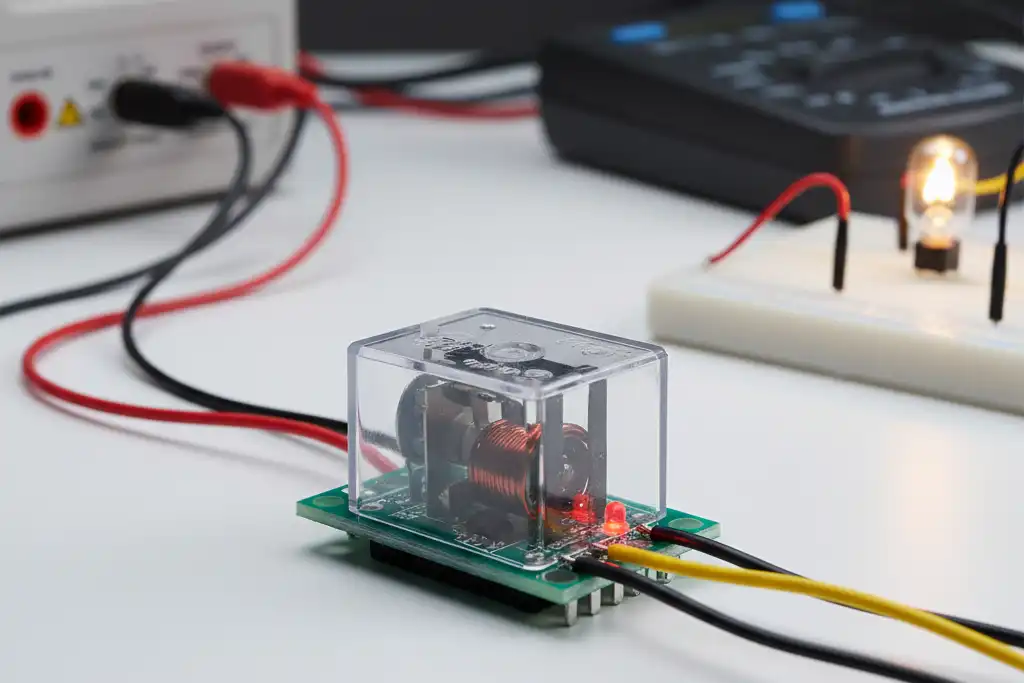
Qualify a second relay supplier by approving the complete product-process-site combination-not by matching a footprint, coil voltage and current label. Freeze the approved relay and real application as the baseline; screen the candidate factory, quality system and compliance scope; compare every critical form, fit and function requirement; test production-representative samples on the actual or justified worst-case load; validate a pilot run; and release the alternate only with traceability and written change-control rules.
The approval object is not just a part number
Record the manufacturer, full model and suffix, drawing revision, approved materials, production site, process route, test limits, packaging, labeling and destination-market approvals. If any controlled element changes, the OEM must decide whether review or requalification is required.
This guide is for OEM sourcing managers, supplier-quality engineers, hardware and power engineers, quality managers, production teams, commodity managers, contract manufacturers and distributors. It focuses on electromechanical PCB, power, plug-in and general-purpose relays. Automotive, railway, medical, safety-related, telecom, high-voltage DC and forcibly guided-contact applications can require additional customer, system and product standards. A component supplier cannot approve the OEM's end-product safety architecture.
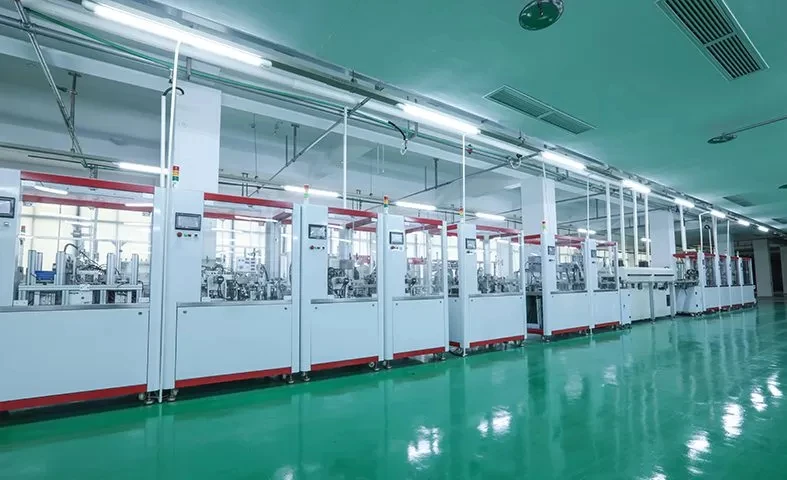
A qualified alternate is tied to an identified production site, process route and control plan. Image: Zhejiang Qianji Relay Co., Ltd.
The Fast Approval Rule: Evidence Before Allocation
A second source reduces supply risk only after it has passed the gates that protect the product. Purchasing can start a search and negotiate capacity, but it should not convert a quotation or sample into production approval. Engineering defines functional equivalence, quality verifies the factory and control system, manufacturing proves assembly compatibility, compliance confirms the exact market scope, and the program owner authorizes the release.
| Candidate state | What is allowed | What is not yet allowed |
|---|---|---|
| Commercially identified | NDA, capability questions, preliminary quotation and evidence request | Prototype substitution, production purchase or AVL approval |
| Pre-screen passed | Controlled sample order, technical gap review and audit planning | Claims of interchangeability or unrestricted customer use |
| Engineering evidence passed | Pilot build using the intended site, tools, materials and test route | Full-rate production before process and traceability evidence closes |
| Limited release | Defined quantity, product, site, market, source segregation and enhanced monitoring | Automatic mixing, site transfer or material substitution |
| Full approved source | Allocation within the written AVL, quality agreement and change rules | Use outside the approved model, suffix, application or compliance scope |
Hard stops are not scorecard deductions. Wrong contact form, failed insulation, unsupported market approval, missing traceability, an uncontrolled factory, a failed load test or an unapproved design change cannot be offset by a low price, short lead time or strong commercial presentation.
What "Second Source," "Dual Source" and "Drop-In" Actually Mean
Teams often use these labels as if they were identical. They are not. A second supplier may be approved only for a named model, factory and customer program. Two approved sources may still need separate allocation and lot identity. A physically compatible relay is not a drop-in replacement until the OEM proves that it meets the defined circuit, assembly, reliability, compliance and service requirements.
| Term | Useful controlled meaning | Dangerous assumption |
|---|---|---|
| Second source | A separately qualified alternate released under stated conditions | Any model from that supplier can replace the incumbent |
| Dual source | Two maintained approvals with allocation, traceability and performance rules | Both parts may be mixed invisibly in every lot and service population |
| Drop-in replacement | A qualified physical and functional substitute for one defined use | Matching pins, volts and amperes prove equivalence |
| Approved vendor list | A controlled supplier-part-site-application approval record | A general company name is sufficient approval detail |
| Deviation | A time- or quantity-limited authorization with risk controls | Emergency use permanently qualifies the alternate |
The cleanest approval record names the legal manufacturer, actual factory, full part number and suffix, current drawing and data-sheet revision, approved materials, critical sub-tier sources, process flow, test route, packaging, labeling and approval files. This prevents a supplier-site or material change from hiding behind an unchanged commercial part number.
Why the Same Relay Rating Is Only a Screen
Relay ratings are conditional. Contact life changes with AC or DC voltage, make and break current, load waveform, inrush, switching frequency, phase, polarity, suppression, ambient temperature and the failure criterion. Panasonic's official relay cautions specifically warn that load conditions, contact materials, waveforms, load type, switching frequency and environment affect contact performance and life. This is why two "10 A, 12 V coil" relays can behave differently in the same OEM product.
| Comparison domain | Evidence to compare | Risk hidden by a headline match |
|---|---|---|
| Contacts and load | Material, geometry, force, gap, bounce, AC/DC load class, inrush, power factor or L/R, duty and endurance condition | Welding, erosion, unstable resistance or failure to interrupt DC inductive energy |
| Coil and magnetics | Resistance basis, power, operate/release voltage, timing, temperature, suppression, polarity and driver waveform | Weak pickup margin, chatter, slow release, driver overload or excess heat |
| Mechanics | Pin geometry, tolerances, coplanarity, socket fit, body clearance, mass, mounting, seal, vent and packing | Assembly damage, wrong terminal mapping, poor retention or enclosure interference |
| Insulation and thermal | Creepage, clearance, dielectric circuits, insulation resistance, materials, ambient, temperature rise and derating | Safety nonconformity, overheating or lost approval conditions |
| Production controls | Critical process windows, adjustment, welding, cleaning, sealing, end-of-line tests, calibration and lot traceability | A good sample masks unstable mass production or silent material changes |
IEC 61810-1:2015 with Amendment 1:2019 defines general and safety requirements for electromechanical elementary relays within its scope and states that application requirements beyond the standard need assessment under the relevant application standards. A component standard helps define evidence; it does not approve the OEM's exact load or end product.
Step 1: Freeze the Approved Baseline and the Real Application
Do not start with a distributor search. Start with the source of truth. Capture the incumbent relay's exact suffix, current drawing, qualification report, production site, approvals, incoming specification, field-return history and known process constraints. Then document the application that the relay actually sees, including the circuit and environmental extremes. If the baseline is vague, the team will compare the alternate against memory, a legacy PDF or a generic family page.
| Baseline file | Minimum content | Primary owner |
|---|---|---|
| Application dossier | Schematic, supply, AC/DC load waveform, inrush, duty, switching rate, ambient, suppression, safety state and field history | Design engineering |
| Approved-source dossier | Full part/suffix, drawing and data revision, factory, approved materials/process, test reports, certificates, packaging and lot code | Supplier quality and sourcing |
| Critical-characteristics register | Electrical, mechanical, insulation, material, thermal, process, marking and traceability requirements with acceptance methods | Cross-functional approval team |
| Risk record | Failure consequence, occurrence, detection, customer/regulatory impact, containment and requalification triggers | Quality and program management |
| Continuity target | Forecast, allocation objective, MOQ, lead time, bottlenecks, tooling ownership, sub-tier exposure and recovery expectation | Procurement and operations |
For the load file, record steady current and the full make/break waveform. State power factor for an AC inductive load or L/R where applicable for DC. Include polarity, suppression, switching frequency, on/off duration, worst supply, coil drive and temperature. A bench resistor does not represent a motor, solenoid, transformer, lamp driver or capacitor input.
Step 2: Classify Risk Before Setting the Test Depth
Qualification depth should follow failure consequence and uncertainty. A low-consequence indicator relay with strong existing evidence does not need the same release plan as an unattended heater, compressor, actuator, remote field device, vehicle function or safety-related subsystem. Risk classification determines audit depth, number of lots, test severities, acceptance authority, pilot size, launch monitoring and change triggers.
| Risk question | Evidence that raises risk | Typical qualification effect |
|---|---|---|
| What happens if contacts weld or do not close? | Hazard, costly field failure, lost process, inaccessible service or customer shutdown | More conservative test, independent review and controlled launch |
| How different is the candidate design? | Different contact system, coil power, insulation geometry, sealing, materials or production method | Targeted gap tests and stronger production evidence |
| How demanding is the electrical load? | High inrush, DC inductive interruption, capacitive input, high cycle rate, low-level dry circuit or hot ambient | Application-representative endurance and waveform capture |
| How mature is the supplier process? | New line, custom design, outsourced critical operation, limited traceability or weak corrective-action history | Onsite audit, multi-lot evidence, pilot/run-at-rate and enhanced incoming control |
| What external obligations apply? | Automotive, medical, railway, safety, regulatory, customer-specific or certification-file requirements | Specialist approval and exact submission/document route |
Define hard-stop criteria before samples arrive. This prevents schedule pressure from changing the meaning of a result. Examples include wrong terminal map, insufficient insulation, unacceptable coil margin, failed endurance, unverified certification scope, inability to trace critical materials, no control over the quoted factory, or refusal to provide advance change notification.
Step 3: Pre-Screen the Supplier Before Deep Validation
Pre-screening should eliminate candidates that cannot meet the legal, product, site, quality, compliance or continuity basics. Verify the contracting entity and manufacturing address; who owns the design and tooling; whether critical work is subcontracted; which plant will build the samples and production parts; available capacity at the requested rate; sub-tier and material controls; export and logistics capability; and willingness to sign quality, traceability, failure-analysis and change-notice terms.
| Pre-screen gate | Evidence to request | Reject or escalate when |
|---|---|---|
| Identity and site | Legal entity, production address, quotation, shipment identity and scope-linked certificates | Documents point to different entities or the real factory is undisclosed |
| Exact product capability | Controlled drawing, full configuration, design ownership, tool status and sample route | The offered model is a family look-alike or requires an unproven design |
| QMS and records | Document control, calibration, nonconformance, CAPA, traceability, training and change-control examples | Evidence is expired, scripted, inconsistent or cannot be tied to real production |
| Compliance | Issuer records for the model, suffix, ratings, factory, standard and conditions | A logo or PDF cannot be verified for the intended application and market |
| Capacity and continuity | Rated and demonstrated capacity, bottleneck, maintenance, critical sub-tiers, recovery and logistics plan | Capacity is only a sales promise or the candidate duplicates the same hidden single point of failure |
| Commercial controls | MOQ, lead time, tooling ownership, warranty, failure-analysis response and change-notice commitment | The supplier refuses configuration ownership, audit rights or written notice obligations |
A supplier's website can orient the review, but approval evidence must be model- and site-specific. QIANJI lists relay product categories, OEM/ODM, sample and inspection services, and an enterprise production workshop page. An OEM qualification should still request the controlled documents and evidence for the exact proposed relay and factory.
Step 4: Audit the Exact Product, Process and Site
A useful relay-factory audit follows one lot from incoming material to shipment. It does not stop at a clean meeting room or a generic ISO certificate. Select the depth from risk: a desktop or remote review may be enough for a mature low-risk product with strong evidence, while a new site, custom design, high-consequence application or opaque sub-tier chain normally justifies an onsite process audit.
| Process area | What to trace | Typical evidence |
|---|---|---|
| Incoming materials | Contact alloy, coil wire, spring, terminals, plating, plastics, sealant and critical sub-tier identity | Approved-source list, material certificates, incoming plan, lot labels and change history |
| Coil and magnetic assembly | Wire, turns, tension, resistance, insulation, winding control, core and armature assembly | Work instructions, parameter records, mistake-proofing and reaction plan |
| Contact system | Material, forming, attachment, force, gap, overtravel, alignment and contamination control | Tool settings, inspection records, challenge samples and maintenance history |
| Assembly, cleaning and sealing | Foreign-material control, vent/seal status, adhesive cure, handling and rework | Environmental controls, process validation, rework authorization and defect samples |
| End-of-line testing | Coil, operate/release, contact, dielectric/insulation and visual/marking coverage | Test limits, fixture validation, software version, calibration, false-pass controls and data retention |
| Packing and release | Part and lot identity, orientation, protection, quantity, label, barcode and shipment release | Packing specification, label master, scan test, release record and retained sample |
Ask operators and quality staff to demonstrate what happens when a value falls outside a limit. Review real nonconformance and corrective-action examples. Confirm that the factory can connect a finished carton to production date, line, shift, critical material lots, inspection results and test equipment. A procedure that cannot be demonstrated on current records is not yet reliable evidence.
Step 5: Build a Requirement-to-Evidence Equivalence Matrix
Do not ask the candidate to sign one sentence stating "equivalent." Create a matrix that connects every critical requirement to a source, acceptance criterion, evidence method, result and approver. Classify each row as matched, better with no new risk, different but acceptable after validation, open, or failed. An unresolved critical row prevents release even when most rows match.
| Requirement group | Compare and verify | Preferred proof |
|---|---|---|
| Form | Body, pins, tolerances, keep-outs, mass, orientation, vent/seal, marking and packaging | Controlled drawing, dimensional report, PCB/socket check and assembly trial |
| Fit | Terminal map, hole pattern, coplanarity, insertion/retention, soldering and enclosure clearance | Production board/socket build with inspection and rework evidence |
| Electrical function | Contact form, coil operating range, timing, resistance, bounce, load capability, suppression and polarity | Data comparison plus measured results in the actual control and load circuit |
| Reliability | Electrical endurance, wear-out indicators, environmental exposure and failure definition | Application-relevant test report, raw data, failed-sample analysis and retained samples |
| Safety and compliance | Insulation, materials, temperature, ratings, model/site scope and end-use conditions | Official issuer record, controlled construction data and end-product review |
| Production and service | Process capability, traceability, test coverage, packaging, change control and field analysis | Audit, pilot records, quality agreement and verified lot genealogy |
For PCB relays, use the exact production board, soldering profile and cleaning process. For plug-in relays, approve the socket, retention clip and terminal map together. QIANJI's PCB relay, general-purpose relay and power relay categories can help identify a candidate family, but the OEM must compare the exact model and suffix against the controlled matrix.
Step 6: Design the Test Plan Around the Failure Modes
A test plan should answer a risk question, not simply produce a thick report. Define the requirement, specimen source, number of lots, conditioning, circuit, instrumentation, sequence, duration, measurement interval, acceptance limit, failure definition, data format and disposition before testing begins. Use the actual load or a justified worst-case representation. If the test circuit differs from the OEM product, document why it is conservative and which failure modes it can detect.
There is no universal sample number. Sample logic depends on failure consequence, confidence target, number of lots, test destructiveness, expected failure distribution, process maturity, prior evidence and the defect or wear-out mode being detected. Document the statistical and engineering rationale instead of copying an arbitrary quantity.
| Evidence group | Typical checks | Key planning rule |
|---|---|---|
| Incoming construction | Dimensions, markings, terminal/plating, mass, seal/vent, materials and internal construction where authorized | Sample from controlled production lots, not only hand-selected prototypes |
| Coil and operation | Resistance at stated temperature, pickup/dropout, operate/release time, power, chatter and suppression effects | Measure at worst supply, temperature, wiring and controller conditions |
| Contacts | Resistance, bounce, voltage drop, make/break behavior and post-test condition | Use a defined measurement method and acceptance threshold |
| Insulation and thermal | Dielectric/insulation circuits, creepage/clearance review, terminal and coil temperature under assembly conditions | Follow the exact product/end-use scope and safe laboratory practices |
| Load endurance | Actual AC/DC voltage, inrush, current, load type, polarity, power factor or L/R, suppression, duty, ambient and switching rate | Monitor degradation and failure mode, not only final continuity |
| Environmental and assembly | Solder/cleaning, vibration, shock, temperature, humidity, sealing, corrosion or storage only as relevant | Tailor severities to transport, storage and operation rather than testing everything by habit |
Use current, applicable test methods and exact editions. IEC 61810-7:2006 remains listed for relay test and measurement procedures, while individual parts of the newer IEC 63522 family are being published for specific test topics. Select the relevant current part rather than assuming one generic reference covers every method. IEC 60068-1:2013 provides general guidance for tailoring environmental tests and severities.
Step 7: Test Representative Samples and Preserve the Data
Sample identity matters as much as sample count. Record the factory, line, date, lot, material state, tool, drawing revision and process route. Separate development samples from samples made with intended production tooling and controls. If a supplier selects only its best units, the result may establish design potential but not production capability.

Test results are useful only when the specimen, method, equipment, limits and raw data are traceable. Image: Zhejiang Qianji Relay Co., Ltd.
Capture waveforms for high-inrush and inductive loads. Record contact voltage and current at make and break, coil voltage at the relay terminals, ambient and component temperature, switching frequency and suppression. Trend contact resistance, voltage drop, pickup/release and temperature where degradation is relevant. Define whether a momentary discontinuity, contact welding, excessive resistance, timing drift, insulation failure or mechanical damage is a failure.
When a unit fails, stop the automatic "replace and continue" response. Quarantine the sample, preserve the circuit and data, compare it with survivors and obtain a documented failure analysis. A failed sample can reveal an invalid load assumption, unstable process, weak material choice, test-fixture problem or incorrect acceptance limit. Repeating the test without understanding the failure only hides uncertainty.
Step 8: Validate the Production Process with a Pilot Run
Engineering samples can prove that a design can work. A pilot proves whether the intended site, people, tools, materials, process controls, test system, packing and logistics can repeatedly deliver the approved configuration. The pilot should use the production route and planned rate whenever practical. Record exceptions; a pilot made on a temporary line or with substitute materials does not close the final process gap.
| Pilot check | Evidence to retain | Release question |
|---|---|---|
| Configuration | Approved drawing, BOM/material lots, tool and software versions, factory/line and deviation list | Was the tested configuration the configuration being approved? |
| Process performance | Output, yield, scrap/rework, critical characteristic data, downtime and reaction records | Can the process hold limits at the required rate without hidden sorting? |
| End-of-line controls | Coverage, test limits, challenge parts, fixture/software validation, calibration and data files | Can the test system detect the agreed defects without excessive false pass or false reject? |
| OEM assembly | Receiving, barcode, PCB/socket insertion, soldering, cleaning, functional test and rework results | Does the alternate run through the real OEM process without new risk? |
| Traceability and packing | Unit/tray/carton identity, material genealogy, label master, pack protection and shipment record | Can any shipped OEM unit be contained to the correct source and lot? |
| Capacity and recovery | Demonstrated rate, bottleneck, maintenance/spares, operator coverage, sub-tier supply and recovery exercise | Does this source reduce continuity risk under realistic demand? |
For automotive programs, use the customer-required APQP/PPAP route and submission level. AIAG describes PPAP as evidence that engineering design and specification requirements can be met consistently during an actual production run at the quoted rate. Non-automotive OEMs can borrow this discipline through a PPAP-like pack, but should not claim formal automotive PPAP unless the customer and required process apply.
Step 9: Release Through Stage Gates, Not One Final Meeting
A stage-gate plan makes authority and evidence visible. Each gate should have an owner, required inputs, open-risk rule and signed decision. Conditional approval must state exactly what is permitted, which gaps remain, who owns them and when the authorization ends.
| Gate | Required evidence | Decision |
|---|---|---|
| 0. Strategy and risk | Business case, application risk, baseline, customer and compliance constraints, continuity objective and owners | Proceed only when an alternate is permitted and the plan matches consequence |
| 1. Supplier screen | Entity/site, QMS, compliance, capability, capacity and quality/change-control commitment | Reject, request closure or authorize controlled samples/audit |
| 2. Technical gap review | Requirement matrix, drawings, load profile, risks, methods and written acceptance criteria | Authorize only the tests needed to close known gaps |
| 3. Product qualification | Representative samples, raw results, failure analysis and closed corrective actions | Pass design evidence, add testing or reject |
| 4. Process and pilot | Production site/material/tool route, control plan, pilot/run-at-rate, OEM build, packing and traceability | Limited release, full release or corrective-action hold |
| 5. Controlled launch | Allocation, source segregation, first-lot review, incoming plan, response escalation and field/line feedback | Increase allocation only after launch metrics meet the rule |
The approved vendor record should point to the signed evidence pack, not duplicate uncontrolled files. Include restrictions such as approved product, market, board revision, customer, quantity, site and expiry. If a change invalidates the evidence, block purchasing before the first changed shipment arrives.
Controlled Launch: Keep the Two Sources Visible
During initial launch, keep source identity segregated unless the approved configuration explicitly permits mixing. Use source-specific AVL or ERP identifiers, receiving labels, production records and finished-product genealogy. This lets the OEM compare yield and field behavior, contain a failure and prevent an issue at one source from stopping both.
Define first-lot or first-period monitoring for incoming dimensions and electrical checks, line yield, solder/assembly defects, functional test, returns and failure analysis. Set exit criteria before launch. Extra inspection should not become permanent compensation for an uncontrolled process; recurring issues require root cause and supplier corrective action.
A balanced allocation is not always 50/50. Start with a quantity that exposes the process while limiting field risk. Increase the alternate share when evidence and launch performance meet the written rule. Maintain enough real production activity to keep the second source capable; a supplier that receives no orders may not remain a practical backup.
Traceability and Change Control Keep the Approval Valid
A second-source program fails if the OEM cannot identify which relay source, factory, revision and material lot is inside a shipped product. Decide the traceability depth at unit, tray, reel, carton, production order and finished product. Align supplier date/lot coding with ERP, receiving, manufacturing and service records. The result should support rapid containment without recalling an unnecessarily broad population.
| Change category | Why it can matter | Typical control |
|---|---|---|
| Contact material, geometry or attachment | Changes welding, erosion, transfer, bounce, resistance and life on the real load | Advance notice, engineering review and targeted load requalification |
| Coil wire, turns, insulation or winding | Changes resistance, heat, pull-in/release margin, timing and driver compatibility | Coil/actuation/thermal validation and controlled drawing/BOM revision |
| Plastic, terminal, plating, seal or adhesive | Changes dimensions, solderability, corrosion, insulation, temperature and approval construction | Material/compliance review plus dimensional, assembly and environmental checks |
| Site, tool or special process | Changes variation, capacity, traceability, test coverage and certificate scope | New-site/process review, audit, pilot and approval before shipment |
| Test fixture, software or limits | Can create false passes, missed defects or incomparable data | Validation, calibration/MSA evidence, challenge parts and version control |
| Packaging, labeling or logistics | Changes protection, mix prevention, traceability and receiving flow | Packing validation, label approval, barcode/ERP test and first-lot check |
The quality agreement should state notice periods, information required, shipment hold rules, OEM/customer approval and requalification authority. Do not accept the phrase "nonfunctional change" as a supplier-only decision. A generic change can still affect one OEM load, assembly process, environment, compliance file or field diagnostic.
What Certificates and Laboratory Reports Actually Prove
Different evidence answers different questions. A quality-management certificate addresses a management system within its scope. Product certification addresses listed products and conditions. Laboratory accreditation addresses competence for methods within the accredited scope. A supplier declaration is the supplier's statement. None of these alone proves electrical life in the OEM's circuit.
| Evidence type | What to verify | What it does not prove alone |
|---|---|---|
| ISO 9001 certificate | Holder, site, scope, status, certification body and accreditation route | That one relay, line, material set or load has passed qualification |
| ISO/IEC 17025 accreditation | Laboratory, current scope, exact method, range and status | That every test the laboratory performs is accredited or applicable |
| Product certification/listing | Model/suffix, ratings, factory, standard, conditions and file status in the issuer database | Unrestricted use in every market, circuit or end-product architecture |
| Supplier test report | Sample identity, method, equipment, load circuit, limits, raw data, failures and authorization | Production consistency or equivalence when the test condition differs |
| Declaration/material document | Exact product, revision, substances/materials, issue date and authorized entity | Independent certification, process control or load performance |
At the time of this article's August 2026 review, ISO 9001:2015 remains the published current edition and has Amendment 1:2024; the next edition is under publication. State the full edition shown on the certificate rather than writing only "ISO 9001." Verify accredited management-system certificates through the relevant accreditation/certification route, including IAF CertSearch where coverage is available. Verify UL claims through UL Solutions' product certification database. For laboratory claims, compare the exact method with the scope under ISO/IEC 17025:2017.
Common Failure Modes in Second-Source Programs
| Failure mode | Why it happens | Prevention or containment |
|---|---|---|
| Catalog-to-catalog approval | Team compares ratings and dimensions but omits waveform, materials, driver, thermal and production differences | Use a requirement-to-evidence matrix tied to the actual circuit |
| Prototype treated as production | Samples use different tooling, materials, site or manual controls | Require production-route pilot evidence and configuration traceability |
| Certificate overreach | A QMS or product logo is assumed to cover every model, factory, rating and end use | Verify official records and match scope, model, suffix, site and conditions |
| No source segregation | Receiving or assembly mixes parts, making containment and comparison impossible | Use source-specific ERP/AVL identity, labels and launch allocation records |
| Silent material/process change | Notice terms are vague or the supplier treats a change as internal | List notice categories, approval rules and requalification triggers in writing |
| Urgency overrides open gaps | Conditional sample approval becomes an undocumented production release | Use hard stops and a time/quantity-limited authorized deviation process |
| No return-analysis loop | Failed units are scrapped without source, lot or waveform evidence | Preserve failures, define analysis timing and feed root cause into AVL decisions |
Example: an OEM selects a second PCB relay because both parts have a 12 V coil, SPDT contacts, the same footprint and a 10 A rating. A resistive bench test passes. In the field, an inductive motor-starter load causes resistance growth and occasional welding. The alternate's endurance rating used a different load condition, while the OEM never documented inrush, power factor, suppression or switching frequency. The corrective action is not simply to buy a relay with a larger amp number. The team must define the real circuit, reproduce it in the test, compare the contact design and update the qualification record.
How to Qualify an Alternate During a Shortage
A shortage can compress calendar time, but it does not change physics or customer obligations. Run activities in parallel: freeze the incumbent baseline and load profile; screen entity, site and approvals; perform the technical gap review; reserve representative samples; prepare the test fixture and OEM pilot; and obtain the correct approval authority. Communicate which evidence can be accelerated and which test duration cannot.
If the business accepts temporary risk, use a formal deviation that names the product, quantity, market/customer, factory, date range, inspections, segregation, shipment approval, field containment and expiry. Do not let the deviation silently become permanent qualification. Open gaps must remain visible, and the full source approval must continue.
Skipping qualification does not save the qualification. It moves the experiment to the production line and the customer's field, where failures cost more and evidence is harder to control.
RFQ and Qualification Checklist for OEM Buyers
A precise RFQ shortens qualification because the supplier can identify limitations before building samples. "12 V, 10 A relay" is not an application specification. Provide the real load, mechanical interface, destination requirements, lifecycle target and evidence expectations. Require the supplier to answer with exceptions and questions, not only a quotation and copied data sheet.
| OEM input | Why it matters | Supplier response to require |
|---|---|---|
| Exact application and failure consequence | Sets architecture, standards, safety boundary and qualification depth | Intended-use confirmation, exclusions, applicable evidence and open questions |
| Load profile | Determines contact stress and endurance relevance | Suitability tied to voltage, AC/DC, current, inrush, load type, power factor/L-R, polarity, suppression and duty |
| Coil and control interface | Prevents driver, pickup, release, leakage and heat mismatch | Coil range, resistance basis, power, timing, suppression, polarity and input restrictions |
| Mechanical and assembly file | Prevents PCB/socket, solder, enclosure, label and packing problems | Controlled drawing, tolerances, materials, solder/assembly instructions, packing and lot-code format |
| Reliability target and test plan | Defines life, confidence, methods and failure criteria | Sample/lot source, load circuit, duration, criteria, raw data, report and failure-analysis process |
| Quality and process requirements | Establishes production control and recoverability | Site/process route, critical materials, test coverage, calibration, traceability, CAPA and change notice |
| Commercial continuity target | Tests whether the source actually reduces disruption risk | MOQ, lead time, capacity basis, allocation, tooling, sub-tiers, recovery, logistics and warranty |
Before contacting a candidate, prepare the incumbent part number and suffix, drawing, schematic, measured load waveform, annual demand and ramp profile, destination markets, required certificates, planned test method and target launch date. Remove confidential details only after confirming that the remaining information is still sufficient for a technically responsible proposal.
Frequently Asked Questions
Is a relay with the same current rating interchangeable?
No. The same rating does not prove equal performance. Compare the actual voltage, AC/DC behavior, inrush, load type, power factor or time constant, switching rate, coil drive, contact system, insulation, thermal limits, dimensions, approvals and production controls. Validate the alternate in the OEM's actual or justified worst-case circuit.
What tests are needed for a second relay source?
Use a risk-based plan. Common checks include dimensions and terminal mapping, coil resistance and operate/release behavior, contact resistance and bounce, insulation/dielectric checks, assembly trials, thermal performance and load-specific endurance. Add vibration, humidity, sealing, corrosion, safety or market-specific tests only when the application requires them. Pilot production and traceability are separate gates.
How many samples should an OEM test?
There is no responsible universal number. Set the sample and lot plan from failure consequence, confidence target, expected distribution, test destructiveness, production exposure, prior evidence, process maturity and failure modes. Record selection method, lot, configuration, condition, acceptance rule and statistical or engineering rationale.
Is PPAP required for every second supplier?
No. Use formal PPAP when the automotive customer, program or contract requires it. Other OEMs can use a PPAP-like evidence pack-drawing, process flow, risk analysis, control plan, material/compliance evidence, qualification data, pilot records, packing and traceability-without presenting it as an automotive PPAP submission.
Can an ISO 9001 supplier be approved without a factory audit?
Sometimes, for a low-risk product with transparent site-specific evidence and mature performance. ISO 9001 certification alone does not prove the relay model, process line, material configuration or circuit. New factories, custom designs, high-consequence use, unresolved record gaps, opaque sub-tiers or weak traceability justify deeper remote or onsite verification.
Can two approved relay sources be mixed in one production lot?
Only when the OEM's configuration, quality, customer, service and traceability rules explicitly allow it. Initial source segregation usually makes comparison and containment easier. If mixing is permitted, preserve source and lot identity in receiving, ERP, manufacturing and finished-product records.
Which supplier changes require requalification?
Potential triggers include contact, coil, spring, plastic, terminal, plating or seal changes; product revision; site, tool, special-process, fixture, software or sub-tier changes; packaging or label changes that affect traceability; and product-certification status changes. The OEM decides the review depth from the actual application risk.
How should an OEM compare incumbent and alternate field performance?
Keep source identity, shipment exposure and operating time visible. Compare incoming defects, assembly yield, functional-test failures, returns and verified failure modes on a normalized exposure basis. Do not compare raw return counts when allocation, customer population, service time or duty differs.
When should the OEM maintain the second source?
Maintain approval records, periodic performance review, change-notice contacts, current certificates and enough real or scheduled production evidence to confirm capability. Revisit the continuity model when demand, product design, site, process, customer obligation or logistics risk changes.
Final Recommendation: Qualify Before the Shortage
Treat a second relay source as an engineering and quality change that provides a supply-chain benefit-not as a purchasing substitution. Freeze the real application and incumbent baseline, define hard stops, connect each requirement to evidence, validate production-representative samples, prove the intended factory process, preserve source identity and control future changes. This is slower than a catalog match and far faster than diagnosing an uncontrolled field failure.
The most resilient programs qualify the alternate while supply is stable. They keep current drawings and load profiles, retain failed samples and field learning, maintain source-specific approvals and test both commercial continuity and technical performance. That preparation turns a second supplier into a usable recovery path instead of an emergency experiment.
Prepare a relay second-source review with QIANJI
Send the current approved relay and suffix, drawing, application circuit or load waveform, coil/control details, destination standards, forecast, required evidence and desired launch date. QIANJI can review the requested relay category and respond with candidate information, samples and project questions; the OEM retains final application and qualification authority.
Technical References and Verification Routes
Use the edition and scope applicable to the project, customer and destination market. The following official sources support the qualification framework:
- IEC 61810-1:2015 with Amendment 1:2019 - general and safety requirements for electromechanical elementary relays within its scope.
- IEC 61810-2:2017 - reliability framework for electromechanical elementary relays.
- IEC 61810-7:2006 and the applicable published IEC 63522 test-method parts - select the exact relevant procedure and edition.
- IEC 60068-1:2013 - environmental testing framework and test tailoring guidance.
- ISO 9001:2015 and Amendment 1:2024 - quality-management-system requirements; confirm the certificate's full edition and scope.
- ISO/IEC 17025:2017 - competence of testing and calibration laboratories; verify the exact accredited scope.
- IATF 16949 sanctioned interpretations and customer-specific requirements - use only for applicable automotive programs and current customer obligations.
- AIAG PPAP - production-part approval evidence for programs that require it.
- Panasonic relay cautions for use - load, waveform, inrush, contact and actual-use verification considerations.
- IAF CertSearch and UL Solutions product database - official verification routes; always match the exact entity, site, model, scope and status.
Technical note: Standards, certification records and customer requirements change. Confirm the current edition, status, scope and contractual requirement when the qualification plan is approved. This guide is an engineering and supplier-quality framework, not a substitute for project-specific safety, regulatory, legal or customer approval.