


If your car struggles to start or stalls suddenly, you might notice a few warning signs. Watch for these symptoms of a broken fuel pump relay:
The engine cranks but does not start. This often happens when the fuel pump relay fails to send power to the fuel pump. Sometimes, this can also mean other problems, like a faulty fuel pump or ignition issue.
You do not hear a fuel pump sound when you turn the key.
The engine stalls or shuts down while driving.
You need several attempts to start the car.
The battery drains faster than usual.
You hear clicking from the fuse box or see the engine light come on.
These signs are easy to spot. Paying attention to them can help you find the problem quickly before you visit a mechanic.
Key Takeaways
Watch for signs like engine cranking without starting. This often means the fuel pump relay is not working.
Listen for the fuel pump sound when turning the key. No sound can indicate a broken relay.
If your car stalls suddenly while driving, it may be due to an intermittent fuel pump relay.
Check for battery drainage. A stuck relay can cause the fuel pump to run constantly, draining the battery.
If you hear clicking from the fuse box but no fuel pump sound, the relay may not be sending power.
Symptoms of a Broken Fuel Pump Relay

Engine Cranks but Won't Start
You might turn the key and hear your engine cranking, but the car does not start. This is one of the most common symptoms of a broken fuel pump relay. The engine sounds normal, but it does not get any fuel because the relay fails to send power to the fuel pump. Without fuel, the engine cannot run.
The engine cranks but does not start.
The relay does not provide power to the fuel pump, so fuel cannot reach the engine.
If you want to check if this is the problem, you can try these steps:
Check the fuses and battery voltage.
Inspect ground connections for faults.
Look for damaged or loose wiring.
Test if the fuel pump runs when powered directly.
Check for missing voltage at the control side.
Make sure the anti-theft system is not stopping the pump.
If your car cranks but does not start, you should consider the symptoms of a broken fuel pump relay before looking for other issues.
Multiple Start Attempts Needed
Sometimes, your car may need several tries before it starts. You might turn the key once, and nothing happens. You try again, and maybe the engine starts after a few attempts. This can happen when the fuel pump relay works only sometimes. The relay may not send power every time you turn the key, so the fuel pump does not always run when needed.
Intermittent Stalling
Your car might stall while you are driving, even if it started fine. The engine can shut off suddenly, especially at higher speeds. This happens because the relay may only supply power to the fuel pump now and then. When the relay fails, the fuel pump stops, and the engine loses power.
Stalling often happens when the relay supplies power only sometimes.
You may notice stalling more when the gas tank is less than half full.
If you check fuel pressure during a stall, you might see a drop.
Sediment in the fuel tank can also cause stalling, so it is good to check for that.
Intermittent stalling is one of the symptoms of a broken fuel pump relay that can be hard to spot, but it is important to pay attention to when it happens.
No Fuel Pump Sound
When you turn the key to the "ON" position, you should hear a soft humming sound from the fuel tank. This is the fuel pump priming. If you do not hear this sound, the relay may not be working. You can listen near the fuel tank or filler cap for the pump sound.
To check for this symptom, you can:
Listen near the fuel tank while someone turns the key.
Use a multimeter to check for power at the fuel pump connector.
Make sure the ground connection for the pump is clean and tight.
Test the resistance of the fuel pump motor.
Use a fuel pressure gauge to see if the pump builds enough pressure.
If you do not hear the fuel pump, this is a strong sign of a broken fuel pump relay.
Battery Drainage
You may notice your battery drains faster than usual. A stuck fuel pump relay can cause the fuel pump to run all the time, even when the car is off. This leads to rapid battery drain. Shorted wiring or internal pump problems can also drain the battery.
A stuck relay can make the pump run non-stop.
Damaged wiring can create a short to ground.
Rarely, a broken pump can drain the battery.
A broken fuel pump relay can also burn out its internal coil or weld its contacts shut, causing a constant current draw. Pitted contacts or cracked solder joints can make the problem worse.
If your battery keeps dying, you should check for symptoms of a broken fuel pump relay.
Clicking Sound from Fuse Box
You might hear a clicking sound from the fuse box when you turn the key. This click means the relay is activating. Normally, you hear a click when the relay works, and a hum from the fuel pump. If you hear a click but no hum, the relay may not be sending power to the pump.
The relay makes a click when it closes its contacts.
If you hear both a click and a hum, the relay and pump are working.
If you hear a click but no hum, power may not reach the pump.
No click or hum means the relay may not be energized.
You can listen near the fuse box and fuel tank to help figure out what is happening.
Engine Management Light On
The engine management light, also called the Check Engine Light, may come on if the fuel pump relay fails. The car's computer (ECU) watches sensors and fuel pressure. If the fuel pump does not work right, the ECU sees problems and turns on the warning light. You may also see codes related to fuel pressure or the fuel pump circuit.
Here is a table showing some common codes:
|
Code |
Description |
|---|---|
|
P0087 |
Fuel Rail/System Pressure Too Low: Indicates low fuel pressure, possibly from a bad pump. |
|
P0171 |
Fuel Trim Codes: High positive fuel trims mean the ECU is trying to fix a lean condition. |
|
P0230 |
Fuel Pump Primary Circuit: Shows an electrical problem in the fuel pump control circuit. |
If you see the engine management light and any of these codes, you should check for symptoms of a broken fuel pump relay.
The engine management light is a warning that something is wrong with your car's fuel system.
Why These Symptoms Happen
Fuel Pump Relay Function
Every time you start your car, you need the fuel pump relay. This part is a small electronic switch. It sends power to the fuel pump. The fuel pump needs a lot of electricity to work. The relay keeps other car parts safe from too much current. If the relay is missing, the engine will not get fuel.
The fuel pump relay is a switch that uses electricity to turn on the fuel pump.
It handles the strong electric current for the pump and keeps other parts safe.
Fuel pumps sometimes need up to 20 amps of electricity.
The relay acts like a bridge to send power safely to the pump.
You can look at this table to see how the relay works with other parts:
|
Circuit Type |
Description |
|---|---|
|
Control Circuit |
Uses a small amount of electricity to turn on the relay coil. It connects to the ignition switch. |
|
Power Circuit |
Sends strong electric current from the battery to the fuel pump. The relay turns this on and off. |
How Relay Failure Affects Fuel Delivery
If the fuel pump relay breaks, your car acts different. The relay might not give steady power to the fuel pump. This makes the pump work only sometimes or not at all. You might see the fuel pressure go up and down. The engine needs steady fuel pressure to run well.
If the relay does not give steady power, the pump works badly.
Fuel pressure goes up and down instead of staying the same.
You might feel the car shake or notice the engine misfire.
If the relay fails, the engine cranks but does not start. You see these problems because the pump cannot send enough fuel.
Impact on Engine Performance
Your engine needs the right amount of fuel at the right time. If the relay fails, the pump cannot keep up. You might have trouble starting the car. The engine can run rough or stall. Sometimes, you feel shaking or hear odd sounds. If fuel pressure changes a lot, the engine can misfire and lose power.
A broken relay can make the engine crank but not start.
Not enough fuel pressure makes the engine run badly and hard to start.
Changing fuel pressure can cause rough idle, misfires, and bumpy driving.
If you see these problems, check the relay first. Fixing it can help your car run better and stop bigger problems.
Locating and Testing the Relay
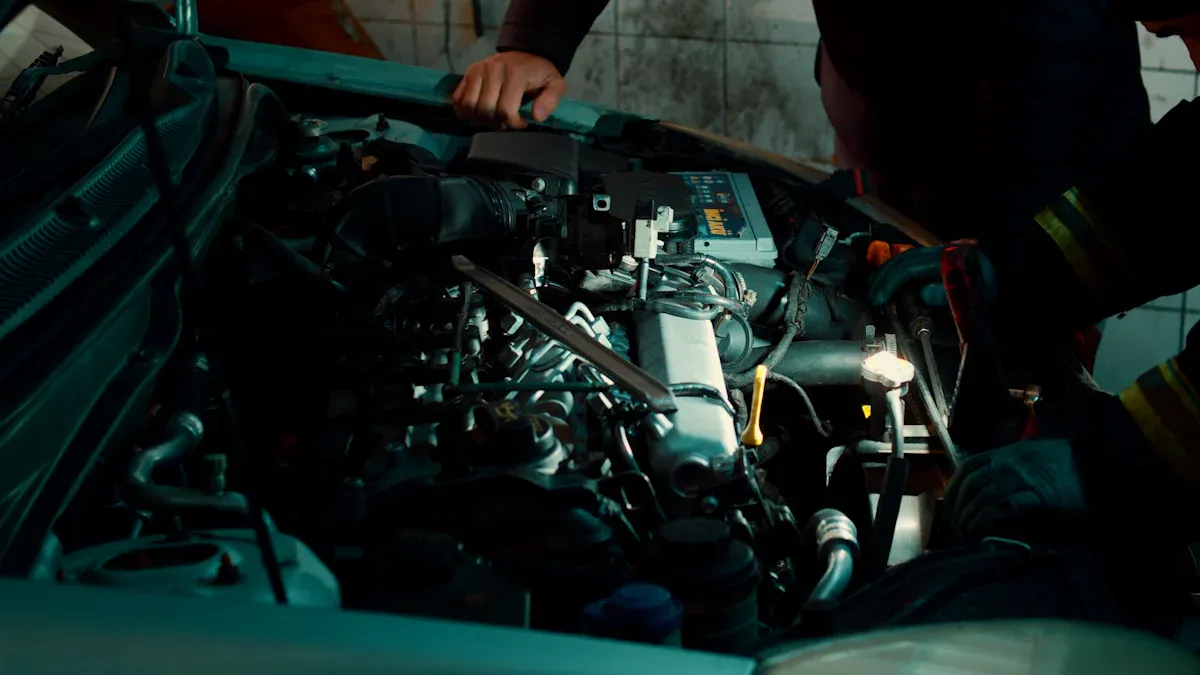
Finding the Fuel Pump Relay
You can find the fuel pump relay in your car by following a few simple steps. Most vehicles keep this relay in the main fuse box, often under the hood or inside the cabin. To make sure you have the right relay, use these resources:
Owner's Manual: Check the manual for diagrams that show the location of fuses and relays.
Fuse Box Lid Diagram: Look at the inside of the fuse box lid. Many cars print a map of the fuses and relays here.
Factory Service Manual: This manual gives detailed wiring diagrams and relay locations.
Online Resources: Search for your car's make and model on websites or forums. Many people share pictures and guides.
Tip: Always turn off the ignition and disconnect the battery before touching any relays or fuses.
Simple Diagnostic Steps
You can test the fuel pump relay with a few basic tools. The most important tool is a digital multimeter (DMM). This tool helps you check voltage, resistance, and continuity. Here is a quick guide:
|
Step |
Description |
|---|---|
|
1 |
Gather Tools: Use a digital multimeter for voltage and resistance checks. Needle-nose pliers help remove the relay. |
|
2 |
Multimeter Testing: Remove the relay. Use the DMM to test each circuit pin for proper function. |
|
3 |
Test Power Input: Set the DMM to DC Volts. Check the relay socket for about 12 volts at the correct terminal. |
If you see no voltage or the relay fails the test, you may need a new relay.
When to Replace or Get Help
You should replace the fuel pump relay if you notice these signs:
No fuel pump sound when turning the key
Engine stalls without warning
Car will not start after the engine gets hot
Tapping the relay makes the car start
Starting problems come and go with no pattern
Starter cranks normally, but the engine does not fire
Fuel pump relays often fail slowly. You might see problems like random stalling or no-starts before the relay stops working completely. Replacing the relay early can prevent getting stranded.
If you do not feel confident testing or replacing the relay, ask a professional for help. You should also see a mechanic if the problem continues after you install a new relay or if you do not have the right tools.
Remember: Fixing a relay is usually simple, but safety comes first. If you are unsure, let a trained technician handle the job.
You can spot a broken fuel pump relay by watching for these signs:
Engine cranks but does not start
Multiple start attempts
Sudden stalling
No fuel pump sound
Fast battery drain
Clicking from the fuse box
Engine light on
Try simple checks first. If you feel unsure, ask a mechanic for help.
Most relay problems are easy to fix once you find them. Early action keeps your car running strong.
FAQ
How do you know if your fuel pump relay is bad?
You may notice your engine cranks but does not start. You might hear no fuel pump sound. Your car may stall or need several tries to start. The battery can drain quickly.
Can you drive with a broken fuel pump relay?
You cannot drive safely with a broken fuel pump relay. Your car may stall or fail to start. You risk getting stranded. Replace the relay as soon as you spot symptoms.
Where is the fuel pump relay located?
You usually find the fuel pump relay in the main fuse box. Look under the hood or inside the cabin. Check your owner's manual or the fuse box lid diagram for the exact spot.
What tools do you need to test a fuel pump relay?
You need a digital multimeter to check voltage and resistance. Needle-nose pliers help remove the relay. Your owner's manual guides you to the correct relay.
What happens if you ignore a faulty fuel pump relay?
Ignoring a faulty relay can leave you stranded. Your engine may stall or refuse to start. You risk damaging other parts if the fuel pump runs nonstop.
How to Test and Inspect Relays for Quality Assurance
A Complete Engineer's Guide to Solid-State Relays
Complete OEM / ODM Relays Customization Guide for Engineers 2025
Branded vs. Customized Relay: Ultimate Decision Guide 2025