

You can use a relay with a DC coil to safely switch AC loads if you follow the right steps. Always make sure the relay matches the voltage and current of your AC load. This helps stop damage and keeps your circuit safe. Using a relay gives you electrical isolation, which protects you from dangerous voltages. Safety is most important, so check your connections twice before turning on power.
Key Takeaways
Make sure the relay's voltage and current fit your AC load. This helps stop damage.
Pick a relay with a DC coil. It keeps AC loads safe and separate.
Look at relay datasheets and wiring before turning it on. This helps you not make mistakes.
Add a snubber circuit for inductive loads. It keeps relay contacts safe from sparks.
Follow safety rules and test your setup. This makes sure it works well.
Can you use a relay with a DC coil for AC switching?
You can use a relay with a DC coil to control AC loads. This setup works well if you follow safety rules and choose the right relay for your project. You must always check the ratings for both the coil and the contacts. The relay lets you keep AC and DC circuits separate. This separation protects you from high voltages and keeps your control circuit safe.
When to use a relay for AC loads
You often use a relay to control AC loads in many places. Here are some common examples:
Industrial automation uses relays to turn motors, fans, and conveyors on and off. You can also use a relay to control solenoid valves and actuators.
HVAC systems use relays to control compressors, fan motors, and pumps. This helps you get smooth switching and quiet operation.
Home appliances like ovens, refrigerators, and washing machines use relays for safe on and off control of heaters, compressors, and motors.
You can use a relay to open or close a circuit without touching the high voltage side. The relay acts as a bridge between AC and DC circuits. You can wire the DC coil to a low voltage control circuit. The contacts on the relay then open or close the AC load circuit.
Key requirements for safe operation
You must follow some key rules to use a relay safely for AC switching. Here are the most important steps:
Tip: Always check the relay's datasheet before you wire anything. This helps you avoid mistakes.
Make sure the relay's contact ratings match your AC voltage and current. The contacts must handle the load when they open and close.
Use a large enough screwdriver to clamp down the load wires. Tight connections stop heat from building up.
Install a Metal Oxide Varistor (MOV) across the load terminals. The MOV absorbs high voltage spikes and protects the relay.
Do not mount the relay near flammable materials. If the MOV fails, it can get hot.
Use a snubber circuit if you switch inductive loads like motors. This protects the relay contacts from arcing.
Always follow safety standards. Here is a table of important standards:
|
Standard |
Description |
|---|---|
|
IEC 61810 |
Sets safety rules and test methods for electromechanical relays. It tells you to lower ratings for inductive loads. |
|
AS/NZS 3000 |
Gives rules for wire size, circuit protection, and certified parts in industrial places. |
|
AS 60947-4-1 |
Makes sure relays work safely with high voltage and tough jobs. |
You must also know the risks. When you use a relay to switch AC, electricity can arc across the contacts. This arcing can heat up the contacts and cause them to stick together. If the contacts weld, the relay may stay closed and not open again. This can be dangerous. You should always check the relay for signs of wear.
If you try to use a DC relay coil with AC voltage, the coil may not pull in. The coil has more resistance at AC frequencies. This can make the relay unreliable. You should only wire DC voltage to a DC coil.
Relays have contacts that are normally open or normally closed. You can wire the load to the normally open contact if you want the circuit off when the relay is not powered. You can use the normally closed contact if you want the circuit on when the relay is not powered. Always check your wiring before you turn on the power.
Relay basics: DC coil and AC load
How a relay works
A relay lets you control one circuit with another. The relay keeps the control circuit and the load circuit apart. When you put voltage on the coil, it makes a magnetic field. This field moves a switch inside the relay. The switch opens or closes the contacts. You can use a relay to turn on high-voltage loads with a small signal. The relay gives you electrical isolation between ac and dc circuits. This helps keep you safe and protects your devices.
Relays make weak signals stronger, help automate things, and keep circuits separate.
Many relays use a double throw design. This means you can connect to both a normally open and a normally closed contact. You pick which wire goes to each contact for your project.
DC vs AC relay coils
You need to know how dc relay coils are different from ac relay coils. DC coils use resistance to set the current. AC coils use something called inductive reactance to limit current. If you use ac power on a dc coil, the relay will buzz. The contacts will open and close fast. This makes the relay not work well. You should only use dc voltage for a dc relay coil. DC makes a steady magnetic field so the relay works right.
|
Feature |
AC Relay Coils |
DC Relay Coils |
|---|---|---|
|
Power Supply |
Designed for AC power (24 VAC, 110 VAC) |
Designed for DC power (5 VDC, 12 VDC) |
|
Coil Design |
Inductive reactance |
Resistance |
|
Current Determination |
Limited by inductive reactance |
Set by wire resistance |
|
Visual Identification |
Thicker wire, E-shaped core |
Thinner wire, solid core |
|
Thermal Design |
More insulation for eddy current loss |
Standard insulation |
AC coils keep the current steady. DC coils can get too hot if you use them wrong. Always check the wire type and voltage before you hook up anything.
Contact ratings for AC switching
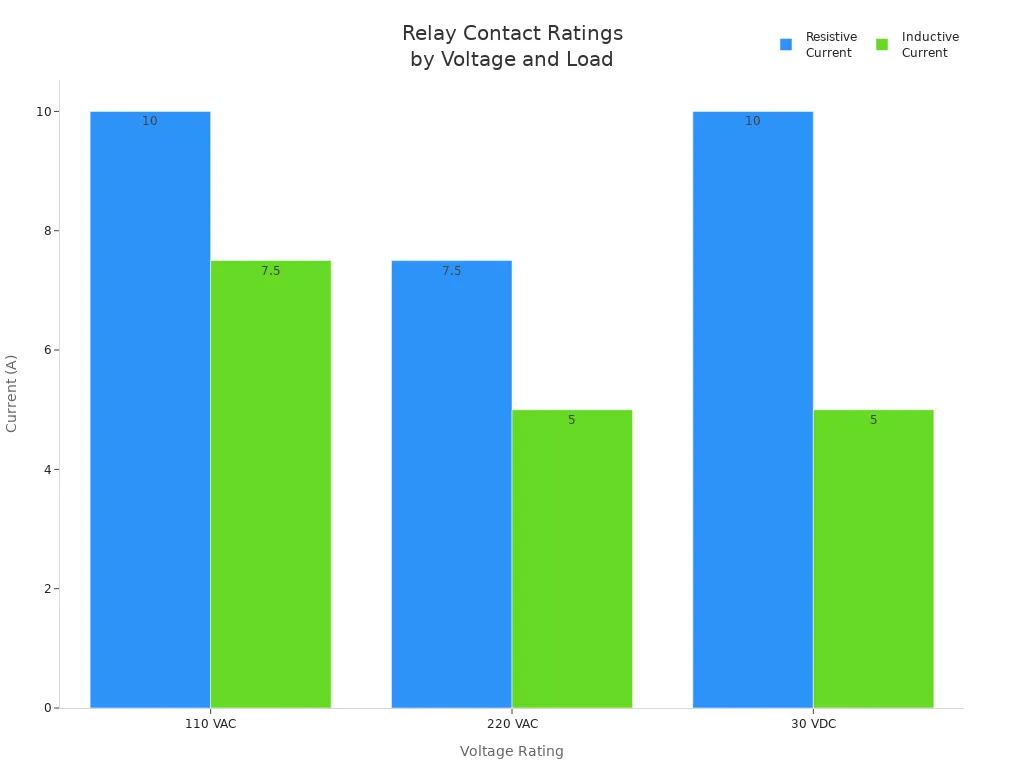
You have to match the relay's contact ratings to your ac load. The contacts must handle the voltage and current of your load. If you use a relay rated for 16 A at 250 VAC, it might not handle a motor's big starting current. Always check if the maker lists ratings for motors, LEDs, or other loads. Look at the electrical life rating to see how long the relay will last.
|
Voltage Rating |
Resistive Current |
Inductive Current |
|---|---|---|
|
110 VAC |
10 A |
7.5 A |
|
220 VAC |
7.5 A |
5 A |
|
30 VDC |
10 A |
5 A |
You must connect the load to the contact side of the relay. Use the normally open contact if you want the circuit off when the relay is not powered. Use the normally closed contact if you want the circuit on when the relay is not powered. Always check the wires and ratings before you switch ac and dc circuits.
How to wire a relay for AC loads
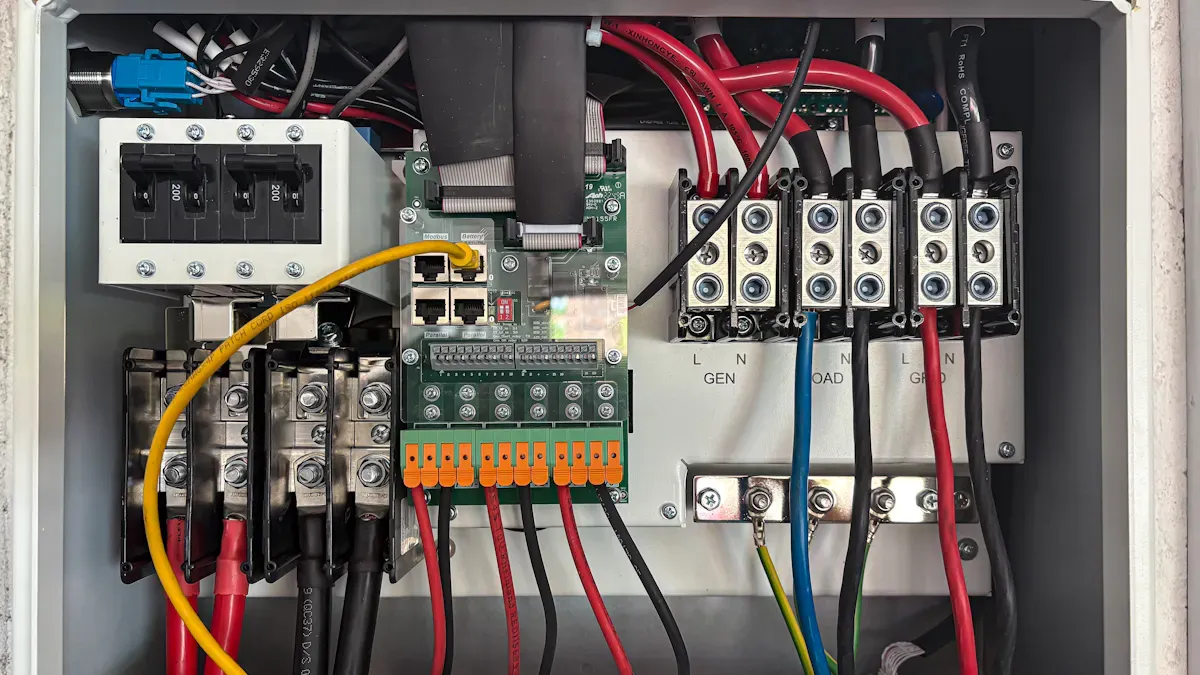
Choosing the right relay
You need to pick the correct relay before you start wiring. Look at the voltage and current of your AC load. Check the relay's datasheet for the right ratings. Make sure the relay can handle both the AC and DC circuits you want to control. If you use a double throw relay, you get both a normally open contact and a normally closed contact. This gives you more options for your project.
Tip: Always choose a relay with a higher current rating than your load. This helps the relay last longer.
You should also check if the relay is an AC relay or a DC relay. For switching AC with a DC coil, use a relay with a DC coil and contacts rated for AC. This keeps your AC and DC circuits safe and separate.
Wiring the DC coil side
You must wire the coil side of the relay to your DC circuit. The coil has to be wired with the correct polarity. Find the two coil terminals on the relay. You will usually see a plus (+) and minus (–) sign. Terminate dc positive to the plus side. Connect the negative wire to the minus side. This lets the relay work when you turn on the DC control signal.
If you use rectified AC to power the coil, add a filter capacitor. This smooths out the voltage and keeps the relay from buzzing. Always double-check your wiring before you power up the coil. Good wiring stops problems and keeps your relay working well.
Connecting the AC load
Now you can wire the contact side of the relay. Find the common, normally open contact, and normally closed contact terminals. You will wire to no and nc based on how you want the AC circuit to work. If you want the load off when the relay is not powered, wire to the normally open contact. If you want the load on when the relay is not powered, wire to the normally closed contact.
Connect the hot and neutral wires from your AC circuit to the relay contacts. Make sure you use the right wire size for your current. Always keep the AC and DC circuits separate. Never mix the wires. This keeps you safe and stops short circuits.
Note: Use a screwdriver to tighten each wire. Loose wires can cause heat and damage.
Testing your relay setup
You should test your relay setup before you use it with a real load. First, check all wires and connections. Make sure you wired the coil and contact side of the relay correctly. Power up the DC circuit and watch the relay click. The normally open contact should close, and the normally closed contact should open. You can use a multimeter to check if the AC circuit opens and closes as you switch the relay.
If you see any sparks or hear buzzing, turn off the power right away. Check your wiring again. Make sure you did not wire to no and nc the wrong way. Always test with a small load before you connect a big one. This helps you find problems early.
Safety Alert: Never touch live wires. Always turn off power before you change any wire.
You now know how to wire a relay for AC loads. You can control AC and DC circuits safely if you follow these steps. Always check your wiring and test your setup before you use it every day.
Safety tips and common mistakes
Electrical safety precautions
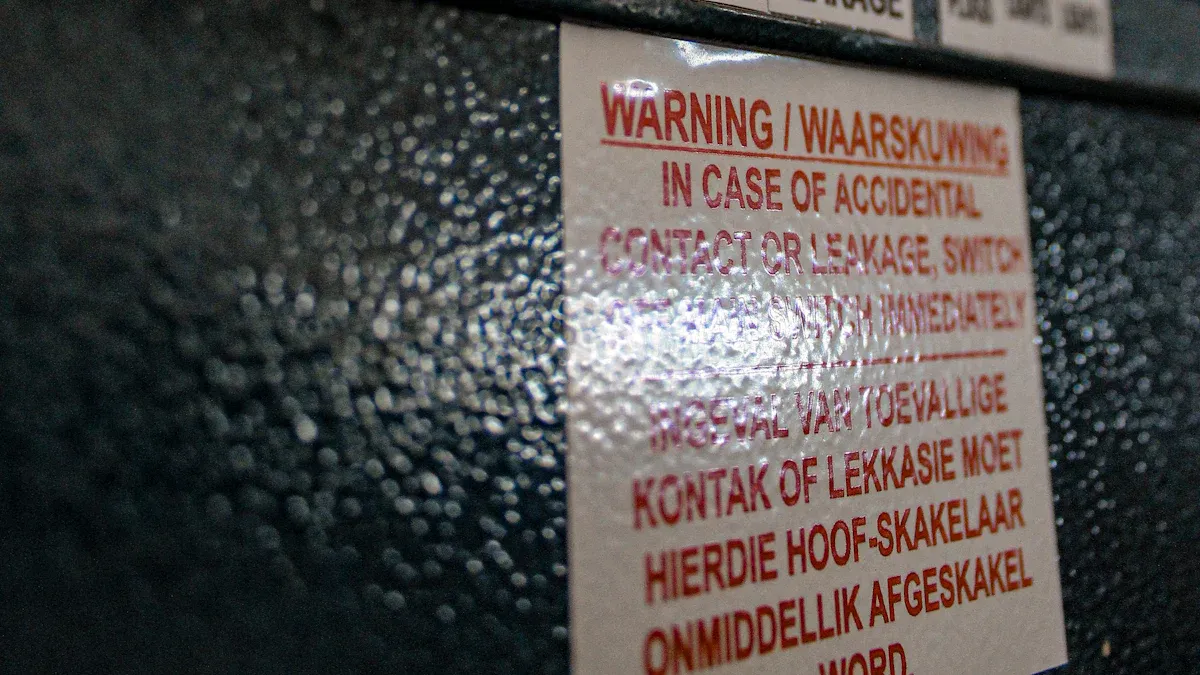
You must be careful when you use electricity with a relay. Arcing can happen when the relay switches. This can break the relay and cause accidents. Keep your hands dry and use tools with insulation. Always turn off power before you touch any wire. Bad insulation, broken circuit breakers, damaged appliances, wrong use of extension cords, and poor maintenance can cause accidents. Check each wire for damage and change any worn parts. Keep ac and dc circuits apart to stop short circuits.
⚠️ Never touch wires with power. Always check that the relay is off before you start work.
Common wiring errors
Many mistakes happen when you wire a relay for ac switching. You might mix up coil ratings and contact ratings. This can make you pick the wrong relay. Some people use dc coils on ac circuits or ac coils on dc circuits. This mistake makes the relay not work right. Do not forget about inrush current. If you do, the contact can get damaged when the relay switches. Always check the wire size and connect to the right terminals. When you use a double throw relay, know which wire goes to the normally open or normally closed contact.
Mixing up coil ratings and contact ratings
Using dc coils on ac circuits or the other way
Forgetting about inrush current
Wrong wire size
Mixing up normally open and normally closed contacts
Troubleshooting relay issues
You can find relay problems by looking for signs. The relay may not work right, heat or cool badly, use more energy, get too hot, cool weakly, have blower motor problems, make clicking or buzzing sounds, cycle often, control temperature badly, or the air conditioner may not turn on. Look for color changes or melted parts on the relay. A burnt smell can mean bad contact resistance. Mechanical problems like weak springs or worn armatures can make switching slow.
|
Symptom |
Likely Cause |
Recommended Action |
|---|---|---|
|
Relay too hot on coil side |
Wrong coil voltage or too much power |
Check coil type and voltage; use the right coil. |
|
Relay chatters on ac line |
Low coil voltage or big line drop |
Use the right coil; keep supply steady. |
|
Contacts welded closed |
Inrush too high, wrong contact rating |
Use higher inrush rating; add snubbers or contactors. |
|
Coil does not pull in on ac |
Wrong coil type or resistor too high |
Use the right coil relay; fix outside parts. |
Always test each wire and contact before you use the relay. Make sure you connect to the normally open or normally closed contact as needed. Careful wiring and regular checks help you stop most problems.
You can safely switch AC loads with a relay that has a DC coil if you follow the right steps. Always check relay ratings and wiring before you power up. Use a snubber circuit to protect the contacts and extend relay life. For motors or other inductive loads, use only 40% of the relay's rated current.
Test the relay coil for proper resistance and function.
Follow the wiring diagram to avoid mistakes.
Make sure the power source matches the coil voltage.
Watch for signs of overheating or damage.
Follow safety standards at all times.
Stay alert for any unusual smells or sounds. Careful checks and good habits keep your projects safe and reliable.
FAQ
Can you use a DC relay coil to switch AC loads?
Yes, you can use a relay with a DC coil to switch AC loads. You must check the relay's contact ratings for AC voltage and current. This keeps your circuit safe.
What happens if you connect AC power to a DC relay coil?
You should not connect AC power to a DC relay coil. The relay may buzz or fail to pull in. This can damage the coil and make the relay unreliable.
How do you know which relay contact to use for your AC load?
You choose the contact based on how you want your circuit to work. Use the normally open contact if you want the load off when the relay is not powered. Use the normally closed contact for the opposite.
Why do relay contacts wear out when switching AC?
Relay contacts wear out because of arcing. When you switch AC, electricity can jump across the contacts. This heats them up and causes damage over time.