

A time delay relay helps you decide when things turn on or off. You pick a time, and the relay waits before it works. This helps you handle many jobs at home or in factories. You can find time delay relays in lights, HVAC systems, and cars. They help save power, protect machines, and keep people safe at work. The main types are on-delay, off-delay, and one-shot relays. You can use them for easy or hard tasks.
Key Takeaways
Time delay relays help control when things turn on or off. They help save energy and keep equipment safe.
There are three main types of time delay relays. These are on-delay, off-delay, and one-shot. Each type is used for different timing jobs.
Time delay relays are used in HVAC systems. They stop equipment from getting damaged. They do this by controlling fans and compressors.
Pick the right relay by looking at the time range. Also check the load capacity and the environment. This helps the relay work well.
Try simple projects first to learn about time delay relays. This helps you set them up safely and correctly.
What is a time delay relay?
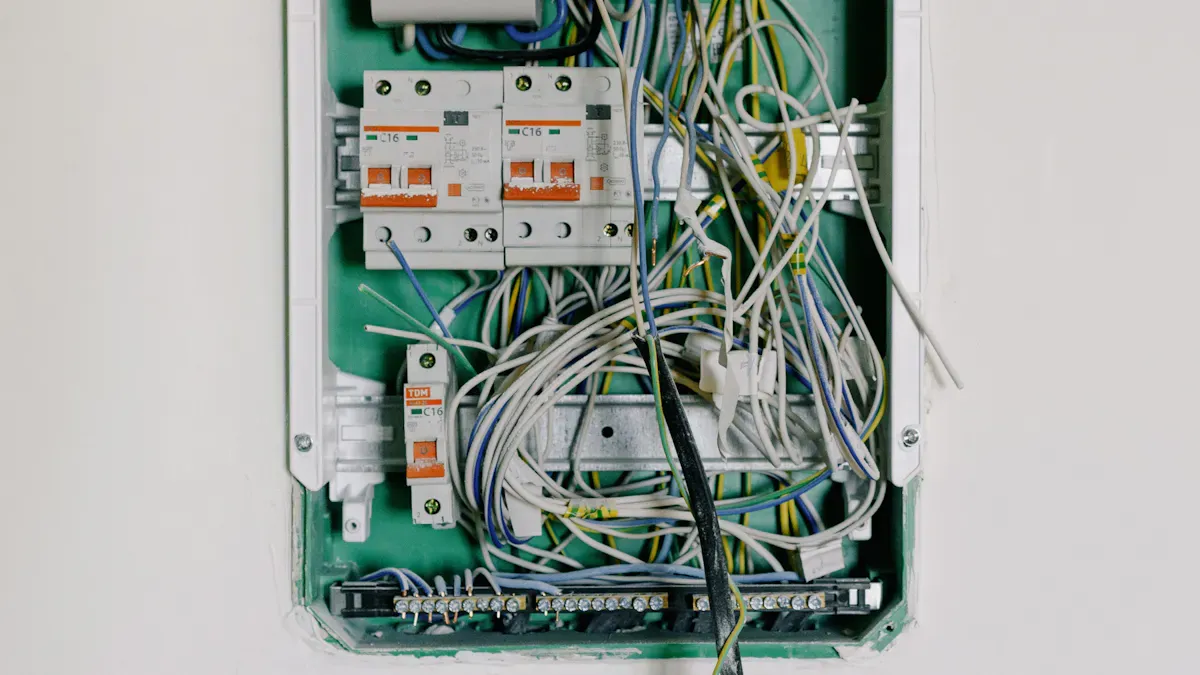
Basic operation
A time delay relay is a special kind of switch. It waits before turning something on or off. You pick the time, and the relay does the rest. This helps you control when things happen at home or work.
Inside a time delay relay, there are a few main parts:
Coil: This part makes a magnetic field to start the delay.
Time delay mechanism: It can be electronic or use air. It decides how long the relay waits.
Contacts: These are like gates. They open or close to let electricity move.
Adjustment knob or dial: You use this to set how long the delay lasts.
When you turn on the relay, the coil gets power. The time delay mechanism starts counting. After the time you set, the contacts change position. This lets you control lights, fans, or machines with a delay. You can use a time delay relay for many jobs that need timing.
Some relays use old parts, like electromechanical time delay relays. Others use new electronics. Both types help you manage timing easily.
Main functions
Time delay relays help things happen at the right time. They let you:
Make a delay before turning something on or off.
Control timing in circuits.
Protect machines by making sure they start or stop in order.
Change the delay for different jobs, so you can set up timing plans.
You see time delay relays in lots of places. Here is a table showing where you might find them:
|
Application Type |
Description |
|---|---|
|
Lighting Control |
Used to manage lighting systems well. |
|
HVAC Systems |
Helps control heating and cooling systems. |
|
Automotive Applications |
Makes sure timing is right in cars. |
|
Industrial Machinery |
Controls how machines work. |
You also find time delay relays in automation systems. They make sure each step happens in order. In HVAC systems, they keep fans running after the heater or air conditioner stops. This protects your equipment and keeps things working well.
Time delay relays help you control timing in many ways. You can use them for safety, saving energy, and making machines work better. The time delay function makes your electrical systems smarter and more reliable.
Types of time delay relays
When you use time delay relays, you will see a few main types. Each type has a special job for turning things on or off at the right time. If you know how they are different, you can pick the best relay for your project.
On-delay relays
The on-delay relay is the most common kind. You use it when you want something to wait before it turns on after you give it power. People also call this the delay on type. When you press the start button, the relay starts counting time. After the time you set, the relay closes its contacts and the device turns on.
Here is a table to help you see how the on-delay relay works:
|
Characteristic/Principle |
Description |
|---|---|
|
Purpose |
Controls timing of circuit operations by introducing a delay before starting, maintaining, or interrupting a connection. |
|
Activation Delay |
Takes time to activate connected devices after power is applied, ensuring orderly startup of equipment. |
|
Counting Mechanism |
Begins counting time immediately when voltage is applied, disconnecting from the circuit after the preset time ends. |
You use the delay on type to stop machines from starting all at once. This helps stop power surges and keeps equipment safe. For example, in a factory, you can set each machine to start a few seconds apart. This keeps the system steady and protects motors from getting too much power.
Tip: On-delay relays give workers time to move away before machines start. This makes your workplace safer.
You also see on-delay relays in engine auto start systems. They wait before sending power to the starter motor. This helps stop sudden power surges. This type of time delay relay keeps your equipment safe and makes things run smoother.
Off-delay relays
The off-delay relay works in the opposite way. This relay, also called the delay off type, keeps a device running for a set time after you turn off the power. When you turn off the input, the relay starts counting down. The device stays on until the time is up, then the relay opens its contacts and the device turns off.
Here is a table to show the difference between on-delay and off-delay relays:
|
Relay Type |
Function |
|---|---|
|
Off Delay Relay |
Keeps the circuit closed for a specific time after power is turned off, only opening after the delay time has passed. |
|
On Delay Relay |
Starts a timer when power is applied, closing the circuit only after the predetermined delay time elapses. |
You use the delay off type in many places. In building automation, it keeps lights on for a short time after you leave a room. This helps you walk safely before the lights go out. In factories, the off-delay relay lets machines finish their work before shutting down. It also protects motors by stopping them slowly, which helps them last longer.
Note: The time delay off circuit is good for motor protection. It stops motors from stopping too fast and getting damaged.
One-shot relays
A one-shot relay gives you a single timed pulse. When you press a button, the relay turns on for a set time, then turns off, even if you keep pressing the button. This type is good when you need a quick, one-time action.
You use one-shot relays for start and stop buttons on machines. They make sure the machine only gets one signal, even if you hold the button down. This helps stop mistakes and keeps your process safe.
One-shot relays are great for jobs that need exact timing.
You can use them in factories to control machines with start and stop buttons.
Other timing relays
There are other timing relays for special jobs. These include interval relays, repeat-cycle relays, flasher relays, and delay on-break relays. Each one helps you with different timing needs.
Interval Relays: These relays give you a set time for an action. They use digital timing and can handle many different times.
Repeat-Cycle Relays: You can set both ON and OFF times. These relays repeat the cycle as long as you want, with delays up to 10 hours.
Flasher Relays: These relays turn things on and off in a regular pattern. They are small and simple to use.
Delay On-Break Relays: These relays start timing when you turn off the power. They are very accurate and easy to set up.
Here is a table to compare some timer types and how you use them:
|
Timer Type |
Function Description |
Application Example |
|---|---|---|
|
ON Delay |
Introduces a delay between input activation and output activation. |
Used in industrial automation to control process timing. |
|
OFF Delay |
Introduces a delay between input deactivation and output deactivation. |
Used in systems requiring a delay before shutting down. |
You will see timing relays in many control panels and machines. They help you control timing, save energy, and keep your equipment safe. When you pick a time delay relay, think about the timing you need and what you want to control. The right relay helps your system work better and last longer.
Timer relays in applications
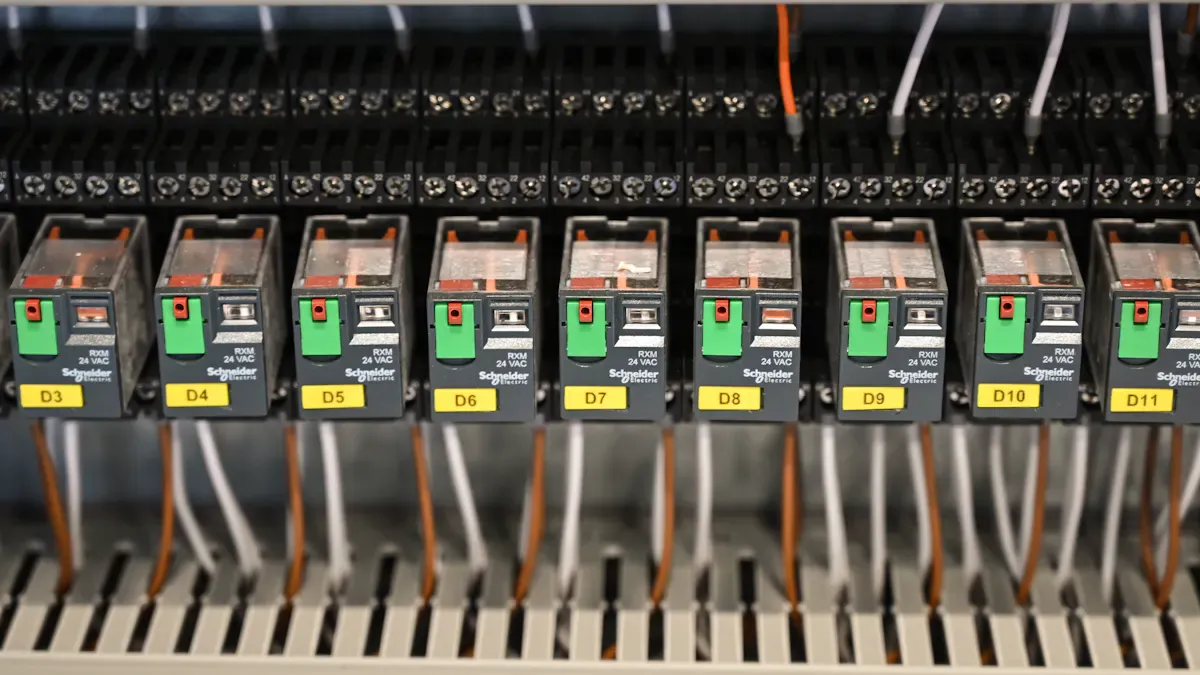
Lighting control
Timer relays help control lights in many places. They let you pick when lights turn on or off. You see timer relays in stairwells. The lights stay on for a short time after someone walks by. Security lights use timer relays to stay on after movement. This keeps areas safe and does not waste power. Emergency lights use timer relays during blackouts. This helps meet safety rules. Timer relays also work with decorative lights, like flashing lights at events.
Timer relays set up lighting schedules in offices and stores.
They work indoors and outdoors, like streetlights that turn on at dusk and off at dawn.
Automatic light timers help save energy. They make sure lights run only when needed. This lowers electricity bills and helps lights last longer.
HVAC and automation
Timer relays are important in HVAC systems and automation. They control when fans and compressors start or stop. This stops short cycling, which can hurt equipment. Timer relays keep fans running after shutdown to cool things slowly. They protect compressors by letting pressure balance before restarting.
Timer relays help HVAC equipment last longer.
They lower damage from quick on-off cycles.
You can use a power on delay timer relay to stop motor surges. This helps prevent circuit breaker trips.
Timer relays help save energy by running parts only when needed. This saves money and keeps equipment safe.
Safety and automotive uses
Time delay relays make machines safer in many ways. You can set them to delay machine actions. This gives workers time to move away before machines start. Timer relays give a pause before equipment turns on. This lets you do safety checks. They also make sure machines run only when needed. This lowers accidents and wear.
Time delay relays help stop accidents by controlling machine timing.
They lower risks and protect workers in factories and garages.
Timer relays in cars control lights, wipers, and other systems. This makes driving safer and more comfortable.
Choosing timing relays
Key selection factors
When you pick timing relays for your project, you need to check a few important things. You want the relay to work well and last a long time. Look at the table below to see what matters most:
|
Factor |
Description |
|---|---|
|
Time Range |
Make sure the relay's delay matches your timing needs. |
|
Load Capacity |
Check if the relay can handle the voltage and current of your device. |
|
Environmental Conditions |
See if the relay can survive heat, cold, moisture, or dust. |
You also need to think about these points:
Voltage and current ratings help you match the relay to your system.
Timing range lets you set delays from milliseconds to hours.
Number of functions shows how many jobs the relay can do.
Mounting type decides how you install the relay, like on a panel or DIN rail.
Certifications and safety standards prove the relay is safe to use.
Different relay types, such as on-delay or off-delay, give you special timing features. Timer relays let you control when things turn on or off. You can use them in homes or factories. Timing relays manage timing between control circuits and main circuits. They help your equipment run safely and efficiently.
Choosing the right relay keeps your system safe and makes your project easier.
Tips for beginners
If you are new to time delay relays, follow these simple tips:
Pick a relay that fits your job. Read the specs before you buy.
Wire the relay carefully. Double-check all connections.
Use a control circuit that matches the relay's voltage and current.
Never go over the relay's rated limits.
Mount the relay firmly so it does not move.
Clean and check the relay often. Follow the maker's instructions.
Change old relays before they break.
Ask an expert if you want to change anything.
You should avoid common mistakes. Contact wear happens if you use high current too often. Dust and moisture can cause overheating or corrosion. Overvoltage can damage the coil. Spring fatigue can make the relay less reliable.
🛠️ Start with simple timing relays. Practice with easy circuits before you try bigger projects.
You have learned how timing relays help control when devices turn on or off. You can find many types, such as ON-delay, OFF-delay, single-shot, flasher, and interval timer relays. Timing relays keep engines and machines safe by managing power and timing. You can use them in cars, factories, or home projects. Try using a simple timer relay in your next project. Check your needs, review features, and make sure you have the right skills for setup and maintenance.
FAQ
What is the main job of a time delay relay?
A time delay relay lets you control when a device turns on or off. You set the time, and the relay waits before it acts. This helps you manage machines and lights safely.
Can you use a time delay relay at home?
Yes! You can use a time delay relay for lights, fans, or small pumps. It helps you save energy and makes your home safer. Many people use them for stairway lights or bathroom fans.
How do you set the delay time on a relay?
Most relays have a knob or dial. You turn it to pick the delay time. Some digital relays use buttons or a screen. Always check the manual for the right steps.
What happens if you set the wrong delay time?
If you set the delay too short, devices may start or stop too soon. If you set it too long, you might waste energy or cause problems. Always test your setup before using it every day.