


Relays, including the automotive circuit relay, are very important in many car systems. They are used in headlights, fuel pumps, cooling fans, starters, and power windows. These parts need a lot of electricity, which can damage switches and wires. An automotive circuit relay helps by letting a small electric signal control bigger devices. This setup keeps electronics safe, makes switches last longer, and helps your car's electrical systems work well.
Key Takeaways
Relays protect car parts by using small signals to control big devices. This stops switches and wires from getting damaged.
Relays make car systems work better and last longer. They also save energy and reduce waste.
Relays are important for things like headlights, fuel pumps, fans, and windows. They help cars stay safe and work well.
There are different relays, like electromechanical and solid-state ones. Each type does a special job to keep cars running smoothly.
Checking relays often can stop electrical problems. This helps cars stay safe and dependable on the road.
Why Automotive Circuit Relays Are Necessary
Handling high-power devices
Relays help manage car parts that need lots of power. Without relays, switches and wires would carry too much electricity. This could cause overheating, damage, or even fires. Relays fix this by using small signals to control big circuits.
For example, relays power fuel pumps, cooling fans, and ignition coils. They give these parts the right amount of electricity without overloading. As cars need better power systems, relays become more important. The relay market is growing fast, especially with electric cars needing strong relay setups.
Keeping electronics safe
Relays protect your car's delicate electronics from high-power devices. They separate big circuits from control systems like the Engine Control Unit (ECU). This stops power surges from harming sensitive parts.
Relays also turn off devices when not needed, preventing overheating or shorts. For instance, the ECU uses relays to start the fuel pump only when the engine runs. This keeps the system safe and improves car safety. Below is a table showing how relays protect and improve your car's electrical system:
|
Purpose of Relays |
What They Do |
|---|---|
|
Manage high-power circuits |
Use small signals to control big circuits, easing strain on wires. |
|
Protect electronics |
Stop high power from damaging sensitive parts, ensuring they last longer. |
|
Make wiring efficient |
Allow smaller wires, improving the car's electrical setup. |
Boosting efficiency and reliability
Relays make your car's electrical system work better and last longer. They reduce wear on switches and wires, helping them last. Relays also spread energy well, cutting waste and keeping systems efficient.
Relays stop problems in big circuits from affecting control circuits. This reduces interference and keeps electronics safe. Their small size fits tight spaces, making them useful for many car designs. Below is a table showing how relays improve performance:
|
Feature |
Benefit |
|---|---|
|
Long-lasting |
Less strain on switches, making electrical parts last longer. |
|
Energy-efficient |
Spreads power well, reducing waste and saving energy. |
|
Isolation |
Stops big circuit issues from harming control circuits, lowering interference. |
|
Compact design |
Fits small spaces, helping with car design. |
|
Multi-use |
Works for many tasks, reducing the need for extra controls. |
Using relays in your car makes its electrical system safer, stronger, and more reliable.
Automotive Circuit Relays in Specific Car Circuits
Headlights and high-beam circuits
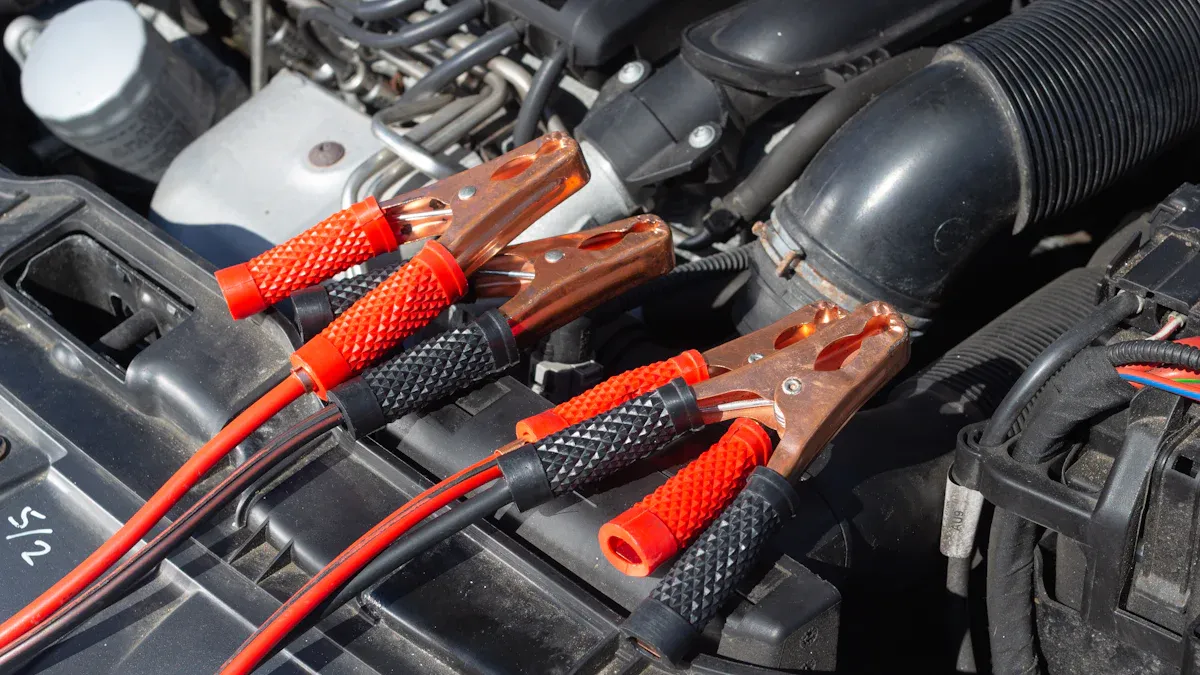
Relays are important for controlling your car's headlights. Headlights and high beams need a lot of power to work. Without relays, switches and wires could get damaged. A relay lets the high current go through it, not the switch. This protects the switch and makes the lights work better.
Modern headlights use relays to switch between high and low beams. Sensors often help these systems detect cars or lighting changes. For example:
Relays help adjust headlights automatically, reducing glare for others.
Some systems use radar to track cars and adjust lights quickly.
Relays and sensors together make driving safer and more comfortable. This is especially helpful at night or in bad weather.
Fuel pump circuits
Relays are also key for your car's fuel pump. The fuel pump needs steady power to send fuel to the engine. Without a relay, high current could harm switches or wires. A relay ensures the pump gets power without overloading the system.
Fuel pump relays are built to last and handle tough jobs. Here are some examples:
Regular relays can last up to 100,000 hours in most cars.
Heavy-duty vehicles use relays lasting 200,000 hours for harder tasks.
Special vehicles, like planes, may need relays lasting 500,000 hours.
Using a relay in the fuel pump circuit makes the system reliable. It also helps the engine run smoothly.
Cooling fan circuits
Cooling fans also rely on relays to work well. The fan keeps the engine cool by turning on when it gets hot. The fan motor needs a lot of power, so a relay manages this load. This protects the control system from damage.
Relays in cooling fans offer many benefits, as shown below:
|
Feature |
Benefit |
|---|---|
|
Durability |
Makes switches last longer by reducing wear. |
|
Efficiency |
Spreads power well, saving energy. |
|
Isolation |
Keeps control circuits safe from big circuit problems. |
|
Protection |
Guards sensitive parts from power surges or failures. |
|
Reliability |
Ensures the fan works even under heavy use. |
|
Compliance |
Follows rules for reducing electrical interference. |
|
Temperature Control |
Turns the fan on only when needed, stopping overheating. |
With a relay, the fan runs only when required, saving energy. This setup helps the fan motor last longer and keeps the engine cool. It prevents overheating and avoids engine damage.
Starter motor circuits
Starter motors need relays to handle high power safely. When you start the car, the relay connects the battery to the motor. This gives the motor enough power without harming the ignition switch.
Starter motors use a lot of power, especially at first. The starting power can be five times more than normal. Without a relay, this could damage the ignition switch or cause parts to stick together. Cars with start/stop systems need stronger relays. These relays last longer and work better for frequent starts.
Relays also make the starter system more efficient. They protect the ignition switch from overheating and wearing out. This setup helps the switch last longer and makes starting the car smoother.
Power windows and door locks
Relays are important for power windows and door locks. They let small signals, like pressing a button, control the motors. These motors move windows or lock and unlock doors.
Relays improve how these systems work and last. For example, when you press the window button, the relay sends the right power to the motor. This stops overheating and keeps the system working longer. In door locks, relays allow quick and easy locking and unlocking.
Relays are also used in other car systems. These include sunroofs, power seats, and advanced features like cruise control. Below is a table showing where relays are commonly used:
|
Application |
Examples |
|---|---|
|
Door Lock |
Yes |
|
Power Windows |
Yes |
|
Sunroof |
Yes |
|
Power Seat |
Yes |
|
EPS (Electric Power Steering) |
Yes |
|
Lighting |
Yes |
|
Fuel Injection |
Yes |
|
Air Conditioner |
Yes |
|
ABS (Anti-lock Braking System) |
Yes |
|
TCS (Traction Control System) |
Yes |
|
Cooling Fan |
Yes |
|
Engine Management Module |
Yes |
|
Adaptive Cruise Control |
Yes |
|
Intelligent Park Assist |
Yes |
Using relays in these systems makes them work better and last longer. This improves your car's performance and reduces electrical problems.
How Automotive Circuit Relays Work
How a relay operates
A relay works like a switch controlled by electricity. A small current flows through a coil inside the relay. This creates a magnetic field that moves a metal piece. The movement either opens or closes a circuit. Relays can be set as "normally open" (NO) or "normally closed" (NC). This depends on whether the circuit is open or closed when the relay is off.
Relays switch quickly, cutting down on sparks and noise. This makes them great for high-power parts like headlights and fuel pumps. For instance, in a headlight circuit, the relay handles the high current. The switch only deals with a small current. This setup protects wires and switches from damage and helps them last longer.
Types of relays in cars
Cars use different types of relays for various jobs. The most common is the Bosch-type ISO mini relay. It has five terminals and can switch between normally open and normally closed modes. This relay is used for things like headlights and cooling fans.
Other relay types include:
Change-over relays: Switch power between two circuits for flexible use.
Potted relays: Sealed with epoxy, perfect for waterproof needs.
Flasher relays: Control turn signals and hazard lights, using thermal or mechanical designs.
Time-delay relays: Keep power on briefly after turning off, like for lights staying on after you leave the car.
Each relay type is made for specific tasks, ensuring systems work well and reliably.
Working with different circuits
Relays must meet strict rules to work in car circuits. They need to handle power surges and static electricity safely. Standards like Nissan 28400 NDS03 and Volkswagen VW TL 824 66 check if relays can manage these issues.
Relays are also tested to avoid messing with other electronics. This ensures they work well in complex systems, like modern cars. By following these rules, relays fit into circuits for headlights, fuel pumps, and more. This improves how the car's electrical system performs overall.
Types of Automotive Circuit Relays
Electromechanical relays
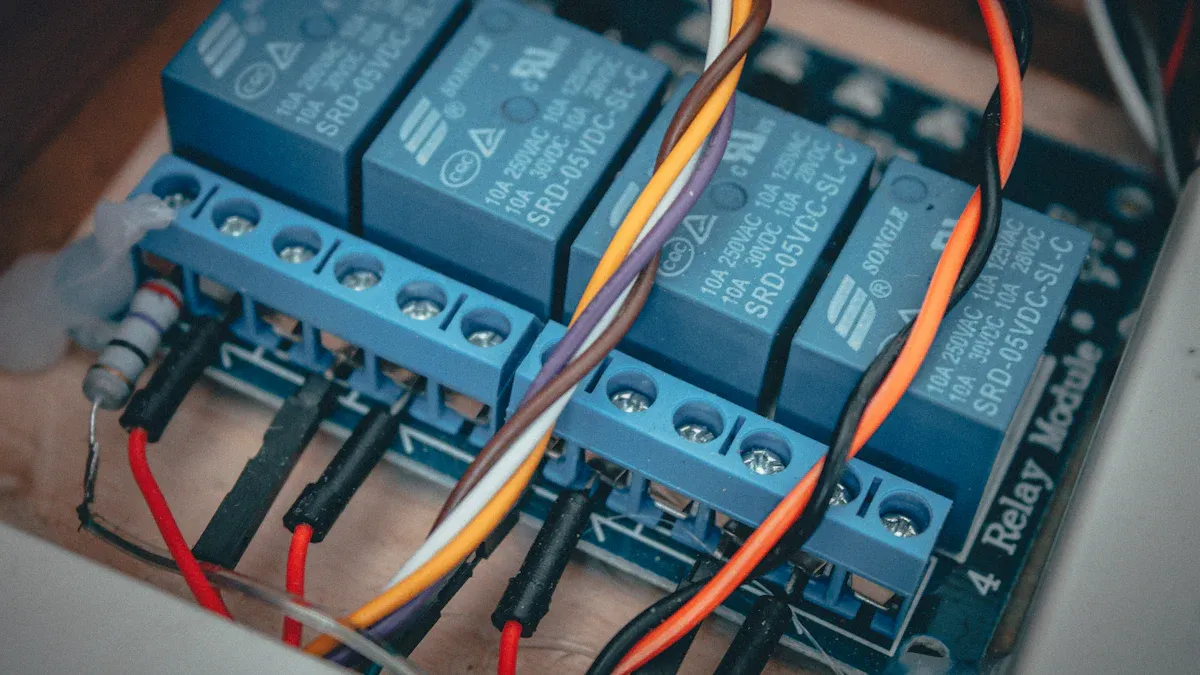
Electromechanical relays (EMRs) are common in car systems. They use moving parts to open or close circuits. This makes them great for handling high-power devices like headlights and fuel pumps.
EMRs have several benefits:
They have low resistance, which reduces energy loss.
High resistance when open stops unwanted electricity flow.
They separate control and load circuits, improving safety.
Some can last up to 50 million uses, depending on the type.
For instance, the Omron MY2 series can last 100 million uses with DC power. The Panasonic GQ series lasts 50 million uses at 180 cycles per minute. These features make EMRs dependable for many car tasks.
Solid-state relays
Solid-state relays (SSRs) are newer and don't have moving parts. Instead, they use electronic parts to switch circuits. This makes them faster, tougher, and better for harsh conditions.
Here's why SSRs are useful:
|
Advantage |
Description |
|---|---|
|
No Moving Parts |
More reliable since there's nothing to wear out. |
|
Faster Switching |
Quick response for modern car systems. |
|
Tough in Harsh Conditions |
Works well in extreme heat, cold, or vibrations. |
SSRs are used in advanced systems like engine controls and fog lights. They handle quick switching and tough environments, making them ideal for these jobs.
Micro relays and their applications
Micro relays are small but powerful. They save space in cars while still working well. You'll find them in power windows, door locks, and steering systems.
These relays are great for tight spaces where reliability matters. For example, micro relays in window systems help them work smoothly and avoid overloads. Their small size lets car makers add more features without needing extra room.
Knowing about different relays shows how they improve car systems. Each type plays a role in making cars safer and more efficient.
Automotive relays help control high-power parts in cars. They protect delicate electronics and make systems work better. Relays keep everything running smoothly, even in tough conditions. Electric cars need strong relays for extreme heat or voltage changes. These relays improve safety and make cars perform well.
Knowing how relays work helps you fix car electronics. Understanding their uses keeps your car reliable and working its best.
FAQ
What does a relay do in a car circuit?
A relay lets small signals control big devices. It stops switches and wires from getting damaged by strong currents. This makes your car's electrical system safer and work better.
What happens if a car relay breaks?
If a relay breaks, the connected part might stop working. For example, a broken fuel pump relay can keep the engine from starting. Checking relays often helps avoid these problems.
What kinds of relays are used in cars?
Cars use electromechanical, solid-state, and micro relays. Electromechanical relays handle strong power. Solid-state relays work well in tough conditions. Micro relays fit small spaces like power windows.
How can you tell if a car relay is bad?
Signs of a bad relay include blinking lights, things not working, or strange clicking sounds. If you see these signs, check the relay for damage. Fixing or replacing it makes things work again.
Why are relays important for modern cars?
Relays control strong devices and protect delicate electronics. They save energy and stop overheating. Electric cars need relays to stay safe and work well.