


A relay control circuit is a versatile switch that can manage various circuits. The number of circuits it can control depends on its design and contacts. The term "pole" indicates how many circuits a relay control circuit can handle. For instance, a single-pole relay control circuit manages one circuit, while a double-pole relay control circuit oversees two separate circuits. Relays consist of interconnected mechanical parts that function together, which helps prevent hidden issues. Relays are relied upon for safely managing circuits in a variety of systems.
Key Takeaways
Relays can control more than one circuit, depending on design. Single-pole relays control one circuit, while double-pole relays control two.
Knowing relay types, like SPST and DPDT, helps you pick the right one. Each type works differently and has special uses.
Safety and reliability are very important with relays. They keep control circuits separate from power circuits, lowering failure risks.
Think about the environment when choosing a relay. Pick relays that handle heat, dust, or moisture for better use.
Always check the relay's details to match your system's voltage and current needs. This stops overheating and damage.
Relay Control Circuit Basics
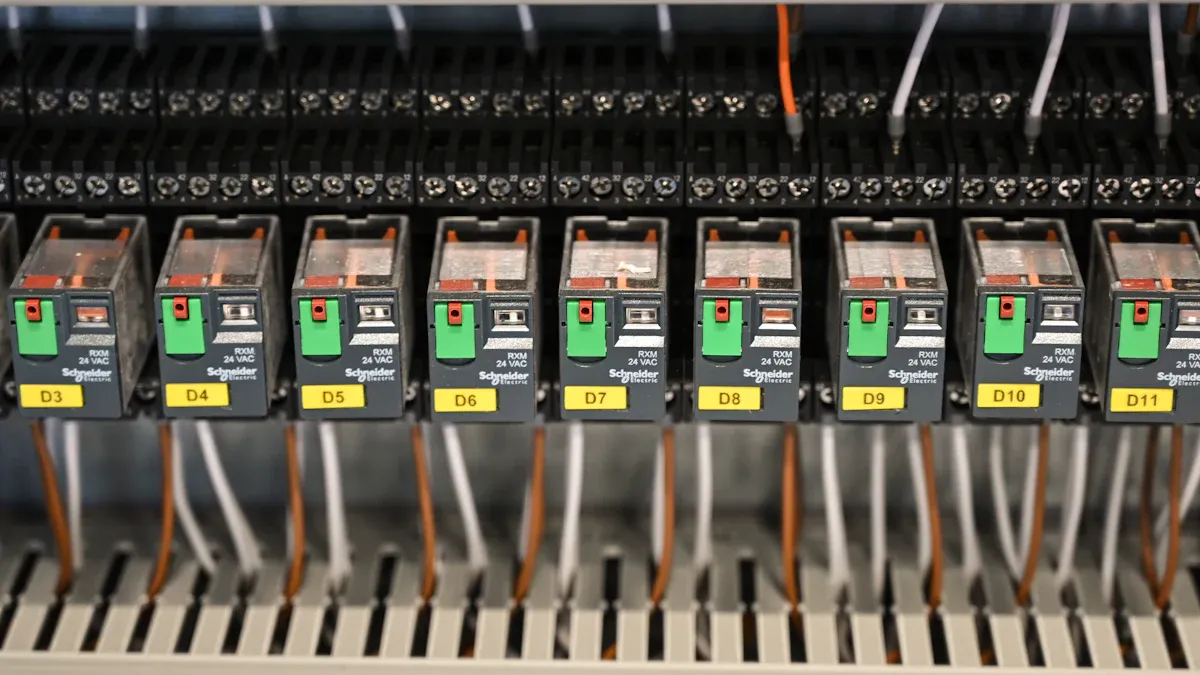
What is a relay control circuit?
A relay control circuit is an electrical system that uses a relay to manage circuits. Relays work like switches, letting low-power signals control high-power circuits. These circuits are important for situations needing electrical isolation or precise control.
Relay control circuits have key parts:
Terminal blocks link power sources, switches, and sensors. Clear labels help with schematics.
Auxiliary contacts improve how the relay works. They can be normally open (NO), normally closed (NC), or change-over (CO).
Power sources include AC mains, DC supplies, or external units. Reliable power keeps the system running smoothly.
Relays come in different types for various uses:
SPST (Single Pole Single Throw): Connects or disconnects one circuit.
SPDT (Single Pole Double Throw): Switches between two outputs.
DPST (Double Pole Single Throw): Manages two circuits at the same time.
These types decide how many circuits a relay can control. Whether for cars or home systems, knowing these basics helps you pick the right relay.
How does a relay control circuit work?
A relay control circuit works by using an electromagnet to move its switch. When powered, the electromagnet creates a magnetic field. This field moves the armature, which opens or closes the circuit.
Main parts of a relay control circuit include:
|
Component |
Function |
|---|---|
|
Electromagnet (Coil) |
Makes a magnetic field to move the armature and contacts. |
|
Contacts |
Open or close the circuit, can be normally open (NO) or normally closed (NC). |
|
Spring |
Returns the armature to its original position when power is off. |
Relay circuits have many benefits:
Safety: They keep control circuits separate from power circuits, lowering risks.
Efficiency: Small signals can manage big circuits.
Reliability: Relays work well even in tough conditions.
By learning how these circuits work, you can use them in many areas, like factories or communication systems.
Factors That Affect How Many Circuits a Relay Can Control
Contact Setup (SPST, SPDT, DPDT, etc.)
The way a relay is set up decides how it links and manages circuits. Each relay type has a special design that changes how it works. For example, an SPST relay can only turn one circuit on or off. A DPDT relay can handle two circuits and switch between different positions. Knowing these setups helps you pick the right relay.
Here's a simple table of common relay types:
|
Relay Type |
What It Does |
Terminals Count |
|---|---|---|
|
SPST-NO |
Turns on a circuit when activated. |
4 |
|
SPST-NC |
Turns off a circuit when activated. |
4 |
|
SPDT |
Links one terminal to two others. |
5 |
|
DPST |
Works like two SPST relays in one. |
6 |
|
DPDT |
Acts like two SPDT relays combined. |
8 |
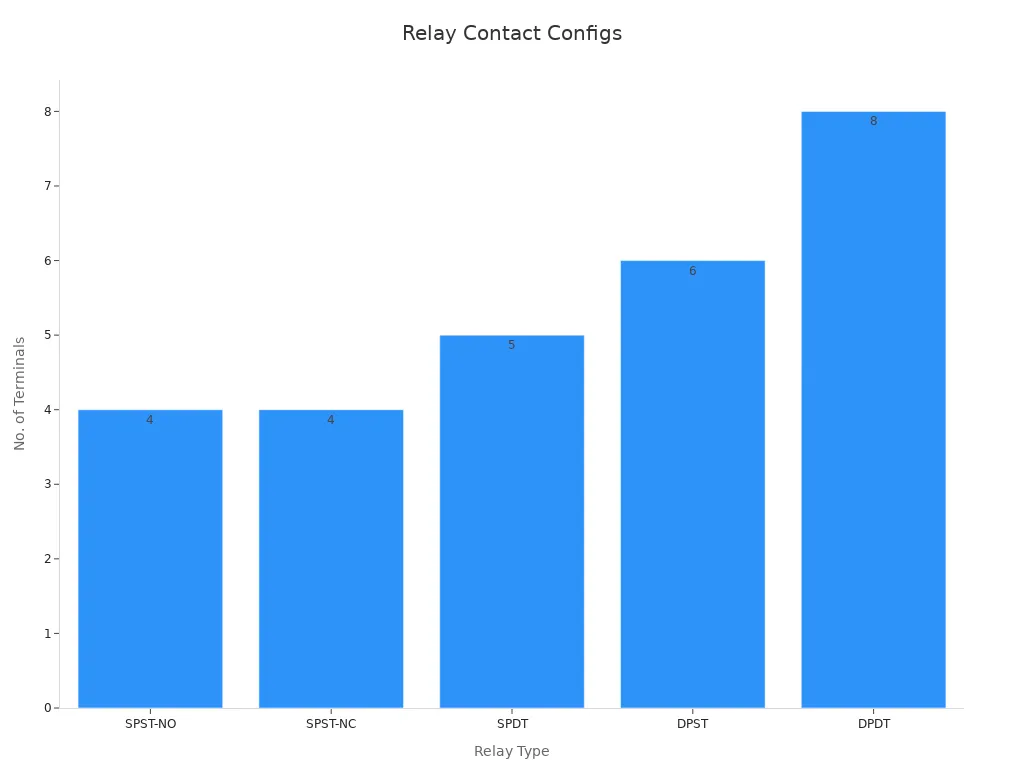
When choosing a relay, think about its contact setup. Relays with more contacts can control more circuits. These are great for complex systems like smart homes or factories.
Poles and Throws
Poles and throws show what a relay can do. Poles mean how many circuits it can control. Throws mean how many positions it can connect to. For example, an SPST relay has one pole and one throw. It's good for simple on/off tasks. A DPDT relay has two poles and two throws. It can manage two circuits and switch between outputs.
Here's a quick table:
|
Relay Type |
What It Means |
|---|---|
|
SPST |
One pole, one throw. |
|
SPDT |
One pole, two throws. |
|
DPDT |
Two poles, two throws each. |
Poles show how many circuits the relay controls.
Throws show how many positions it can switch to.
By knowing these details, you can find the right relay. For example, a DPDT relay works well for controlling two circuits in smart homes.
Limits of Relays
Relays are useful but have limits. These can affect how well they work and how long they last. Mechanical relays use moving parts like springs. Over time, these parts wear out. This makes them less reliable. Also, mechanical relays switch slower than solid-state ones.
Here are some limits to know:
Wear and tear: Moving parts wear out and work less well.
Switching speed: Mechanical relays are slower than solid-state ones.
Arcing: High voltage can damage relay contacts.
Voltage spikes: Relays can make high-voltage spikes when turned off. Extra parts may be needed to fix this.
Even with these limits, relays are still popular. Mechanical relays are cheap and handle high currents. They're great for cars and factories. But for fast switching or longer use, solid-state relays are better.
Application-specific requirements
When picking a relay, think about what your system needs. Different systems need different features to work well. Knowing these needs helps the relay work properly and last longer.
Voltage and Current Ratings
Each system has its own voltage and current needs. Pick a relay that meets or exceeds these levels. For example, industrial machines need relays that handle more current than home devices. Using a weak relay can cause overheating or failure.
Environmental Conditions
The place where the relay works is very important. Outdoor or tough environments need relays that resist water, dust, and heat. For example, car relays must handle vibrations and high heat. Choose relays with covers or coatings for protection.
Switching Speed
Some systems need quick switching. Solid-state relays are great because they have no moving parts. Mechanical relays are better for slower systems that need to handle high currents.
Size and Space Constraints
Small systems, like gadgets, need tiny relays. Mini relays save space but still work well. Bigger relays are better for heavy-duty systems where size doesn't matter.
Control Signal Requirements
The control signal type affects the relay choice. Some relays work with low DC signals, while others need higher AC signals. Make sure the relay matches the signal to avoid problems.
Durability and Lifespan
Systems that switch often need strong relays. Solid-state relays last longer because they don't have moving parts. For long-lasting systems, pick relays known for their durability.
Tip: Always check the relay's datasheet to confirm it fits your system. This avoids problems and ensures the best performance.
By thinking about these factors, you can choose the right relay. Whether for a smart home or factory, knowing your system's needs helps you pick the best relay control circuit.
Practical Uses of Relay Control Circuits
Car Systems (e.g., controlling lights, motors, and sensors)
Relays are important in today's car systems. They control parts like lights, motors, and sensors. For example, relays help turn on headlights or cooling fans. They let small signals control big devices, reducing stress on switches. This makes the system last longer.
In cars, relay reliability depends on their design and strength. Gold-plated contacts work well for low-power tasks. Stronger relays handle motor loads better. Using the wrong relay can cause failures, especially in tough conditions.
|
Evidence Type |
What It Means |
|---|---|
|
Contact-Horsepower Rating |
Shows how much motor load a relay can handle. |
|
Load Types |
Explains which loads (like lamps) are hardest on relays. |
|
Contact Specifications |
Suggests gold-plated contacts for small power tasks. |
|
Failure Risks |
Warns about problems from using the wrong relay in cars. |
Choosing the right relay keeps car systems working well and lasting longer.
Factory Automation (e.g., running machines and production lines)
Relays are key in factory automation. They control machines and production lines for smooth operation. These circuits are vital in smart factories, where automation boosts efficiency.
Relays use feedback to work well in real systems. They help find how often a system reaches certain levels. This method, introduced in 1984, is great for tuning controllers.
The relay market is growing fast. Key facts include:
In 2023, it was worth $32.5 billion and may reach $52.8 billion by 2033.
General-purpose relays make up over 35% of the market.
Factory automation is the biggest user of relays, thanks to new tech.
Relays improve safety and efficiency in factories, making them essential for modern automation.
Smart Homes (e.g., controlling appliances and lights)
Relays have changed how we use smart homes. They let you control lights, appliances, and security systems remotely. For example, a relay with a Raspberry Pi can manage devices from afar. This setup saves energy and adds convenience.
Relays work well with new tech in smart homes. They allow voice commands, schedules, and live monitoring. Whether automating lights or managing heating, relays are reliable and efficient.
Adding relays to your smart home makes life easier. You'll save energy, lower bills, and enjoy a smarter home.
Telecommunications and Data Systems
Relays are very important in telecommunications and data systems. They manage signals, switch circuits, and keep devices connected. You can find them in telephone systems, routers, and data centers. Their ability to handle many circuits makes them crucial for reliable communication.
What Do Relays Do in Telecommunications?
Relays perform key tasks to keep telecommunications systems working well:
Signal Switching: They move signals between channels or devices for smooth data flow.
Circuit Isolation: Relays separate control circuits from high-power ones to avoid interference.
Load Management: They spread electrical loads across circuits to stop overloads.
For example, in a telephone system, relays quickly switch circuits to connect calls. This ensures clear and uninterrupted communication.
Why Are Relays Important in Data Systems?
Relays help data systems run fast and securely. They control servers, storage, and network devices. This ensures smooth and safe data transfers.
Here's how relays help in data systems:
Power Control: They turn devices on or off as needed.
Fault Protection: Relays find and isolate problems to protect equipment.
Automation: They allow systems to work automatically, reducing manual work.
Tip: Use relays with fast switching for better performance in data systems.
Types of Relays Used in Telecommunications and Data Systems
Different relays are used for various tasks in telecommunications and data systems. Here's a simple table:
|
Relay Type |
Common Use Case |
Key Feature |
|---|---|---|
|
Solid-State Relays |
Fast data switching |
No moving parts, quick response |
|
Electromechanical Relays |
Telephone systems and signal routing |
Strong, handles high currents |
|
Reed Relays |
Modems and network devices |
Small, good for tiny signals |
Solid-state relays are best for modern systems because they are fast and reliable. Older systems often use electromechanical relays for high current needs.
Practical Examples of Relay Applications
Relays are used in many telecommunications and data systems. Some examples include:
Telephone Systems: Relays connect calls by switching circuits quickly.
Network Routers: They direct signals to improve data flow.
Data Centers: Relays manage power for servers and storage devices.
These examples show how relays handle complex tasks in these systems.
Relays help telecommunications and data systems work efficiently. By learning about their role, you'll see how they keep us connected every day.
Picking the Best Relay for Your Circuit Needs
Knowing relay details
To pick the right relay, you need to know its details. These details show if the relay works for your system. Companies give guides to make this easier. Follow these steps to check relay details:
Find the highest voltage (AC or DC) the relay will handle.
Check the highest current, including any sudden increases.
Look at the control current's voltage type and range (AC or DC).
Pick the mounting style: PCB, plug-in, DIN rail, or panel.
Decide how many circuits the relay will manage.
Identify the load type, like inductive or resistive.
Think about heat control if the relay gets hot.
By doing these steps, you'll know if the relay fits your system.
Matching relay features to your needs
To match a relay to your system, check its features and limits. Use this table to help you decide:
|
Factor |
What to Look For |
|---|---|
|
Mounting Type |
Pick one that fits the environment and mounting conditions. |
|
Drive Circuits |
Choose based on how the relay will operate. |
|
Contact Ratings |
Match ratings to the load type and expected lifespan. |
|
Switching Capacity |
Check graphs to ensure the relay can handle the needed capacity. |
For example, if your system is in a tough place, pick a relay with strong mounting. Also, make sure the contact ratings match the load to avoid damage.
Keeping circuits safe and reliable
Safety and reliability are very important for relay circuits. Rules and certifications make sure relays work well in different situations. The table below shows key rules:
|
Rule Name |
What It Covers |
|---|---|
|
PRC-023-1 Standard |
Explains settings for protective relays to keep electric systems safe. |
|
Rule R1 |
Requires owners to use settings that protect systems without limiting loads. |
|
Rule R1.7 |
Sets relay settings to work only above 115% of max current for reliability. |
Following these rules makes your relay system safer and last longer. Always check that your relay meets the needed certifications for the best results.
Relays are very useful and can control one or more circuits. Their design and setup decide how they work. They are important for many uses, like smart homes and factories. Features like finding problems, acting fast, and protecting systems make them safe and reliable.
|
Feature |
What It Does |
|---|---|
|
Problem Detection |
Checks for issues like short circuits. |
|
Fast Action |
Quickly stops problems to avoid harm. |
|
Flexible Protection |
Can be adjusted for different system needs. |
Knowing these features helps you pick the best relay for safe and easy circuit control.
FAQ
How many circuits can a relay control?
The number of circuits depends on the relay type. A DPDT relay controls two circuits. Relays with more poles can manage extra circuits. Always check the relay's specs to know its limits.
What happens if a relay handles too much current?
Too much current can overheat the relay. It may damage contacts or cause failure. This can lead to system problems or safety risks. Pick a relay with a current rating that fits your system.
How are SPST and DPDT relays different?
SPST relays control one circuit with on/off switching. DPDT relays control two circuits and switch between positions. Choose based on how many circuits you need to manage.
Which relay works best for fast switching?
Solid-state relays are great for quick switching. They have no moving parts, so they work faster. These relays last longer and are used in data systems and telecom.
What should you look for in outdoor relays?
Outdoor relays need protection from water, dust, and heat. Pick relays with IP-rated covers or coatings. This keeps them working well in tough conditions over time.