


You have to pick between pluggable relays and PCB relays for your project. If you want to fix or change parts often, a pluggable relay is best. If you need to save space and put the relay right on the board, use a PCB relay. Think about these things: how much room you have, how often you will change parts, and what your project needs
.
PCB relays have 64.9% of the market in 2024.
These relays are used a lot in things like ABS, cruise control, and power windows.
Europe and North America use PCB relays the most, but pluggable relays are more common with top makers in Asia-Oceania.
You will see a clear comparison and get helpful tips to choose the best one.
Key Takeaways
Pick a plug-in relay if you want easy replacement. You can change it fast and do not need special tools. This is good for projects that need many changes.
Use a PCB relay if you do not have much space. These relays go right on the circuit board. They help save space in small devices and keep things tidy.
Think about how much power your project needs. Plug-in relays work well with high currents. PCB relays are better for low or medium power jobs.
Make sure the relay has safety certifications. Look for marks like UL or CE. These marks show the relay is safe and protects your project.
Relay Types
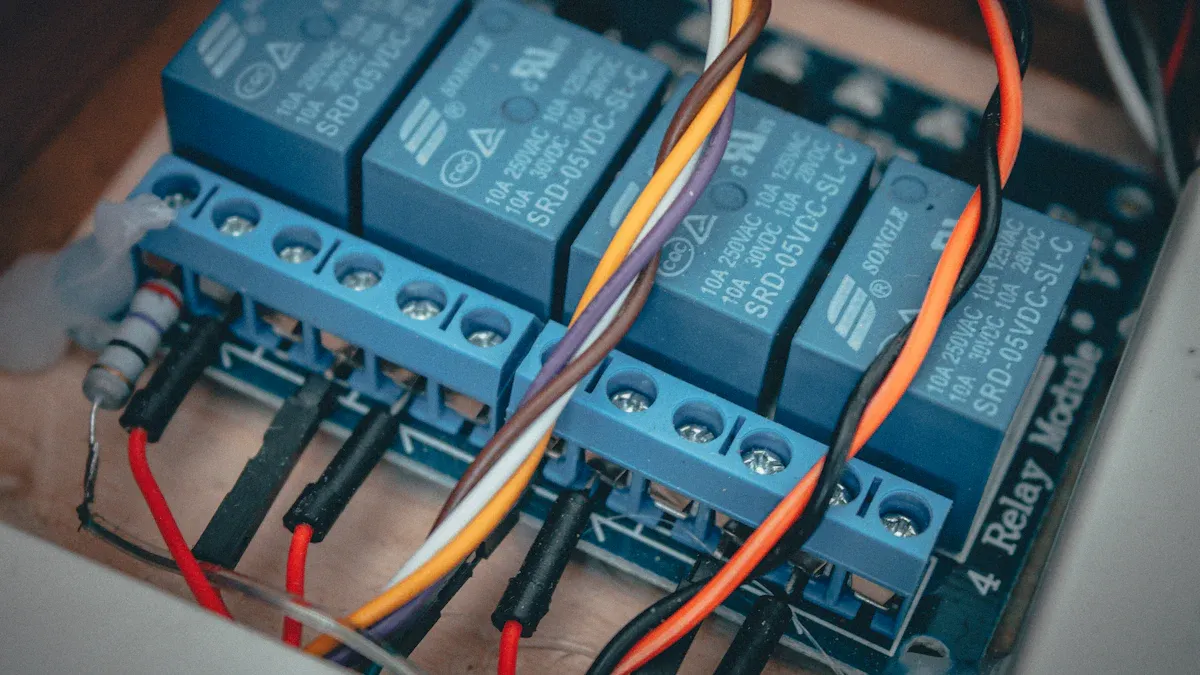
Relays come in different shapes and sizes. Each type does a special job in electronics. The table below shows the main relay types:
|
Relay Type |
Description |
|---|---|
|
Poles and Throws |
Sorted by how many poles and throws they have. |
|
Electromechanical Relays (EMR) |
Use moving contacts and an electromagnetic coil to work. |
|
Solid State Relays (SSR) |
Use semiconductors to keep low and high voltages apart. |
|
Reed Relays |
Have a coil and a reed switch inside a glass tube. |
|
Hybrid Relays |
Mix EMR and SSR features to fix their weak points. |
Plug-in Relay
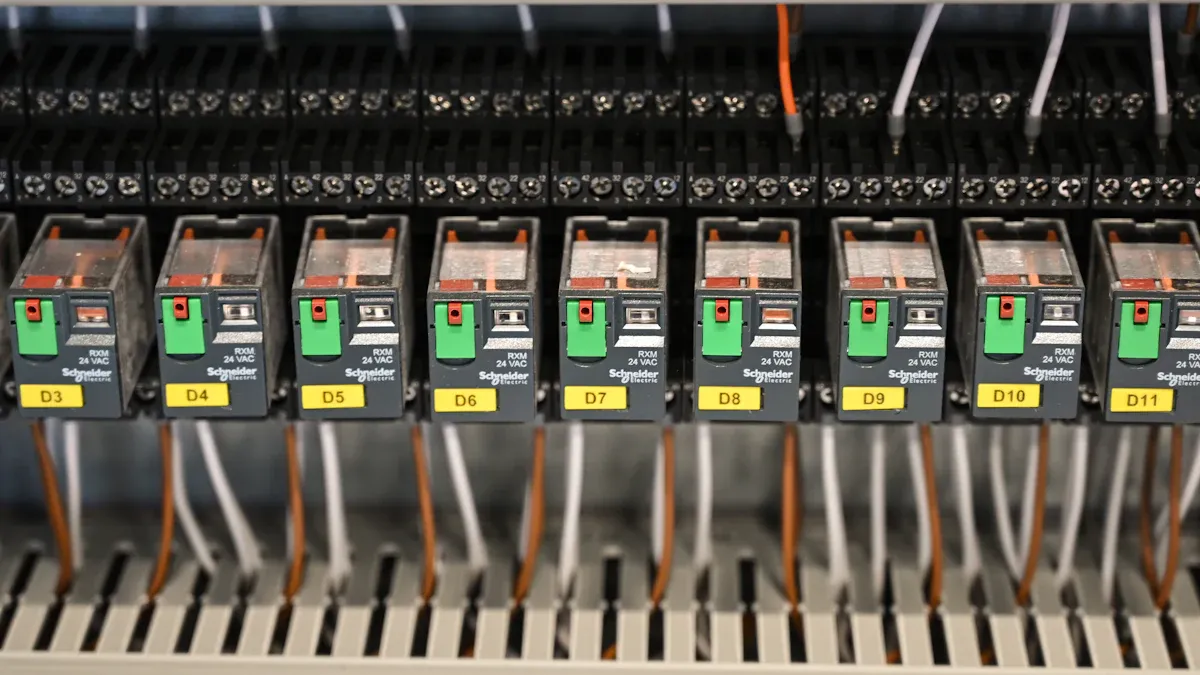
Plug-in relays are used when you need to change parts fast. People also call them electromechanical relays or industrial switches. They last a long time and work well. Some, like the 14-pin Eutroniks EOS-4N-T, can handle many loads and materials. You can use plug-in relays in:
Industrial control systems
PLC panels
CNC machines
Building electrical boxes
HVAC panels
Smart factories
A pluggable relay is good if you change relays a lot or use strong machines. You can take them out and put in new ones easily. This is why factories and big machines use them often.
Tip: Pick a pluggable relay if you want easy fixing and quick swaps in your project.
PCB Relay
PCB relays go right onto printed circuit boards. You see them in many new devices because they save space. They fit well in small designs. These relays let you control strong circuits with weak signals. They also keep control parts safe from high voltage. Some main uses and features are:
Making signals stronger for big electrical systems
Keeping circuits apart to protect weak parts
Controlling many circuits in complex electronics
PCB relays are used in:
Car electronics (like headlights and fuel pumps)
Home machines (washing machines, fridges)
Factory automation (factory machines, PLCs)
Phone equipment
Consumer electronics (computers, game consoles)
Green energy systems (solar, wind power)
Pick a PCB relay if you need to save space and want it on the board. This is best for automatic systems and small gadgets.
Key Differences
Installation
You will notice a big difference when you install these relays. A pluggable relay lets you push it into a socket. You do not need to solder it. You can pull it out and put in a new one if it fails. This makes your job faster, especially if you work in a factory or need to change relays often. PCB relays need you to solder them onto the board. You cannot remove them easily. If a PCB relay fails, you must desolder it and put in a new one. This takes more time and skill.
Tip: If you want quick and easy installation, choose a pluggable relay.
Space and Integration
Space matters a lot in your project. PCB relays save space because they sit flat on the board. You can fit many of them in a small area. This helps when you build small gadgets or tight control panels. Pluggable relays take up more room. They need a socket and extra space for your hand to pull them out. You may not fit as many in a small box.
|
Relay Type |
Space Needed |
Best For |
|---|---|---|
|
Pluggable relay |
More |
Large panels, factories |
|
PCB relay |
Less |
Small devices, gadgets |
Pin Arrangements
Pin arrangement affects how you connect the relay. PCB relays have flexible pin layouts. You can pick a relay that matches your board design. This helps you make custom circuits. Pluggable relays follow standard pin patterns. You must use a matching socket. This makes wiring simple and safe, but you have less freedom to change the layout.
PCB relays: Flexible pin options for custom boards.
Pluggable relay: Standard pins for easy, safe swaps.
Note: Always check your board or socket before you pick a relay. The right pin arrangement saves you time and trouble.
Safety and Reliability
Electrical Protection
You want your project to be safe. Both plug-in relays and PCB relays protect circuits. These relays keep high voltage away from weak parts. They also help stop short circuits and overloads. This keeps your system from getting hurt.
When picking a relay, look for safety marks and certifications. These marks show the relay is safe to use. Here is a table with common safety standards:
|
Standard/Certification |
Description |
|---|---|
|
EN 50205 (Type B) |
Needed for safety circuits |
|
CSA Mark |
Canadian safety approval |
|
UL Listed |
Meets US and Canadian rules |
|
CE Mark |
Follows European standards |
|
TUV Certified |
German safety certification |
|
EN 61810-1 |
General relay requirements |
|
UL 508 |
Industrial control equipment |
You might see relays that are:
UL recognized
CSA certified
VDE approved
CE marked
Some relays reach high safety levels like SIL3 under EN 61508. TÜV-NORD and TÜV Rheinland test and certify relays for safety worldwide.
Tip: Always check for these marks before buying a relay. These marks help you trust the relay to protect your project.
Durability
You want your relay to last a long time. Plug-in relays have strong cases and handle tough jobs. You can change them quickly if they wear out. This makes them good for places where you swap relays often.
PCB relays sit right on the board. They save space and work well in small devices. Many PCB relays have sealed cases to block dust and water. This helps them last longer in hard places.
Plug-in relays: Good for heavy jobs and easy swaps.
PCB relays: Good for small designs and steady places.
Both types can last thousands of cycles if used right. Always pick the relay that fits your project's needs for the best safety and reliability.
Maintenance
Replacement Ease
You want to keep your project running with as little downtime as possible. When you use a pluggable relay, you can swap it out quickly. You just pull the old relay from its socket and push in a new one. This makes repairs fast and simple. You do not need special tools or soldering skills. Many factories and large machines use this type because it saves time during maintenance.
PCB relays work differently. You must desolder the relay from the board if it fails. This process takes more time and needs careful hands. You might need to remove the whole board from your device. If you do not have experience with soldering, you may find this task hard. For projects where you expect to replace relays often, a pluggable relay gives you a clear advantage.
Tip: Choose a pluggable relay if you want to make maintenance quick and easy.
Troubleshooting
Finding problems in your relay system can be tricky. Both types of relays have common issues you should watch for:
Contact resistance can build up in PCB relays. This causes voltage drops and may lead to overheating.
Contact bounce happens when relay contacts vibrate. This can create electrical noise or false signals.
Coil overheating may occur if too much current flows or if heat cannot escape. This affects how well the relay works.
Environmental factors like humidity and temperature can change how your relay performs.
You can test a pluggable relay by removing it and checking it in another socket. This helps you find faults faster. With PCB relays, you need to check the board and use tools to measure resistance or voltage. This takes more time and skill.
|
Relay Type |
Replacement |
Troubleshooting |
|---|---|---|
|
Pluggable relay |
Very easy |
Simple, quick testing |
|
PCB relay |
Harder |
Needs tools, more time |
Remember: Regular checks help you catch problems early and keep your project safe.
Pluggable Relay Advantages
Standardization
A pluggable relay uses set rules for pin layouts and sizes. These rules, like ISO pin patterns, help you swap relays from different brands. You do not need to find the exact same relay each time. This makes repairs or upgrades much faster. You can keep extra relays ready and know they will fit your sockets.
Tip: In a busy workshop or factory, standardization means less mix-ups and quicker repairs.
It is also easy to install a pluggable relay. You just push it into its socket. There is no need to solder or use special tools. If a relay breaks, you can change it in seconds. This keeps your machines working with less waiting.
High-Power Use
A pluggable relay is great for controlling lots of electricity. These relays can handle high currents and voltages easily. You will find them in many strong systems. Here are some places they are used:
HVAC systems: They control heaters, fans, and compressors because they handle high current.
Automotive industry: They manage headlights and power windows, keeping circuits safe from too much current.
Power generation and distribution: They protect circuits and control loads, keeping bad circuits apart.
Security systems: They control locks and set off alarms when needed.
Pick a pluggable relay if your project needs lots of repairs or uses strong electrical loads. In a factory, you might need to change relays often to keep machines running. In a car, you want a relay that can handle the power for windows or lights.
Note: Pluggable relays give you both power and speed. You can count on them for hard jobs and fast fixes.
PCB Relay Benefits
Compact Design
If you want your project to be small, use PCB relays. These relays have a tiny shape. You can put them right on your circuit board. This helps you save space and keeps things tidy. You do not need extra wires or sockets for them. You can fit many relays close together. This is good for smart home gadgets, car electronics, and small machines.
PCB relays let you pick different pin layouts. You can choose one that matches your board. This makes building custom circuits easier. You can change the layout to fit what you need. This helps you make new products faster.
Tip: Pick PCB relays if you want to save space or keep your board neat.
Here are some reasons to use a PCB relay for direct board mounting:
You get great reliability and durability. PCB relays work well even in tough places.
Their small size fits into tight spots.
You can use them in many kinds of projects. They are very flexible.
It is easy to install and fix them. Technicians can work faster and stop downtime.
Automated Integration
You can use PCB relays in automatic systems. These relays work well with machines that build boards. Robots can place them quickly and accurately. This saves time and lowers costs.
PCB relays help you use smart technology. They make your system safer and more efficient. You can change your design easily if you need to. This gives you more choices for upgrades later.
Better performance
Lower costs
More flexibility
Using smart technology for safety and efficiency
PCB relays give you a good mix of saving space and easy setup. You can build modern, strong, and efficient systems with them.
Choosing for Your Project
Application Fit
You want your project to work well and last a long time. Picking the right relay helps you reach that goal. Start by thinking about how you will use the relay. Ask yourself these questions:
Will you need to replace relays often?
Do you have limited space on your board?
Does your project need to handle high power?
Will you use automated assembly for your boards?
If you plan to fix or swap parts quickly, a pluggable relay fits best. You can pull it out and put in a new one without tools. Factories and workshops use these relays because they save time during repairs.
If you want to save space and keep your design neat, choose a PCB relay. You can mount it right on your board. This helps you build small devices like smart home gadgets or car electronics. PCB relays also work well with machines that build boards automatically.
You should also think about the power your project needs. Pluggable relays handle high currents and voltages. They work well in strong machines and heavy-duty systems. PCB relays fit best in low-power or compact devices.
Tip: Match the relay type to your project's main needs. This helps you avoid problems and keeps your system safe.
Decision Checklist
You can use this checklist to help you pick the right relay for your project. Go through each point and see which relay fits your needs.
Relay Selection Checklist
Maintenance Needs
Will you replace relays often?
Yes: Pluggable relay
No: PCB relay
Space Constraints
Do you need to save space on your board?
Yes: PCB relay
No: Pluggable relay
Power Requirements
Does your project use high current or voltage?
Yes: Pluggable relay
No: PCB relay
Integration and Assembly
Will you use automated board assembly?
Yes: PCB relay
No: Pluggable relay
Pin Arrangement
Do you need flexible pin layouts?
Yes: PCB relay
No: Pluggable relay
Replacement Ease
Do you want quick and easy relay swaps?
Yes: Pluggable relay
No: PCB relay
Common Mistakes to Avoid
|
Mistake |
Why It Matters |
|---|---|
|
Incorrect Coil Voltage |
If you pick a relay with the wrong coil voltage, it will not work in your circuit. |
|
Underestimating Load Voltage |
If the relay cannot handle the load voltage, your project may fail. |
|
Ignoring Current Ratings |
If you forget to check current ratings, the relay can overheat or break. |
Note: Always check the coil voltage, load voltage, and current ratings before you buy a relay. This helps you avoid common mistakes and keeps your project safe.
Expert Tips for Final Selection
Read the datasheet for each relay. You will find important details like voltage, current, and pin layout.
Look for safety marks such as UL, CE, or TUV. These marks show the relay meets safety standards.
Test the relay in your circuit before you use it in your final design.
Keep spare relays on hand if you expect frequent replacements.
Ask for advice from experienced technicians if you feel unsure.
🛠️ Picking the right relay makes your project safer and easier to maintain. Take your time, use the checklist, and double-check your choices.
Pick a pluggable relay if you want easy fixes and to save money later, especially for big projects. PCB relays are better when you need to save space or use machines to build your boards. Use this checklist to help you decide:
|
Step |
Description |
|---|---|
|
Check your load first |
Look at the current, voltage, and type of load. |
|
Think about your space |
Consider heat, shaking, dust, or wetness. |
|
Match your control signal |
Make sure the coil voltage works with your circuit. |
|
If unsure, go bigger |
Choose a relay with a higher rating for safety and longer use. |
Always pick a relay that fits what your project needs. If you are not sure, ask someone who knows more. This way, your system will stay safe and work well. 🚦
FAQ
What is the main difference between a plug-in relay and a PCB relay?
You can remove a plug-in relay from its socket easily. You must solder a PCB relay onto a board. Plug-in relays work best for quick changes. PCB relays save space in small devices.
Can I use a PCB relay in high-power applications?
You should not use most PCB relays for high-power jobs. They work best in low or medium-power circuits. For high-power needs, you should pick a plug-in relay.
How do I know which relay fits my project?
Check your project's needs.
Need easy replacement? Use a plug-in relay.
Need to save space? Use a PCB relay.
Need high power? Use a plug-in relay.
Are plug-in relays more expensive than PCB relays?
Plug-in relays often cost more than PCB relays. You pay for easy replacement and strong build. PCB relays cost less and fit better in small, low-cost devices.
Do both relay types need special tools for installation?
You do not need special tools for plug-in relays. You just push them into the socket. You need a soldering iron for PCB relays. This tool helps you attach the relay to the board.
See also
Factors to Consider When Choosing a Solid-State Relay Manufacturer
Which types of loads are not suitable for using solid-state relays?
Can solid-state relays be used without a heat sink?
The role of solid-state relays in 3D printers and CNC machine tools