

When it comes to the application of solid state relays (SSRs) in high - frequency circuits, it is a topic that has intrigued many electrical engineers and enthusiasts alike. As a solid state relay supplier, I've had numerous conversations with customers about the suitability of SSRs in high - frequency scenarios. In this blog, I'll delve into the technical aspects, advantages, limitations, and real - world applications to help you determine whether a solid state relay can be used in a high - frequency circuit.
Understanding Solid State Relays
Before we discuss high - frequency applications, let's briefly understand what solid state relays are. A solid state relay is an electronic switching device that uses semiconductor components to perform the function of a traditional electromechanical relay. Unlike electromechanical relays, which rely on moving parts such as contacts to open and close a circuit, SSRs use opto - isolators, thyristors, or transistors to achieve the same goal. This design offers several benefits, including faster switching times, longer lifespan, and immunity to mechanical wear and tear.
High - Frequency Circuits: What Are They?
High - frequency circuits typically operate at frequencies above 100 kHz. These circuits are commonly found in applications such as radio frequency (RF) communication systems, power converters, and high - speed data transmission. In high - frequency circuits, the performance requirements are significantly different from those of low - frequency or DC circuits. Factors such as signal integrity, switching speed, and electromagnetic interference (EMI) become critical considerations.
Can a Solid State Relay Be Used in a High - Frequency Circuit?
The answer is both yes and no. It depends on several factors, including the type of SSR, the specific requirements of the high - frequency circuit, and the trade - offs between performance and cost.
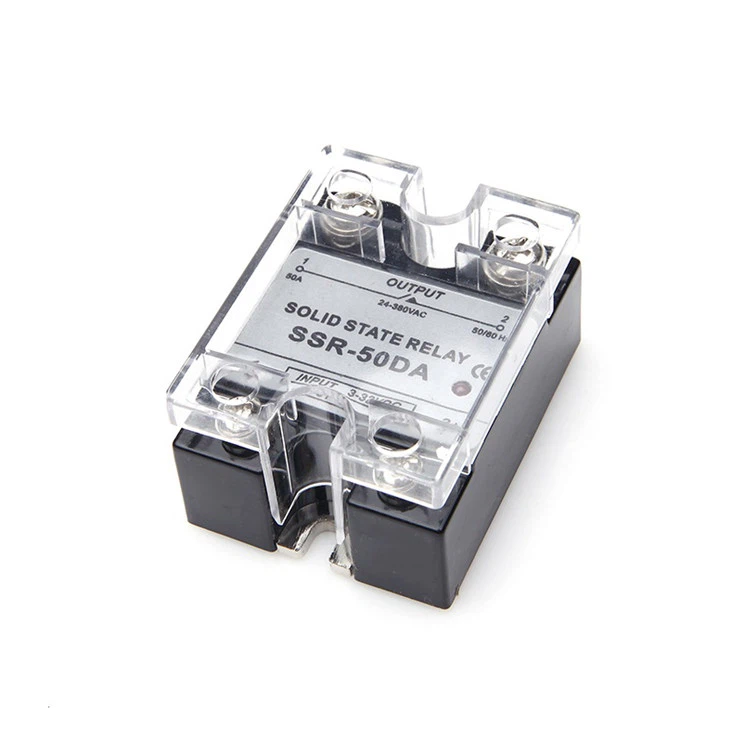

Advantages of Using SSRs in High - Frequency Circuits
- Fast Switching Speed: One of the primary advantages of SSRs is their fast switching speed. Compared to electromechanical relays, which may take several milliseconds to switch, SSRs can switch in microseconds or even nanoseconds. This makes them suitable for high - frequency applications where rapid switching is required.
- Low EMI: SSRs produce less electromagnetic interference than electromechanical relays. Since they have no moving parts, there is no arcing or contact bounce, which can generate EMI. This is particularly important in high - frequency circuits, where EMI can disrupt the operation of sensitive components.
- Long Lifespan: SSRs have a longer lifespan than electromechanical relays. With no mechanical contacts to wear out, they can withstand millions of switching cycles without significant degradation in performance. This makes them a reliable choice for high - frequency applications that require continuous operation.
Limitations of Using SSRs in High - Frequency Circuits
- High Output Capacitance: Most SSRs have a relatively high output capacitance, which can limit their performance in high - frequency circuits. The output capacitance can cause signal attenuation and distortion, especially at higher frequencies. This can result in a loss of signal integrity and reduced circuit efficiency.
- Limited Frequency Response: While SSRs can switch rapidly, their frequency response is still limited compared to some other high - frequency switching devices. The internal components of an SSR, such as the opto - isolator and the semiconductor switch, have their own frequency limitations. Beyond a certain frequency, the SSR may not be able to switch accurately or efficiently.
- Power Dissipation: High - frequency operation can cause increased power dissipation in an SSR. As the switching frequency increases, the power losses in the semiconductor switch also increase. This can lead to overheating and reduced reliability if the SSR is not properly cooled.
Types of SSRs for High - Frequency Applications
Not all SSRs are created equal when it comes to high - frequency applications. Some types of SSRs are better suited for high - frequency operation than others.
- MOSFET - Based SSRs: MOSFET - based SSRs are often a good choice for high - frequency circuits. MOSFETs have a fast switching speed and low on - resistance, which can minimize power losses and improve circuit efficiency. They also have a relatively low output capacitance compared to other types of SSRs, which helps to reduce signal distortion.
- IGBT - Based SSRs: IGBT - based SSRs are suitable for high - power, high - frequency applications. IGBTs can handle high currents and voltages, making them ideal for power converters and motor control circuits. However, they may have a slightly slower switching speed than MOSFETs and may require more complex gate drive circuits.
Real - World Applications
Despite their limitations, SSRs are used in a variety of high - frequency applications.
- RF Communication Systems: In RF communication systems, SSRs can be used to switch between different RF paths or to control the power output of RF amplifiers. Their fast switching speed and low EMI make them a good choice for these applications.
- Power Converters: SSRs are commonly used in power converters, such as DC - DC converters and AC - DC converters. They can be used to switch the input or output voltage, control the power flow, or protect the circuit from over - current or over - voltage conditions.
- High - Speed Test Equipment: In high - speed test equipment, SSRs can be used to switch between different test signals or to control the operation of test probes. Their fast switching speed and long lifespan make them a reliable choice for these applications.
Choosing the Right SSR for Your High - Frequency Circuit
When choosing an SSR for a high - frequency circuit, it is important to consider the following factors:
- Switching Speed: Make sure the SSR has a switching speed that is fast enough for your application. Consider the rise time, fall time, and total switching time of the SSR.
- Output Capacitance: Look for an SSR with a low output capacitance to minimize signal distortion and attenuation.
- Power Rating: Choose an SSR with a power rating that is suitable for your application. Consider the maximum current and voltage that the SSR will need to handle.
- Frequency Response: Check the frequency response of the SSR to ensure that it can operate at the desired frequency. Some SSRs may have a specified maximum operating frequency.
As a solid state relay supplier, we offer a wide range of SSRs suitable for various applications, including high - frequency circuits. Our 100a Dc Solid State Relay is designed to handle high currents and is ideal for power - intensive high - frequency applications. For those looking for cost - effective solutions in bulk, our Wholesale 24V Solid State Relays provide reliable performance. And if space is a concern, our Mini Solid State Relays offer a compact design without compromising on functionality.
If you are considering using an SSR in a high - frequency circuit, we encourage you to contact us for more information. Our team of experts can help you choose the right SSR for your specific requirements and provide technical support throughout the procurement process. Whether you are a small - scale hobbyist or a large - scale industrial manufacturer, we are committed to providing you with the best solid state relay solutions.
References
- "Solid State Relay Handbook" by International Rectifier
- "High - Frequency Electronics" magazine
- IEEE Transactions on Power Electronics