

When it comes to the world of electrical components, solid-state relays (SSRs) play a crucial role, especially in applications where reliability, speed, and efficiency are paramount. As a trusted supplier of 3A DC solid-state relays, I am often asked about various technical aspects of these devices. One question that frequently arises is, "What is the on-state voltage of a 3A DC solid-state relay?" In this blog post, I will delve into this topic, providing you with a comprehensive understanding of on-state voltage and its significance in the performance of 3A DC solid-state relays.
Understanding Solid-State Relays
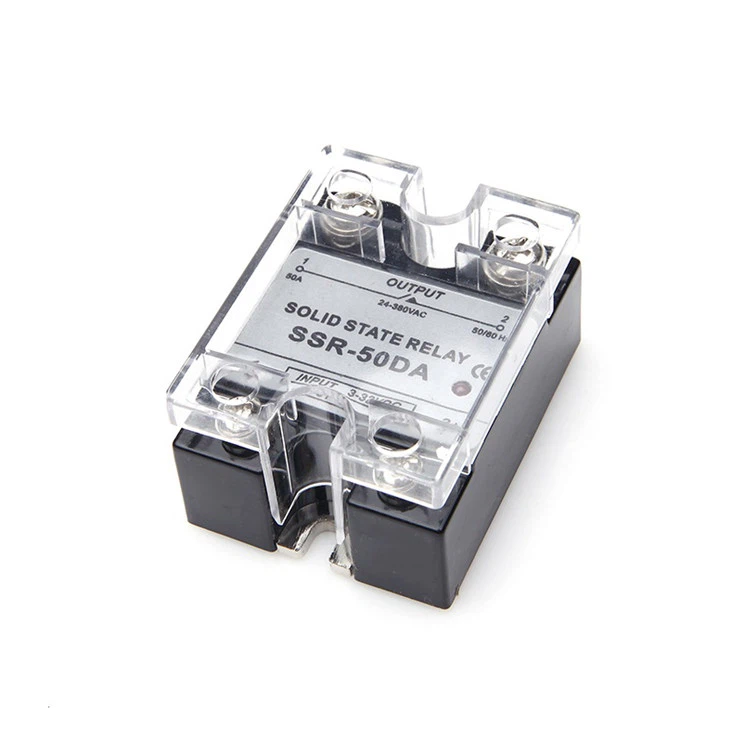
Before we dive into the on-state voltage, let's briefly review what solid-state relays are. A solid-state relay is an electronic switching device that uses semiconductor components, such as thyristors, triacs, or MOSFETs, to control the flow of electrical current. Unlike traditional electromechanical relays, which rely on moving parts, solid-state relays have no mechanical contacts. This design offers several advantages, including faster switching speeds, longer lifespan, reduced electrical noise, and immunity to mechanical wear and tear.
3A DC solid-state relays, in particular, are designed to handle direct current (DC) loads of up to 3 amperes. They are commonly used in a wide range of applications, including industrial automation, robotics, power supplies, and automotive electronics. These relays are known for their compact size, high reliability, and excellent performance in DC circuits.
What is On-State Voltage?
The on-state voltage, also known as the forward voltage drop or conduction voltage drop, is a critical parameter of a solid-state relay. It refers to the voltage difference across the relay's output terminals when it is in the "on" state, i.e., when it is conducting current. In other words, it is the voltage that is lost or dissipated across the relay when it is allowing current to flow through the load.
The on-state voltage is typically measured in volts (V) and is specified in the relay's datasheet. It is an important consideration because it directly affects the power dissipation and efficiency of the relay. A lower on-state voltage means less power is wasted as heat, resulting in higher efficiency and lower operating temperatures. Conversely, a higher on-state voltage can lead to increased power consumption, reduced efficiency, and potentially higher operating temperatures, which may require additional cooling measures.

Factors Affecting On-State Voltage
Several factors can influence the on-state voltage of a 3A DC solid-state relay. These include:
- Semiconductor Material: The type of semiconductor material used in the relay's output stage plays a significant role in determining the on-state voltage. For example, MOSFET-based solid-state relays generally have lower on-state voltages compared to thyristor-based relays. This is because MOSFETs have a lower forward voltage drop when conducting current.
- Current Rating: The on-state voltage of a solid-state relay is also affected by the amount of current flowing through it. As the current increases, the on-state voltage typically increases as well. This is due to the internal resistance of the semiconductor components, which causes a voltage drop proportional to the current.
- Temperature: Temperature can have a significant impact on the on-state voltage of a solid-state relay. As the temperature rises, the on-state voltage tends to increase. This is because the resistance of the semiconductor material increases with temperature, resulting in a higher voltage drop across the relay.
- Manufacturing Tolerances: Manufacturing variations can also cause slight differences in the on-state voltage of individual relays. These variations are typically within the specified tolerance range provided by the manufacturer.
Importance of On-State Voltage in 3A DC Solid-State Relays
In 3A DC solid-state relays, the on-state voltage is particularly important for several reasons:
- Power Dissipation: As mentioned earlier, the on-state voltage directly affects the power dissipation of the relay. A lower on-state voltage means less power is wasted as heat, which can help reduce energy consumption and operating costs. This is especially important in applications where the relay is used continuously or in high-power circuits.
- Efficiency: The efficiency of a solid-state relay is defined as the ratio of the output power to the input power. A lower on-state voltage results in higher efficiency, as more of the input power is transferred to the load. This can be crucial in applications where energy efficiency is a priority, such as in battery-powered devices or energy-efficient lighting systems.
- Thermal Management: The on-state voltage also affects the thermal performance of the relay. Higher on-state voltages can lead to increased power dissipation and higher operating temperatures, which may require additional cooling measures, such as heat sinks or fans. By choosing a relay with a lower on-state voltage, you can reduce the thermal stress on the device and improve its reliability and lifespan.
- Load Compatibility: The on-state voltage can also impact the compatibility of the relay with certain loads. Some loads, such as sensitive electronic devices or low-voltage circuits, may require a relay with a very low on-state voltage to ensure proper operation. In these cases, it is important to select a relay that meets the specific requirements of the load.
How to Choose a 3A DC Solid-State Relay Based on On-State Voltage
When selecting a 3A DC solid-state relay, it is important to consider the on-state voltage along with other important parameters, such as the input voltage, output voltage, switching speed, and load current. Here are some tips to help you choose the right relay for your application:
- Check the Datasheet: The datasheet of the relay provides detailed information about its electrical characteristics, including the on-state voltage. Look for a relay with a low on-state voltage to minimize power dissipation and improve efficiency.
- Consider the Load Requirements: The load requirements, such as the type of load (resistive, inductive, or capacitive), the load current, and the operating temperature, can also influence the choice of relay. Make sure the relay you choose is capable of handling the specific load requirements of your application.
- Evaluate the Application Environment: The application environment, such as the ambient temperature, humidity, and vibration levels, can also affect the performance of the relay. Choose a relay that is designed to operate in the specific environmental conditions of your application.
- Compare Different Models: It is always a good idea to compare different models of 3A DC solid-state relays from different manufacturers to find the one that offers the best combination of performance, reliability, and cost. Look for relays that have a proven track record of quality and performance in similar applications.
Conclusion
In conclusion, the on-state voltage is a critical parameter of a 3A DC solid-state relay that directly affects its power dissipation, efficiency, thermal performance, and load compatibility. By understanding the concept of on-state voltage and its importance in the performance of these relays, you can make an informed decision when selecting a relay for your application.
As a supplier of high-quality 3A DC solid-state relays, we offer a wide range of products with low on-state voltages, high efficiency, and excellent reliability. Our relays are designed to meet the demanding requirements of various applications, including industrial automation, robotics, power supplies, and automotive electronics. Whether you need a Mini Solid State Relays, a 24v Ssr Relay, or a 24V AC Solid State Relay, we have the right solution for you.
If you have any questions or need further information about our 3A DC solid-state relays, please do not hesitate to contact us. Our team of experts is always ready to assist you with your procurement needs and provide you with the best possible solutions. We look forward to working with you and helping you find the perfect solid-state relay for your application.
References
- Solid State Relay Handbook, Various Manufacturers
- Electrical Engineering Textbooks on Power Electronics and Switching Devices