

You can read relay datasheet by focusing on the main specifications, as each one affects how your project operates. When you read relay datasheet, you'll notice they cover different types of relays, each designed for a specific purpose. Before you start, check the main categories:
Electromechanical relays
Solid-state relays
Reed relays
Choosing the right relay is important for any circuit. With practice, you'll feel confident as you read relay datasheet.
Key Takeaways
You should always read the relay datasheet first. This helps you pick the right relay for your project. It also helps you avoid making mistakes.
Look at important details like coil voltage. Check the contact current rating and contact voltage rating too. These things make sure the relay is safe in your circuit.
Learn about the pin layout and markings on the relay. This helps you connect the relay the right way. It also stops you from making wiring mistakes.
Look at the reliability and lifespan ratings in the datasheet. This tells you how long the relay will work in different situations.
Use the datasheet to help you with wiring. If you follow the wiring diagram, you can set up the relay safely and correctly.
Read Relay Datasheet Basics
What Is a Relay Datasheet?
A relay datasheet is a paper that tells you about a relay. It helps you know how the relay works and if it fits your project. When you read relay datasheet, you see parts that show how to connect it, what it can do, and how long it will last. This keeps you from making mistakes and keeps your circuit safe.
You will usually find these parts in a relay datasheet:
Model overview and operation modes (like on-delay or off-delay)
Time range settings and adjustment methods
Electrical ratings (supply voltage, input circuit, power use)
Output specifications (contact type, ratings, endurance)
Performance characteristics (timing, accuracy, environment effects)
Environmental ratings (temperature, humidity, vibration)
Standards and approvals (certifications)
Dimensions and wiring diagrams
Tip: Always look at the datasheet before using a new relay. This helps you pick the right relay for your project.
A relay datasheet is helpful for beginners because it shows what the relay can do. If you skip reading it, you might choose a relay that cannot handle your circuit's voltage or current. This could break your project or cause safety issues.
Here is a table that explains why each part of a relay datasheet matters:
|
Aspect |
Importance |
|---|---|
|
Coil Voltage Rating |
Makes sure the relay works with your power source |
|
Contact Current Rating |
Prevents damage from too much current |
|
Contact Type |
Helps you choose the right relay for your circuit |
|
Switching Speed |
Affects how fast your circuit responds |
|
Environmental Conditions |
Keeps the relay reliable in your project's space |
Key Specs: Voltage, Current, and Resistance
When you read relay datasheet, you should look at three main specs: voltage, current, and resistance. These numbers help you know if the relay will work in your circuit.
Coil Voltage: This is the voltage needed to turn the relay on. Most relays work if you give them between 80% and 120% of their coil voltage. For example, a relay rated at 24V will still work if you give it between 19.2V and 28.8V.
Contact Current Rating: This shows the most current the relay can safely switch. If your circuit uses more current, the contacts might burn or stick. Some circuits, like ones with motors or lamps, have a high inrush current when you turn them on. This inrush current can be up to 10 times higher than normal. Always pick a relay with a current rating higher than your circuit's highest current.
Contact Voltage Rating: This is the highest voltage the relay contacts can safely switch. If you use more voltage, the relay might arc or stop working.
Coil Resistance: This tells you how much resistance is in the relay coil. It helps you know how much current the coil will use from your power supply.
Contact Resistance: This is the resistance between the relay's contacts when closed. Lower contact resistance means less heat and better work. Here is a table with common values:
|
Relay Type |
Average Contact Resistance (mΩ) |
|---|---|
|
General Relays |
50 to 200 |
|
Signal/Dry-Circuit Relays |
Lower than 50 |
|
Power Relays/Contactors |
Higher than 200 |
Note: Some relays have a minimum switch capacity. If you use them with very small signals, the contacts might not work well.
You also need to know about 4-pin relay and 5-pin relay types. A 4-pin relay has two pins for the coil and two for the contacts. A 5-pin relay has an extra contact, so you can switch between two circuits.
Reliability and Lifespan
Reliability means the relay will work well for a long time. Lifespan tells you how many times you can turn the relay on and off before it stops working. Relay datasheets show two types of lifespan:
Mechanical Durability: This is how many times the relay can switch with no load. It shows how strong the relay is inside.
Electrical Durability: This is how many times the relay can switch with a load, like a lamp or motor. This number is lower because switching with a load wears out the contacts faster.
Relay datasheets often have graphs that show how long the relay will last at different loads. You should always check these graphs to make sure the relay will last in your circuit.
Many things can change relay reliability:
Surge current durability: The relay must handle the highest inrush current in your circuit.
Voltage rating: The relay's voltage rating must match or be higher than your circuit's voltage.
Operating environment: High or low temperatures, humidity, dust, or vibration can make the relay wear out faster. Some relays have sealed cases or coatings for tough places.
Mechanical stress: Vibration or shock can make the relay fail early. Use anti-vibration mounts if needed.
Proper derating: Using a relay below its top ratings helps it last longer.
Protective components: Adding snubber circuits or diodes can protect the relay from voltage spikes.
Tip: Mechanical life is tested without a load, but electrical life is what matters most in real circuits.
If you want your relay to last, always use it within its ratings and add protection if your circuit has lots of surges or spikes. Without enough protection, the relay's lifespan can get shorter fast.
Relay Pin Reference and Markings
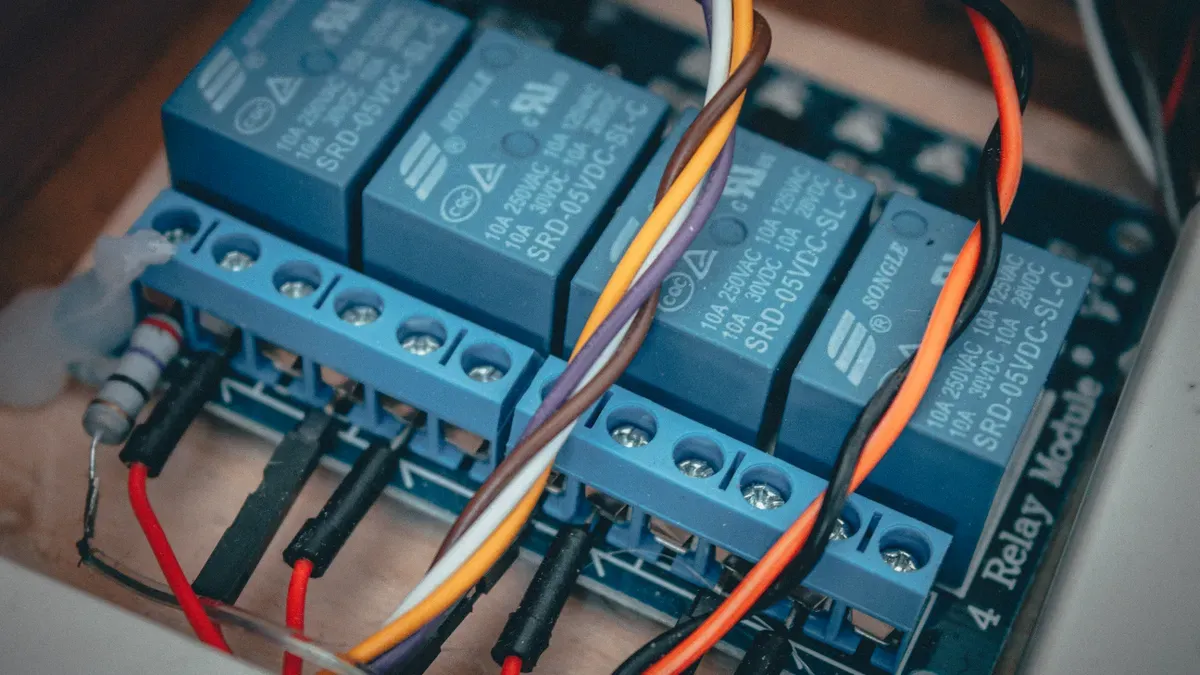
Understanding Relay Pin Numbers
When you look at a relay, you will see several pins on the bottom or side. Each pin has a special job. You need to know what each pin does before you connect the relay to your circuit. Most relays use numbers or letters to label each pin. For example, in automotive relays, you often see pins labeled 85, 86, 30, 87, and 87a. Each number stands for a different function:
85 and 86: These pins connect to the relay coil. When you apply voltage here, the relay switches.
30: This pin is the common contact. It connects to either 87 or 87a, depending on if the relay is on or off.
87: This pin is the normally open (NO) contact. It connects to 30 when the relay turns on.
87a: This pin is the normally closed (NC) contact. It connects to 30 when the relay is off.
You may also see other pin names in relay datasheets. Here is a table to help you understand common relay pin types:
|
Pin Type |
Description |
|---|---|
|
Coil Contacts |
Named A1 and A2. |
|
Complex Relays |
Each coil pin has a letter and a number showing the coil and tap number. |
|
Bistable Relays |
S+ or S- for Set coil; R+ or R- for Reset coil. |
|
NC Contacts |
Labeled as x1 and x2. |
|
NO Contacts |
Labeled as x3 and x4. |
|
Changeover Contacts |
x1 for common, x2 for NC, x4 for NO. |
When you use a relay pin reference, always check the datasheet diagram. This helps you match each pin to its job and avoid mistakes.
Reading Relay Markings and Schematics
Relay markings help you connect the relay the right way. You will find small numbers or letters next to each pin on the relay body. These markings match the relay datasheet. If you see a diagram, it shows how the pins connect inside the relay.
Relay schematics use symbols to show how the relay works in a circuit. You might see different letters for relays in diagrams:
RL is a common label for a relay.
RLY is another label you may see.
K is a popular symbol for relays in many schematics.
Sometimes, relays get numbers or letters, like RLY1 or K2, if there are several in one circuit.
When you read a schematic, look for these symbols. They help you find the relay and see how each pin connects to the rest of the circuit. Always match the relay pin numbers from the datasheet to the schematic. This step keeps your wiring safe and correct.
Tip: If you ever feel unsure, double-check the relay pin reference diagram in the datasheet. This habit will help you avoid wiring errors and keep your project running smoothly.
How to Wire a Relay
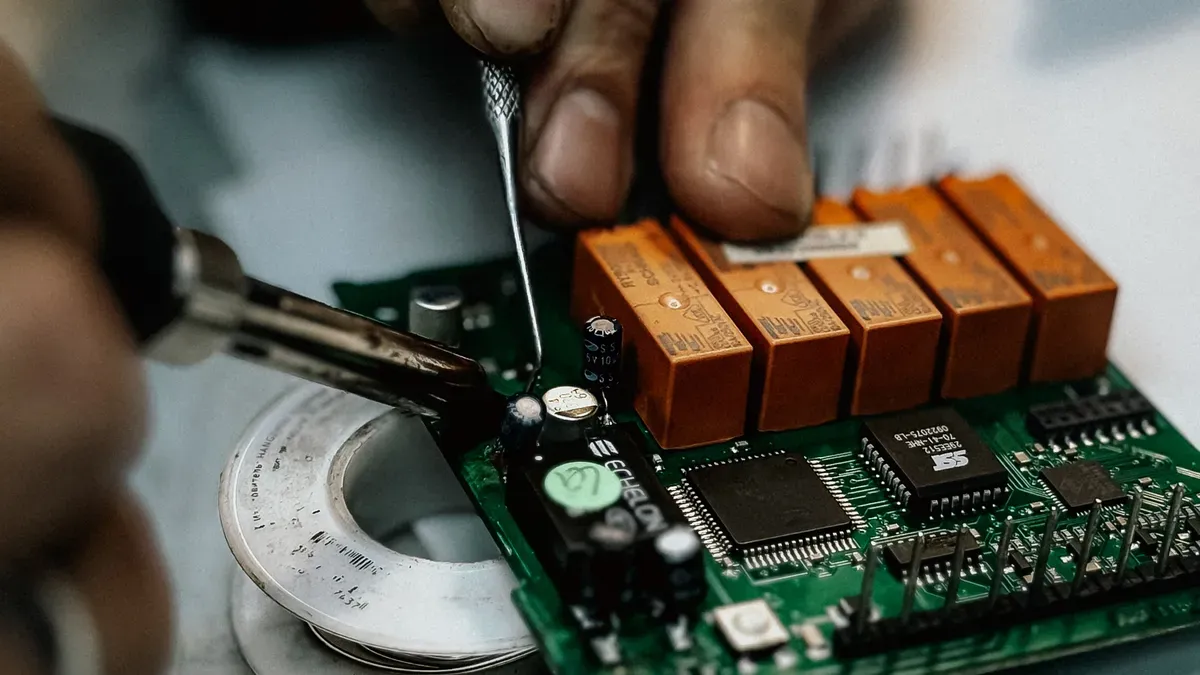
Relay Wiring Diagram Basics
When you start to wire a relay, you need to know some basics. A relay diagram shows how the inside parts connect. It helps you hook up each pin the right way. Most datasheets have a diagram. This diagram shows the coil terminals, the control circuit, and the contact setup. You will see symbols for the coil, the armature, and the contacts. The contacts can be normally open or normally closed. The diagram helps you not make mistakes when wiring a relay to a switch or another device.
Here is a table with the main parts you will see in a basic relay wiring diagram:
|
Component |
Description |
|---|---|
|
Electromagnet |
Coil of wire with a metal core that makes a magnetic field when turned on. |
|
Armature |
Moving arm that is pulled by the electromagnet when it is on. |
|
Spring |
Keeps the armature back when the electromagnet is off. |
|
Contact(s) |
Electrical contacts that open or close when the armature moves. |
|
Electrical Terminals |
Spots for connecting wires to the electromagnet and contacts. |
Wiring diagrams in datasheets help you check your setup before you connect anything. This step stops common mistakes, like mixing up the control pins or putting the load on the wrong contact. Always look at your setup and compare it to the diagram. This keeps your relay working safely and the right way.
Step-by-Step Wiring Guide
You can follow these steps to learn how to wire a relay:
Use the relay datasheet diagram to find each pin. Look for the coil terminals, the common pin, the normally open, and the normally closed pins.
Connect the control circuit to the coil terminals. This lets you use a small current to control a bigger load.
Attach your load to the common pin and the normally open or normally closed pin. Pick the one that fits how you want the relay to work.
Check your wiring with the ladder diagram in the datasheet. This diagram shows the control path and how the relay switches.
Test the relay by turning on the control circuit. Watch how the contacts move between the normally open and normally closed spots.
Tip: Always use safe relay wiring steps. Make sure the current through the contacts is not too high. Use snubber circuits for loads that make spikes to protect the relay. Think about the room temperature, because it can change how the relay works.
When you wire a relay to a switch, always follow the control path in the diagram. This helps you see the setup and stops mistakes. If you use a ladder diagram, you can see how the control circuit and load work together. This makes relay wiring and control circuit wiring easier to understand.
Do not switch under heavy load to stop arcing.
Use good contact protection to help the relay last longer.
Always check the highest current and temperature ratings for your setup.
With practice, you will feel sure about wiring a relay to a switch, reading each pin, and using the right diagram for your project.
Using Datasheet Info in Real Projects
Choosing the Right Relay
You need to read relay datasheet before you pick a relay for your project. Start by looking at the main specs. You want your safety relay to match your circuit needs. Follow these steps to choose the right relay for your load circuit and control system:
Measure the highest and lowest temperature where you will use the relay.
Find out the real electrical load. Check the current, voltage, and if the load is resistive or inductive.
Use the derating curve in the datasheet. This curve shows how much current the relay can handle at different temperatures.
Check the coil insulation class. Look for Class F or H for better safety and longer life.
Pick a relay with a sealed case and strong terminals. This helps in tough places and keeps your safety relay working well.
Plan your panel layout. Make sure there is enough space for heat to move away from the relay.
When you read relay datasheet, you see that coil voltage and contact rating matter a lot. The coil makes a magnetic force that moves the contacts. If the voltage is too low, the relay may not switch. If the voltage is too high, the coil can overheat. Always match the coil voltage to your control circuit. The contact rating tells you how much current and voltage the relay can switch. If you use a safety relay in a load circuit with more current than rated, the contacts can burn.
Matching Specs to Application
You must match the relay specs to your circuit. Many people make mistakes when they pick a safety relay. Here are some common errors:
Some people choose a relay that is too big. This wastes money and space.
Others pick a relay with the wrong coil voltage. This can cause the relay to fail or overheat.
Some forget to check the size. The relay may not fit in the control panel.
You can avoid these problems if you read relay datasheet and check every detail. Make sure the relay voltage and current ratings match your load circuit and control needs. Test the coil resistance to find problems early. If you use a solid-state relay, check the specs for your safety circuit and emergency stop circuits. Solid-state relay types work well in fast control systems. Always use the right safety relay for your control and load circuit. This keeps your project safe and reliable.
Tip: Always double-check the datasheet before you wire a safety relay. This step helps you avoid mistakes and keeps your control and safety relay working well.
You can read a relay datasheet by checking all safety parts. Look for coil voltage, contact ratings, and pin layout. Always pick a safety relay that fits your project. Use the datasheet to wire the relay the safe way. Practice using real datasheets to get better. Safety is always important. A safety relay helps keep your circuit safe. You protect your project and yourself by following safety steps. Be careful and make safety your main goal.
Tip: Check every safety relay datasheet before you begin. This habit helps you stop mistakes and keeps your safety strong.
FAQ
What does "coil voltage" mean on a relay datasheet?
Coil voltage tells you how much voltage you need to turn the relay on. You must match this value with your control circuit. Using the wrong voltage can damage the relay or make it not work.
How do I know which relay pin connects to what?
Always check the datasheet diagram. It shows each pin and its function. Look for labels like 85, 86, 30, 87, and 87a. These numbers help you connect the relay correctly.
Can I use a relay with a higher current rating than my circuit needs?
Yes, you can. A higher current rating means the relay can handle more current safely. It will not harm your circuit. Just make sure the coil voltage matches your control circuit.
What happens if I exceed the contact voltage rating?
If you use more voltage than the contact rating, the relay contacts can arc or burn. This can damage the relay and your circuit. Always stay within the voltage limits listed in the datasheet.