


You need to know relay action and release times. This helps your designs work well. Relay action time shows how fast a relay reacts when you turn on its coil. Release time shows how fast the relay goes back after you turn off the power.
If a breaker opens too slowly, many breakers can trip. This can make the whole bus stop working.
Slow contact opening can cause big outages that are not needed.
Overcurrent relays can miscoordinate if breakers do not open fast enough.
Key Takeaways
You need to know relay action and release times. This helps your designs work well. These times show how fast relays react to power changes.
Watch operate and release times carefully. Temperature and voltage changes can change these times. This might cause your system to fail.
Pick the right relay for your job. DC relays work fast. AC relays can handle big loads. Digital relays give exact timing.
Do regular maintenance. Clean relays and check connections often. This helps relays work well for a long time.
Use protection relay test kits to check timing. These tools help you measure timing right. This stops mistakes and keeps your system safe.
Relay Timing Basics
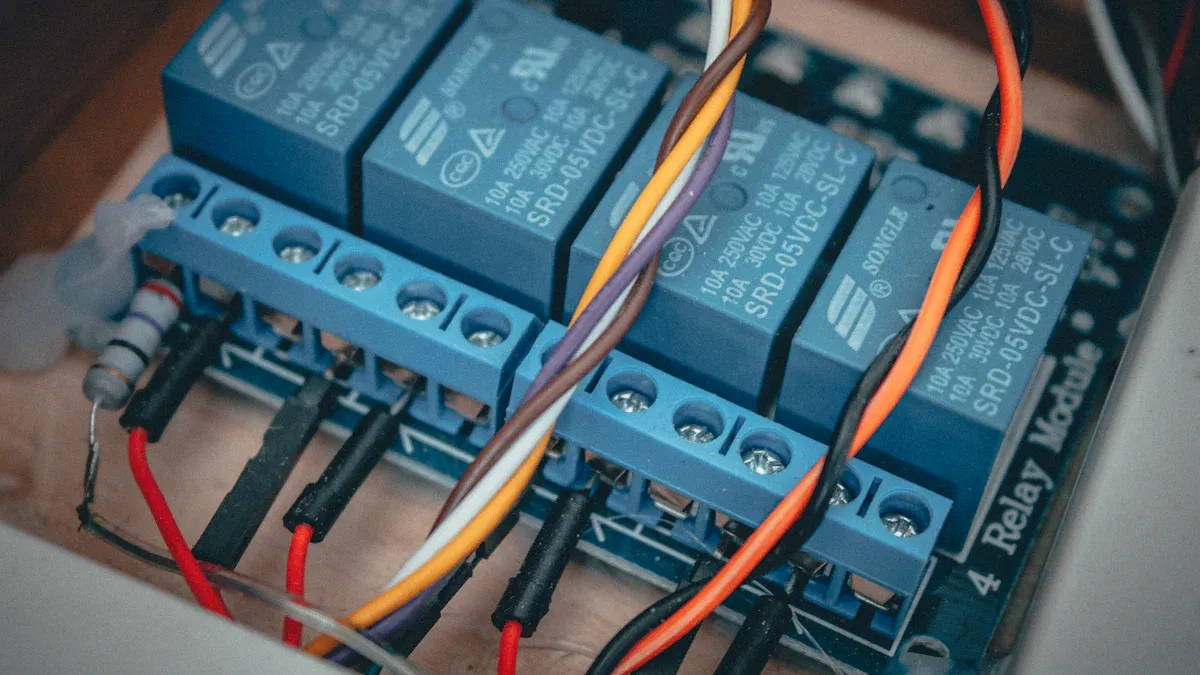
Operate Time
It is important to know about operate time when using relays. Operate time is how long it takes from turning on the coil to the relay finishing its last contact move. This timing shows how fast the relay works after you give it power. If operate time changes, your control system might not work right. Things like heat and voltage can change how quickly the relay works. You should check operate time to keep your system working well.
Release Time
Release time matters as much as operate time. You measure release time from when you turn off the coil until the relay finishes its last contact move. This timing shows how fast the relay goes back to normal. If release time changes, your system could be too slow or too fast. Heat or voltage changes can make release time different. You need to watch release time to keep your system working right.
Action Condition
Action condition means the wait that happens when you first turn on the relay. You see this wait before the relay starts moving its contacts. This wait is called the power-on delay. You need to know this timing because it affects how your system starts and answers commands.
Changes in operate and release times can affect how your control system works. These timings depend on things like room temperature and voltage. If you do not control these things, your relay might not work as you want.
Here is a table with important sources for relay timing definitions in engineering books:
|
Source |
Description |
|---|---|
|
IEEE Std C37.2-2008 |
This is a key standard for relay definitions, including timing definitions for engineers. |
|
Bibliography of relay literature, 1992 IEEE committee report |
This is a list of power system relay references, giving details for timing definitions in relay books. |
Relay Timing Factors
Relay Type
Different relay types work in their own ways. DC relays act fast because their magnetic field forms right away. AC relays are slower since the current goes back and forth. This can make the armature shake. Digital relays use circuits, so they switch even faster than mechanical ones. Time delay relays (TDRs) let you set how long contacts wait before moving. You can change the delay to protect devices and fit what you need. This timing is important in many electrical and factory systems.
Here is a table that shows how AC and DC time relays are different:
|
Feature |
AC Time Relay |
DC Time Relay |
|---|---|---|
|
Response Time |
Slower because current changes |
Faster and more accurate |
|
Internal Coil |
Has impedance to limit current |
Has steady resistance |
|
Mechanical Operation |
Armature may shake or vibrate |
Runs smoother and quieter |
DC relays are best when you need quick and exact switching. AC relays are good for big jobs in factories. Digital relays switch the fastest and can do hard tasks.
Coil and Contact Design
The coil and contacts change how a relay works. If the coil has more resistance, it needs more voltage to move the contacts. The shape and material of contacts affect how fast they move and how long they last. Time delay relays use special parts to slow down contact movement. You can set these delays for your system. This helps stop damage and keeps things working well.
When the coil gets hotter, its resistance goes up, so you need more voltage.
Contacts can get hot, which raises the temperature and changes how the relay works.
Contact resistance depends on how clean and smooth they are. Dirty or rough contacts get hotter and may not work well with big currents.
Sparks between contacts can make them hotter and may hurt the relay over time.
Environment Effects
Heat and other things around the relay can change how it works. If the room gets warmer, the coil resistance goes up. You need more voltage to make the relay work. Contacts can get hot when used, making the area up to 10°C warmer. This extra heat can slow the relay or make it less steady. If contacts get dirty, their resistance goes up, which makes them hotter and can hurt how they work.
|
Aspect |
Effect on Relay Operation |
|---|---|
|
Coil Resistance |
Goes up by 0.4% for each °C, so pull-in voltage changes. |
|
Minimum Pull-in Voltage |
Changes with heat; at 20°C, you need 3.75V, but at 50°C, you need 4.25V. |
|
Contact Heating |
Contacts can make the area up to 10°C warmer, which changes how the relay works next time. |
|
Contact Resistance |
Dirt and roughness change resistance, which affects heat and how well it works with big currents. |
|
Arcing Effects |
Sparks can make a lot of heat, which may damage contacts and make the relay less steady. |
|
Thermal Time Constant |
This is how long the coil takes to reach its final temperature, which changes how ready it is to work. |
|
PCB Track Size |
Bigger tracks help get rid of heat in high current jobs, which helps the relay work better. |
Heat also changes special relays, like SF6 density relays. If it gets warmer, the gas density changes, which can make the relay give wrong readings. Heat from current or the cabinet can also change how the relay works. You need to watch these things to keep your system safe and working well.
Tip: Always check release time for normally open (NO) contacts at a set temperature, like 23°C, to get the best results.
Relay Measurement Methods
Standard Techniques
You can check relay action and release times by following easy steps. First, put the relay in a room where you control the temperature. Keep the temperature steady, usually at 23°C. Use a digital timer or relay test kit to see how long it takes for the contacts to move after you turn on the coil. For release time, measure from when you turn off the coil until the last contact goes back to normal. Always look at the slowest normally open (NO) contact because it gives the best timing for your system. Do the test a few times to make sure your results are correct.
Tools Needed
You need special tools to get good timing results. Some tools work better in certain places. The table below lists common tools and what they do:
|
Tool Type |
Features |
|---|---|
|
Protection System Tools |
Made for testing problems, helps with timing checks and wiring. |
|
Plug-in Modules |
Makes training and testing faster in substations. |
|
Switching Accessories |
Helps protection system checks work better. |
|
Single Phase Relay Tester |
Has two channels, digital timer, strong AC/DC output, and protects from too much power. |
|
Secondary Injection Relay Kit |
Checks pull-in and release voltage or current for different relays. |
|
Protection Relay Test Kit |
Measures pull-in and off-time, works better than a stopwatch for timing. |
|
Specialized Protection Tools |
Checks timing, copies signals, and tests trip circuits safely. |
|
Circuit Breaker Simulators |
Lets you test interlocks and logic without danger. |
|
Portable Testers |
Checks coil performance and makes timing checks faster. |
Tip: Use a protection relay test kit for the best timing. This tool does timing for you and helps avoid mistakes.
Test Interpretation
You need to understand your test results to make sure your relay is good. Follow these steps:
Look at relay testing rules to help you read results.
Use the right test ways and tools from IEEE and IEC rules.
Check important things like pickup level, time delay, and trip time.
Make a clear test plan and report to show you followed the rules.
Match your results to what is needed for good performance.
A good test plan and careful notes help you show your relay works well. This keeps your system safe and working right.
Optimizing Relay Timing
Design Changes
You can improve relay timing by making smart design choices. Choose materials that conduct electricity well for the coil and contacts. Use contact shapes that move quickly and do not stick. Pick a coil size that matches your voltage needs. If you use a relay with a strong spring, the contacts return faster. You should also select a relay with a short thermal time constant. This helps the relay respond quickly to changes in temperature. Good design keeps your system safe and reliable.
Circuit Adjustments
You can adjust your circuit to help the relay work better. Try adding snubber circuits to your design. These circuits protect the relay and make timing more stable:
Adding snubber circuits reduces voltage spikes and arcing. This helps the relay contacts last longer.
Snubber circuits control surges. They keep the relay working well and lower the risk of damage.
A snubber diode gives current a safe path when you turn off the relay coil. This stops high voltage spikes and arcing.
You can also use surge protectors and keep wires short. These steps help the relay respond faster and more accurately.
Maintenance Tips
You need to take care of your relay to keep timing steady. Follow these steps:
Use the right relay for your job.
Control how often you switch the relay.
Check and fix connections often.
Keep the relay clean.
Add surge protection to your system.
Tip: Regular checks and cleaning help your relay last longer and work better.
If you follow these tips, you can keep your relay working well for many years.
Relay Types in Practice
DC Relays
DC relays are used when you need quick and exact switching. They work with direct current, so they switch loads right away. You get better control because DC relays do not wait for a certain time in the current. They also run quietly and do not shake much. DC relays are good for systems that need fast action and steady work.
AC Relays
AC relays use alternating current. They switch slower than DC relays because they wait for the current to reach zero before switching. This can make the relay shake or buzz. AC relays are often used in big machines or building systems. They can handle large loads, but their timing is not as exact as DC relays.
Here is a table that shows how AC and DC relays are different:
|
Characteristic |
AC Relays |
DC Relays |
|---|---|---|
|
Switching Speed |
Slower switching due to holding current |
Faster switching, more precise control |
|
Switching Principle |
Uses AC waveform; switches at zero crossing |
Switches DC loads instantly, no zero crossing |
Note: If it gets hotter, both types may slow down when turning on and speed up when turning off. Always check relay timing in your real setup.
Digital Relays
Digital relays use microprocessors to control timing. These relays give very exact timing. They can do special things like coincidence timing, which means they only react when two or more signals happen together. Digital relays work faster and more accurately than old analog relays. You can use them where you need very exact timing, like in power plants or factories.
Application Advice
You should choose the right relay by looking at a few things. Here is a table to help you pick:
|
Factor |
Description |
Recommendation |
|---|---|---|
|
Function Type |
Type of timer relay needed |
Choose the timing function your job needs |
|
Timing Range |
How long the relay can stay on or off |
Pick a relay with the right timing range |
|
Operating Voltage |
Voltage the relay uses |
Make sure it matches your system voltage |
|
Load Capacity |
How much current or power the relay can handle |
Select one that meets or beats your device needs |
|
Mounting and Size |
How and where you can install the relay |
Check it fits your space and mounting style |
|
Environmental Conditions |
Where you will use the relay |
Use a relay built for your working environment |
Tip: Always test your relay in your real system before using it. This helps you avoid timing problems and keeps your system safe.
If you learn about relay action and release times, your system works better. Good timing keeps your equipment safe. It also helps your process run without problems. The table below shows how relay timing helps your projects:
|
Benefit |
Explanation |
|---|---|
|
Enhanced Coordination |
Exact time delays make sure devices work in order. This stops shutdowns that do not need to happen. |
|
Reduced Equipment Stress |
Changing delays makes switching smoother. This lowers stress on your equipment. |
|
Improved System Stability |
Fault isolation in order stops failures from spreading. This keeps the grid steady. |
|
Increased Flexibility in Design |
One relay can fit many timing needs. This makes design easier. |
|
Operational Safety and Compliance |
Following standards keeps projects safe. It also helps with rules in important jobs. |
You also save energy, keep things safer, and control your system better:
|
Benefit |
Description |
|---|---|
|
Energy-saving |
Time relays turn off equipment not being used. This saves energy, especially in lights. |
|
Security |
Machines turn off after a set time. This helps meet safety rules in factories. |
|
Process optimization |
Relays help improve how production works by controlling when things happen. |
|
Flexibility |
You can set relays to work at special times and delays for what you need. |
Keep checking and making relay timing better. This makes your system safer, more reliable, and efficient.
FAQ
What is the difference between relay operate time and release time?
Relay operate time means how long the relay takes to turn on after you give power to the coil. Release time means how long the relay takes to turn off after you stop giving power.
How does temperature affect relay timing?
Heat makes the coil's resistance higher. You need more voltage for the relay to work. High temperatures can make the relay slower and change how fast it turns off.
Why should you test relay timing in your own system?
Your system might have different voltage, temperature, or load. Testing relay timing helps you find problems early. This keeps your equipment safe and working well.
Can you adjust relay timing after installation?
You can change timing by adjusting circuit parts like snubber circuits or using time delay relays. Cleaning and taking care of the relay helps timing stay steady.
Tip: Always check relay timing after you make changes to your system.
See also
What is time relay? Definition, Work, and Use
How to Program Your Light Timing Switch for Daily Schedules
What is a relay module and how does it work?
Why Is My 12V Relay Buzzing? Complete Troubleshooting Guide 2025