


You will see that OLR Electrical Full Name is overload relay. This relay helps protect motors from too much current. The relay can tell when the current is too high. When there is an overload, the relay stops the circuit. Overload relay keeps your machines safe. Each relay has a way to find overloads. You can trust this relay to keep things safe.
Key Takeaways
OLR means overload relay. It is a device that keeps motors safe. It stops the circuit if too much current flows for a long time.
Overload relays sense heat. They often use bimetallic strips or electronic sensors. These parts help find overloads and stop motor damage.
Picking the right overload relay keeps motors safe. It lowers repair costs. It also makes machines work better and last longer.
OLR Electrical Full Name
Overload Relay Meaning
You see olr electrical full name a lot in places with motors. OLR means overload relay. This relay helps keep motors and equipment safe. It checks if the motor uses too much current for a long time. If that happens, the relay turns off the circuit. This stops the motor and keeps it from getting hurt.
Most overload relays have bimetallic strips made of two metals. If the motor uses too much current, the strips get hot and bend. When they bend, the relay opens the circuit. Some new overload relays use electronics to work faster and better. You find these relays in control panels next to other motor control parts.
Overload relays stop motors from getting too hot and help them last longer. You need them to keep your machines safe.
The olr electrical full name shows its main job. It finds overloads and gives protection. Other relays protect against more problems, but overload relays only watch for overloads. They do not work for short circuits or phase failures. You can see how they are different in the table below:
|
Aspect |
Overload Relay Characteristics |
Other Protective Relays Characteristics (e.g., MPCBs) |
|---|---|---|
|
Function |
Checks motor current with thermal sensing to find overloads that cause heat |
Protects against short circuits, phase failure, and lets you change settings |
|
Protection Scope |
Only protects against motors getting too hot from too much current |
Protects against short circuits, phase failure, voltage problems, and more |
|
Response Speed |
Slower to react to sudden overloads or current spikes |
Reacts faster to many electrical problems |
|
Reset Mechanism |
Needs manual or automatic reset |
Usually has automatic reset and better control features |
|
Sensitivity to Environment |
Can be affected by temperature, humidity, and vibration |
Not as easily affected by the environment |
|
Cost and Complexity |
Simple, cheap, and good for basic overload protection |
More complex and costs more but protects better |
|
Phase Failure Protection |
Usually does not detect phase failure |
Can detect phase failure and other problems |
|
Suitability |
Good for basic motor overload protection, not for fast or sensitive motors |
Good for full motor protection, even for sensitive motors |
OLR in Motor Starters
You use olr electrical full name in motor starters to keep motors safe from overload. The overload relay works with contactors and other control parts. Together, they make a motor starter. You put the relay in the power, control, and protection circuits. This way, the relay checks the current and turns off the circuit if there is an overload.
Here is how you wire overload relays in motor starters:
Power Circuit: Connect three-phase power to the relay's main terminals. This gives power to the motor.
Control Circuit: Use control signals to start or stop the motor from far away. The relay works with these signals and motor starters.
Protection Circuit: The relay checks motor current with sensors. If the current goes over the set limit, the relay trips and saves the motor.
Some setups also protect against short circuits and phase loss.
Ground Connection: Connect the relay's ground terminal for safety. This helps stop electrical problems and damage.
You see overload relays in many motor control panels. They help you keep things safe and avoid expensive repairs. The olr electrical full name means a device you trust to protect motors from overload in every motor starter.
Overload Relay Working
How Overload Relays Work
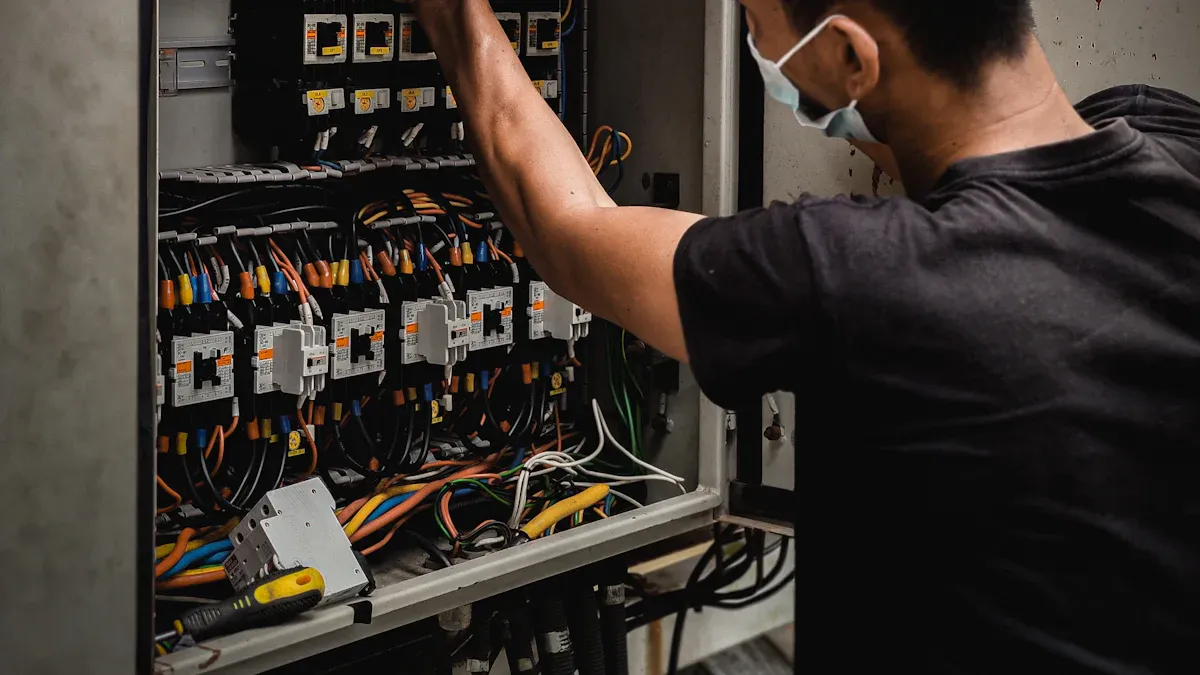
You can find overload relays in many motor systems. The relay keeps your motor safe by watching for too much current. If the current gets too high, the relay feels the extra heat. Inside, a bimetallic strip heats up as current passes through it. The two metals in the strip get bigger at different speeds. This makes the strip bend. When it bends enough, the relay trips and opens the circuit. This stops the motor from running.
The relay does not trip for short high currents, like when a motor starts. It only trips if the overload lasts a long time. This helps stop the motor from turning off for no reason. The relay uses a normally closed contact. When there is an overload, the contact opens and the relay trips. The contactor coil loses power, so the motor stops.
Here is how overload relays protect your equipment:
The relay senses heat from the current.
The bimetallic strip bends if overload stays.
The relay trips and opens the control circuit.
The contactor coil turns off.
The motor stops to avoid damage.
The relay lets short inrush currents pass but trips on long overloads.
The relay does not protect against short circuits. You need a circuit breaker for that.
Overload relay working keeps your motor safe from too much current. The relay reacts to heat, not quick current spikes.
There are two main types of overload relays: thermal and electronic. Thermal overload relays use bimetallic strips. Electronic overload relays use sensors and transistors. Both types trip and open the circuit if there is an overload.
Manual reset overload relays need you to press a button after they trip. This lets you check the motor before you start it again. Automatic reset overload relays reset by themselves when they cool down. This can make the motor start again without fixing the problem. Manual reset is safer because you can check the motor and stop more damage.
Overload Protection Function
Overload protection is a main job of the overload relay. The relay checks current, temperature, and how long the motor runs. If things get unsafe, the relay trips and cuts power to the motor. This stops the motor from getting too hot and keeps the wires safe. The relay also helps stop broken parts and burned motors.
You see overload protection relays work with contactors to keep motors safe. The relay and contactor work together. When the relay trips, it opens its contacts. The contactor coil loses power. The contactor opens and cuts power to the motor. This keeps the motor safe from overload and other problems.
Here is a table that shows what overload protection does for your motor:
|
Aspect |
Explanation |
|---|---|
|
Overload Protection Function |
Finds too much heat by checking current, temperature, and time. Cuts power when things get unsafe to stop motor damage. |
|
Working Principle |
Uses bimetallic strips or sensors to trip and stop the motor, letting it cool down. Digital systems use sensors for fast protection. |
|
Safety Enhancement |
Stops overheating, wire damage, broken parts, and burnout. Makes motors last longer and cuts downtime. |
|
Common Devices |
Bimetallic thermal relays, temperature sensors, control units, digital protection systems. |
|
Benefits |
Makes motors last longer, lowers repair costs, stops fire risks, and helps you fix problems early. |
You trust overload relays to keep your motors safe. The relay protects against too much current and helps you avoid big repairs. The relay does not protect against short circuits. You need a circuit breaker for those fast problems.
Overload relay working is very important for motor safety. The relay trips during overload and works with contactors to stop the motor. This keeps your equipment safe and working well.
Thermal Overload Relay and Types
Thermal Overload Relay
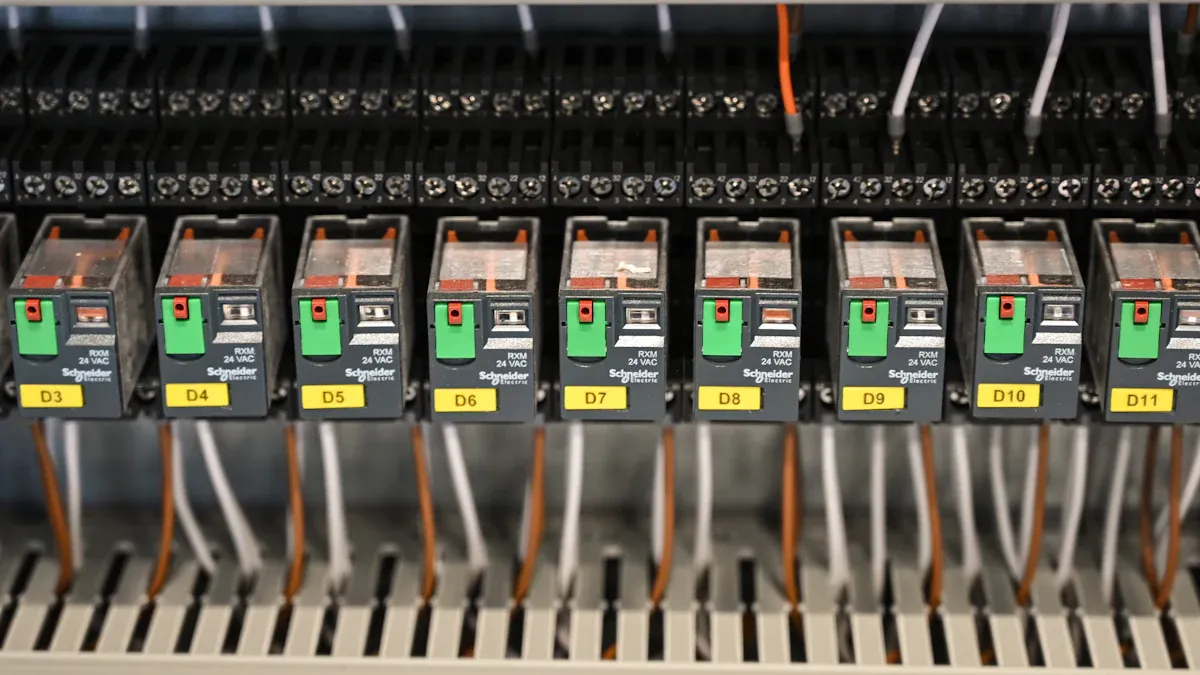
You can find a thermal overload relay in motor panels. This relay uses a bimetallic strip to sense heat from too much current. It gives simple and steady protection for motors. Here is what happens inside a bimetallic thermal overload relay:
The relay has a bimetallic strip with two metals. These metals grow at different speeds when heated.
When current goes through the relay, a coil heats the strip.
The strip bends because the metals expand in different ways.
The bent strip moves a lever inside the relay.
The lever opens the relay contacts and stops the motor.
A signal shows the relay tripped, and you can reset it after.
A bimetallic thermal overload relay keeps your motor safe by turning it off before it gets too hot.
You can use a thermal overload relay in many places. These relays work best where the temperature is steady and the motor load is simple. You see them in pumps, fans, and conveyor belts. The relay works from -10 to +55°C and can handle up to 10 A. The bimetallic thermal overload relay meets safety rules and can take shaking and bumps.
Electronic Overload Relay
An electronic overload relay uses sensors and a microprocessor to find overloads. This relay checks the real RMS current or voltage. You can change the trip settings for different jobs. The relay gives better protection than a thermal overload relay. Here is a table that shows what you get with electronic overload relay types:
|
Feature/Aspect |
E100 Electronic Overload Relay |
E300 Electronic Overload Relay |
|---|---|---|
|
Overload Detection Method |
RMS current sensing |
True RMS current/voltage sensing |
|
Trip Current Adjustment |
Adjustable |
Adjustable |
|
Trip Class Selection |
Selectable |
Adjustable (Class 5 to 30) |
|
Reset Options |
Manual/Automatic |
Test/Reset button, programmable |
|
Communication & Integration |
Accessory modules, some communication |
EtherNet/IP, DeviceNet, diagnostics |
|
Motor Protection Scope |
Single- and three-phase |
Single- and three-phase |
You use an electronic overload relay in smart and modern places. These relays protect motors in factories, HVAC, and power plants. You get things like phase loss protection and remote checks. The relay trips fast and helps stop motor problems.
Pick the right overload relay for your job. Think about the motor, the place, and what kind of protection you need.
You have learned that OLR stands for overload relay. This relay helps protect motors and systems from too much current. It gives you many good things:
Stops expensive repairs and helps motors last longer
Cuts down on time when machines do not work and makes them more reliable
Helps save energy and keeps things safe
Makes it easier to avoid mistakes when setting up the relay
Relay technology keeps getting better. You can now find smart features and improved overload control. Always pick the best overload relay for your needs.
FAQ
What does OLR stand for in electrical engineering?
OLR means Overload Relay. People use it to keep motors safe from too much current. It also helps stop motors from getting too hot.
What happens when an overload relay trips?
The relay opens the circuit when there is a problem. This makes the motor stop working. Stopping the motor helps protect it from getting damaged.
What types of overload relays can you use?
You can pick thermal overload relays or electronic overload relays. Each one has special features to help protect motors.
See also
Where is the power control relay located? Quickly help you find it!
4 surprising facts about Relay socket DIN rail you should know
Explaining the Function of Relay Sockets for Beginners
How to Safely Test Relay Sockets with a Multimeter