


When you choose industrial relays, first check the load type you want to control. Loads can be resistive, inductive, or capacitive. Each type changes how safe and efficient your system is. The table below explains why this is important:
|
Factor |
Description |
|---|---|
|
Surge Current Durability |
Relays need to handle the highest amps for your load. This helps your system work well. |
|
Voltage Rating |
The relay should match or be higher than your load's voltage. This keeps things safe. |
|
Mechanical Durability |
Relays can only work a certain number of times before wearing out. This affects maintenance. |
Always think about safety, reliability, and how well things work when you choose industrial relays.
Key Takeaways
Find out your load type before picking a relay. It can be resistive, inductive, or capacitive. This helps keep your system safe and working well.
Pick a relay with voltage and current ratings above your load. This stops the relay from getting too hot or breaking.
Think about where you will use the relay. Things like heat, wetness, and shaking can change how long the relay lasts.
Check and take care of your relays often to spot problems early. This keeps your equipment working longer and better.
Look at the total cost, not just the first price. Solid-state relays might cost more at first but can save money later because they need less care.
Relay Types and Load Matching
Electromechanical Relays Overview
Electromechanical relays have a coil, iron core, contacts, and springs. When current goes through the coil, it makes a magnetic field. This field pulls the iron core and moves the contacts. The relay then switches the circuit on or off. These relays are used in motor control, heating, and lighting. They can handle high heat and heavy loads. Their insulation and special contacts help them last longer. You should check them often because their parts move and can wear out. If you switch them too much, contacts can get dirty or burned. Maintenance is needed to keep them working well.
Tip: Electromechanical relays are good for simple switching jobs. They are reliable and easy to use. They make a clicking sound when they switch.
|
Relay Type |
Operating Principle |
Applications |
Advantages |
Limitations |
|---|---|---|---|---|
|
Electromagnetic Relay |
Uses a coil's magnet to move contacts |
Motor control, heating, lighting |
Simple, cheap, reliable |
Parts wear out, slower switch |
|
Thermal Overload Relay |
Bimetal strip bends when hot to trip |
Protects induction motors |
Cheap, protects well |
Not for short-circuit issues |
Solid-State Relays for Specific Loads
Solid-state relays use electronic parts to switch circuits. They do not have any moving parts, so they last a long time. You can use them for motors and transformers. They work well where there is a lot of shaking or noise. These relays switch very fast and do not make any sound. You will see them in pumps, compressors, and conveyor belts. They need less care because there are no contacts to wear out.
Longevity: Solid-state relays can last for millions of uses.
Silent operation: They do not make noise.
Fast response: They switch very quickly.
Vibration resistance: Good for big machines.
Reduced maintenance: Fewer problems.
|
Feature |
Electromagnetic Relay (EMR) |
Solid State Relay (SSR) |
|---|---|---|
|
Response Speed |
Slower switching (ms) |
Very fast (μs) |
|
Noise |
Clicking sound |
Silent |
Note: Solid-state relays are best if you need fast and quiet switching. Pick your relay based on your load and where you use it.
Reed and FET Relays Applications
Reed relays and FET relays are best for low-power signals. Reed relays have magnetic contacts inside glass. They switch fast and are good for small signals. FET relays use electronic switches. They are very quick and use little power, but only work for low voltage.
|
Relay Type |
Advantages |
Limitations |
|---|---|---|
|
Reed Relays |
Fast, reliable, good for small signals |
Not for high power |
|
FET Relays |
Very fast, low power use |
No physical isolation, low voltage |
You will find reed and FET relays in small systems, sensors, and machine controls. Reed relays are used in phones and medical tools. FET relays are best for fast and low-power jobs.
Tip: For sensor circuits or signal paths, reed and FET relays are fast and reliable.
Identify Load Type and Ratings
When picking industrial relays, you need to know your load type and its electrical ratings. This helps you choose the right relay for your job. It also keeps your system safe and working well.
Resistive, Inductive, and Capacitive Loads
Industrial loads are resistive, inductive, or capacitive. Each load type changes how a relay works and how long it lasts. You must know your load type before picking a relay.
|
Load Type |
Voltage-Current Relationship |
Power Factor |
Characteristics |
|---|---|---|---|
|
Resistive Loads |
Voltage and current peak together |
1 |
Make heat, use full load, do not test reactive power. |
|
Inductive Loads |
Voltage comes before current |
Lagging |
Use wire coils, make magnetic fields, lower power factor for testing. |
|
Capacitive Loads |
Current comes before voltage |
Leading |
Use capacitors, hold charge, raise power factors of circuits. |
Resistive loads are things like heaters and light bulbs. These loads are simple and do not wear out relay contacts much.
Inductive loads are things like motors and transformers. These loads can make sparks and wear out contacts faster.
Capacitive loads are things like capacitor banks and some lights. These loads can make high inrush currents that might hurt relay contacts.
Tip: Always look at your equipment manual or nameplate to find your load type.
Voltage and Current Considerations
You need to know the voltage and current your load uses. This helps you pick a relay that will not fail.
Most industrial relays can switch up to 250V AC.
The highest current rating is often up to 10A.
Pick a relay with voltage and current ratings higher than your load. If you use a relay with lower ratings, it might get too hot or break.
Key points to remember:
The switching load should be more than 100mA but less than 75% of the relay's rated current. Loads under 100mA can cause contact issues. Loads over 75% can wear out the relay faster.
The load type changes how much the relay contacts wear out. Inductive and capacitive loads usually cause more wear and sparks than resistive loads.
|
Item |
Specification Points |
Consideration Points |
|---|---|---|
|
Contact |
Contact arrangement |
Contact forms, number of poles, contact order |
|
Contact load |
Load level, AC or DC, load type |
Counter voltage of inductive load |
|
Coil |
Coil voltage |
Normal voltage, power source ripple |
|
Insulation |
Dielectric strength |
Do relay specs fit equipment needs? |
|
Environment |
Temperature and humidity |
Range of temperature and humidity at the use place |
Note: Too much current can make your system overheat and break. Always use relays with the right ratings and think about adding protection devices.
Application and Safety Needs
Think about where and how you will use the relay. Some places need special safety features or relay types.
Electrical gear in risky areas can cause fire or explosions.
If you put relays in these places, use special boxes and follow safety rules to lower risks.
Safety relays help keep workers safe by watching emergency stops, safety gates, and light curtains.
|
Relay Type |
Description |
|---|---|
|
Force-guided contacts |
Stop contact welding for extra safety. |
|
Industrial automation safety relays |
Check contact states to make operations safer. |
|
Hazardous area relays |
Give safe electrical links between risky and safe areas. |
|
Safety Feature |
Description |
|---|---|
|
Emergency Stops |
Stop machines right away in emergencies. |
|
Safety Gates |
Block entry to dangerous areas while running. |
|
Light Curtains |
Find people in risky zones and stop machines. |
|
Pressure Sensitive Mats |
Start safety action when someone steps on them. |
|
Contact Strips |
Sense touch and start safety steps. |
|
Foot Operated Switches |
Let you use emergency stops with your foot. |
|
Time Delay Scenarios |
Add a delay to stop sudden shutdowns. |
Safety relays are used in factories, automation, and moving materials.
They watch important safety features and can stop machines if there is danger.
Tip: Always follow safety rules and use the right relay for your area. This keeps your equipment and team safe.
When picking industrial relays, always match the relay to your load type, voltage, current, and safety needs. This careful choice helps you build a system that is safe, works well, and lasts a long time.
Choose Industrial Relays for Your Application
Matching Relay Type to Load
Start by picking a relay that fits your load. Different loads need different relays. You should check what kind of load you have. Look at how much current the load uses. Think about how often you will turn the relay on and off. Use this table to help you pick:
|
Criteria |
Description |
|---|---|
|
Load Type and Rating |
See if your load is resistive, inductive, or capacitive. Each needs its own relay rating. |
|
Switching Frequency |
Figure out how many times you switch the relay. |
|
Duration of Operation |
Think about how long the relay stays on. This affects its life. |
|
Temperature Sensitivity |
Make sure the relay works in your area's temperature. |
|
Moisture & Humidity |
Use sealed relays in wet places to stop rust. |
|
Vibration Concerns |
Pick relays that can handle shaking machines. |
|
Voltage and Current Ratings |
Match the relay's coil voltage and contact ratings to your system. |
|
Switching Speed and Response |
For quick switching, use solid-state relays. |
|
Environmental Conditions |
Use relays with good protection for dust, water, or heat. |
If you control a heater, use a basic electromechanical relay. If you switch a motor, pick a relay with higher current ratings and arc protection. For fast and quiet switching, use a solid-state relay. Always check the relay's ratings and compare them to your load.
Tip: Write down your load type, voltage, and current before you pick a relay. This helps you make the right choice.
Switching Speed and Life
Switching speed and relay life are important for many jobs. If your system switches on and off a lot, you need a relay that can keep up. Check this table to see how relays work:
|
Relay Type |
Switching Speed |
Impact on Operational Life |
|---|---|---|
|
Mechanical Relay |
5-15 ms |
Moving parts wear out over time |
|
Solid State Relay |
0.5-1 ms |
No moving parts, lasts much longer |
|
Critical Applications |
High-speed counting, rapid pulse control |
More reliable in fast-switching jobs |
Mechanical relays can last for over 1,000,000 cycles. Some can even reach 10,000,000 cycles before they stop working. Solid-state relays last longer because they do not have moving parts. If you need fast switching, solid-state relays are best.
Note: If you need high-speed switching, pick relays with quick response and long life.
Application-Specific Factors
You also need to think about special things in your job. Some loads, like motors and transformers, use a lot of current when they start. This is called inrush current. Inrush current can be much higher than normal. If you do not pick the right relay, it can hurt your system or trip breakers.
Here are some things to check:
High inrush current: Motors and transformers need relays that can handle big surges.
Duty cycle: If your relay stays on for a long time, make sure it can handle the heat.
Protection: Use relays with built-in protection or add fuses for safety.
Environment: Dust, water, and shaking can affect relay life. Use sealed or tough relays in hard places.
Load characteristics: Always know if your load is resistive, inductive, or capacitive.
Tip: Always check your load's start-up current and duty cycle. This helps you pick relays that last longer and keep your system safe.
If you follow these steps, you can pick the right relay for your load, switching needs, and environment. This makes your system safer, more reliable, and easier to take care of.
Installation, Environment, and Reliability
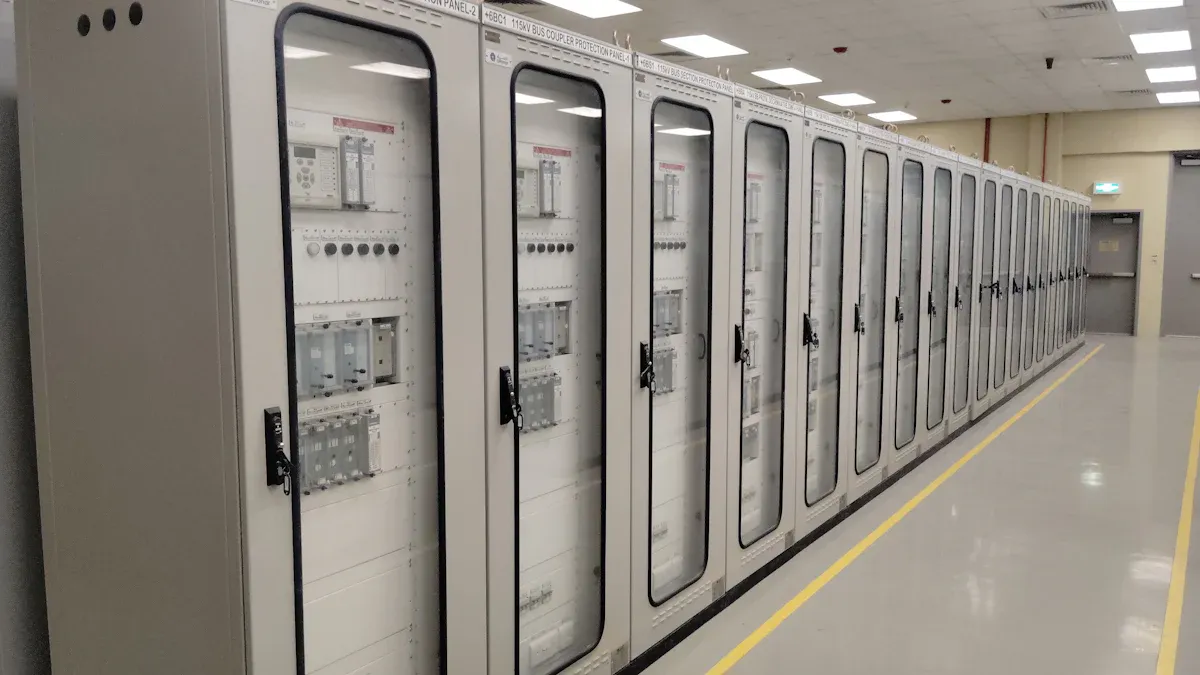
Environmental Factors
Check the area before you put in a relay. Heat, wet air, and shaking can change how a relay works. If you do not think about these things, the relay might break early. Here are some things to remember:
Hot places can make relay parts get bigger. This makes the relay not last as long.
Wet air can make relay contacts get rusty. Rust makes it hard for the relay to work right.
Dust and dirt can stop parts from moving. This can make the relay stick or not move.
Tip: Keep relays dry and clean. Use boxes to keep out dust and water.
Mounting and Space
Pick a relay that fits in your control box. The relay's size and shape are important. If the relay is too big, it will not fit. If it is too small, it might not connect well. Think about these things:
The relay should fit in your space.
If the relay is the wrong size, it can hit other parts or not fit.
The way you mount the relay must match your box. This keeps it in place.
Note: Measure your box before you buy a relay. Check how it mounts so you do not have trouble.
Reliability and Maintenance
You want your relay to work for a long time. Good setup and regular checks help stop problems. Many things can make a relay stop working. You can lower the chance of this by doing these things:
|
Cause of Failure |
Mitigation Strategy |
|---|---|
|
Poor contact alignment |
Put in relays the right way and check them often. |
|
Electrical overload |
Use relays with the right current rating. Add extra protection if needed. |
|
Mechanical fatigue |
Pick relays made for lots of use. Check and fix them on a schedule. |
|
Environmental stress |
Use boxes and keep the area at the right temperature. |
|
Poor quality components |
Buy relays from good brands that test their parts. |
|
Improper usage |
Follow the maker's rules for setup and use. |
Tip: Make a plan to check your relays. Look at them often to find problems early and keep your system working well.
Cost and Final Selection
Performance vs. Budget
You want a relay that fits your needs and your budget. Some relays cost more at first but save money over time. Others seem cheap but may need more repairs or replacements. Here is how different relays compare:
Solid-state relays (SSRs) cost more upfront. They last longer and need less maintenance. You save money in the long run, especially if you switch loads often.
Electromechanical relays (EMRs) cost less to buy. They wear out faster and need more care. You may spend more on repairs and downtime.
SSRs work best for jobs that need fast and frequent switching. They do not break down as quickly as EMRs.
EMRs can handle higher voltages with less heat. They may suit some heavy-duty jobs better.
Tip: Think about how often you will use the relay. If you need to switch loads many times each day, SSRs can save you money over time.
Comparing Options
When you compare relays, look at more than just the price. You should check how each relay works in your system and how long it will last. Consider these factors:
Coil resistance affects how much power the relay uses.
Contact materials change how well the relay works in different places.
Mechanical lifetime tells you how long the relay will last.
Operating speed matters if you need quick switching.
Isolation features protect your equipment from voltage spikes.
Load voltage and surge handling keep your system safe.
Environmental needs, like heat or moisture, affect relay choice.
Total cost over time includes both the price and the cost to keep it running.
Note: Always match the relay's features to your job and work area. This helps you avoid problems later.
Making the Final Choice
You can follow these steps to pick the best relay for your needs:
Check if the relay works with your current system.
Look for proof that the relay meets safety and quality standards.
Choose vendors who keep improving their products.
Make sure the relay follows all rules and standards.
Think about how much you will spend over time, not just at the start.
Plan for changes in supply or rules that could affect your choice.
If you use this process, you will find a relay that fits your needs, keeps your system safe, and saves you money.
You can pick the right industrial relay by using easy steps.
Find out what kind of load you have and its ratings.
Choose a relay that works for your job.
Think about where you will use it and if it needs to be safe.
Look at how much it costs and how well it works.
Make sure the relay fits your load to keep things safe and working well. If your job is hard, read the datasheet or ask someone who knows more. Keep learning so you can make good choices for your system.
FAQ
What is the most important factor when choosing an industrial relay?
You should always check the load type and its ratings first. This helps you pick a relay that works safely and lasts longer. Matching the relay to your load keeps your system running well.
Can I use any relay for both AC and DC loads?
No, you cannot use any relay for both. You need to check if the relay is rated for AC, DC, or both. Using the wrong type can cause the relay to fail or even damage your equipment.
How do I know if my relay needs extra protection?
If your load has high inrush current or creates sparks, you should add protection. Use fuses, snubber circuits, or surge protectors. These devices help your relay last longer and keep your system safe.
How often should I check or replace my industrial relay?
You should inspect relays during regular maintenance. Look for signs of wear, dirt, or overheating. Replace relays if you see problems or after reaching the recommended cycle life from the manufacturer.
See also
What is the minimum pull in voltage? Engineer's Guide to Relay Specs
What is the Pull in Voltage of the Relay? Engineer's Guide 2025
What do the pull in voltage and release voltage of a relay mean?
How to distinguish between normally open and normally closed contacts of a relay