


You can make your car's electrical system better by adding relays to control strong accessories. Relays let you use a small switch to safely turn on things that need more power, like headlights or fans. This setup helps stop wires from getting too hot and keeps your car's wiring safe. When you use the right relay wiring, your system is safer and works better. Automotive relay wiring also helps your upgrades last longer and work well. Anyone with simple tools and some patience can do this project.
Key Takeaways
- Relays keep your car's wiring and switches safe. They handle high power so your electrical system works better and is safer.
- Pick the right relay and wire size for your device's power. This helps make strong connections and stops wires from getting too hot.
- Always take off the car battery before you start working. This keeps you safe from shocks and stops damage. Follow wiring diagrams to install things the right way.
- Put relays in dry, cool spots and keep wires away from heat and sharp things. This helps your upgrade stay neat and safe.
- After wiring, test your setup by checking the fuse, connections, and relay. This helps you find and fix problems early.
Why Use Relays
Benefits for Car Electrical Systems
You want your car's electrical system to be safe and work well. Relays help by acting like switches for high-power devices. They use low-power signals to control things that need more power. Using relays keeps your car's wiring from getting too hot. This lowers the chance of electrical fires. Relays let you use thinner wires for switches. This makes it easier and safer to install new parts. Here are some main benefits of using relays in your car:
- Protects switches and wiring: Relays take care of the strong current. This helps your switches last longer.
- Improves performance: Devices like headlights and fans get all the power they need.
- Boosts safety: Relays lower the risk of short circuits and wire damage.
- Makes upgrades easier: You can add new accessories without hurting your system.
Tip: Always use relays when adding high-power accessories. This keeps your car's electrical system safe and working well.
Common Applications
Relays can be used in many places in your car. Here are some common ways to use them:
| Application | Why Use a Relay? |
|---|---|
| Headlights | Brighter lights, less switch wear |
| Electric fans | Reliable cooling, safer wiring |
| Fuel pumps | Stable power, better performance |
| Horns | Louder sound, longer switch life |
| Auxiliary lights | Easy control, safer installation |
Automotive relay wiring lets you control these devices without hurting your car's original wiring. You can also use relays for power windows, audio systems, and alarms. When you plan upgrades, think about where relays can make your system safer and work better.
Automotive Relay Wiring Basics

Relay Pin Functions
When you look at a standard automotive relay, you will see numbers on the pins. Each pin has a job. Here is what each pin does:
- 30: This pin connects to the power source. It brings power into the relay.
- 85: This pin connects to ground. It completes the control circuit.
- 86: This pin connects to the switch or trigger. When you turn on the switch, it sends a signal to this pin.
- 87: This pin connects to the device you want to power, like a fan or light. When the relay turns on, power flows from pin 30 to pin 87.
- 87a: Some relays have this extra pin. It connects to the device when the relay is off.
Tip: Always check the relay diagram on the relay body. Not all relays use the same pin layout.
Types and Configurations
You will find two main types of relays in automotive relay wiring:
- SPST (Single Pole Single Throw): This relay has four pins (30, 85, 86, 87). It works like a simple on/off switch.
- SPDT (Single Pole Double Throw): This relay has five pins (30, 85, 86, 87, 87a). It can switch between two outputs.
SPST relays work well for most upgrades. SPDT relays give you more control if you need to switch between two devices.
Wiring Diagrams
A wiring diagram helps you see how to connect everything. Here is a simple example for an SPST relay:
[Battery]---(Fuse)---[30]
                |
              [87]---[Device]---[Ground]
                |
             [85]---[Ground]
                |
             [86]---[Switch]---[Battery]
- Use a fuse close to the battery for safety.
- Make sure you ground the relay and the device well.
- Use proper insulation on all wires.
Automotive relay wiring works best when you follow the diagram and double-check each connection. Good fusing, grounding, and insulation keep your car safe and your upgrades reliable.
Planning the Upgrade
Choosing the Right Relay
You need to pick a relay that matches your device's needs. Check the voltage and current ratings for your accessory. Most car systems use 12-volt relays. Look at the amp rating on your device. Choose a relay that can handle more amps than your device uses. For example, if your fan draws 20 amps, use a 30-amp relay. This gives you a safety margin. You can find this information on the relay's label or datasheet.
Tip: Always buy relays from trusted brands. Cheap relays may fail and cause problems.
Selecting Wire Gauge
Wire size matters for safety and performance. Thicker wires carry more current without getting hot. Use a wire gauge chart to match the wire to your device's amp draw. For most automotive relay wiring, 14-gauge wire works for up to 15 amps. Use 12-gauge wire for up to 20 amps. If your device uses more power, pick an even thicker wire.
| Amp Draw | Recommended Wire Gauge |
|---|---|
| Up to 15 | 14 AWG |
| Up to 20 | 12 AWG |
| Up to 30 | 10 AWG |
Cut wires to the right length. Avoid extra slack, but do not make them too tight. Use quality connectors for strong, safe joins.
Tools and Workspace
Gather your tools before you start. You will need:
- Wire strippers and crimpers
- Screwdrivers
- Electrical tape or heat shrink tubing
- Multimeter for testing
- Sockets or mounting brackets for relays
Pick a clean, dry workspace. Good lighting helps you see small parts. Keep your tools organized. Lay out your parts before you begin. This makes the job faster and safer.
Note: Always disconnect your car's battery before working on any wiring.
Relay Wiring Steps
Disconnecting Power
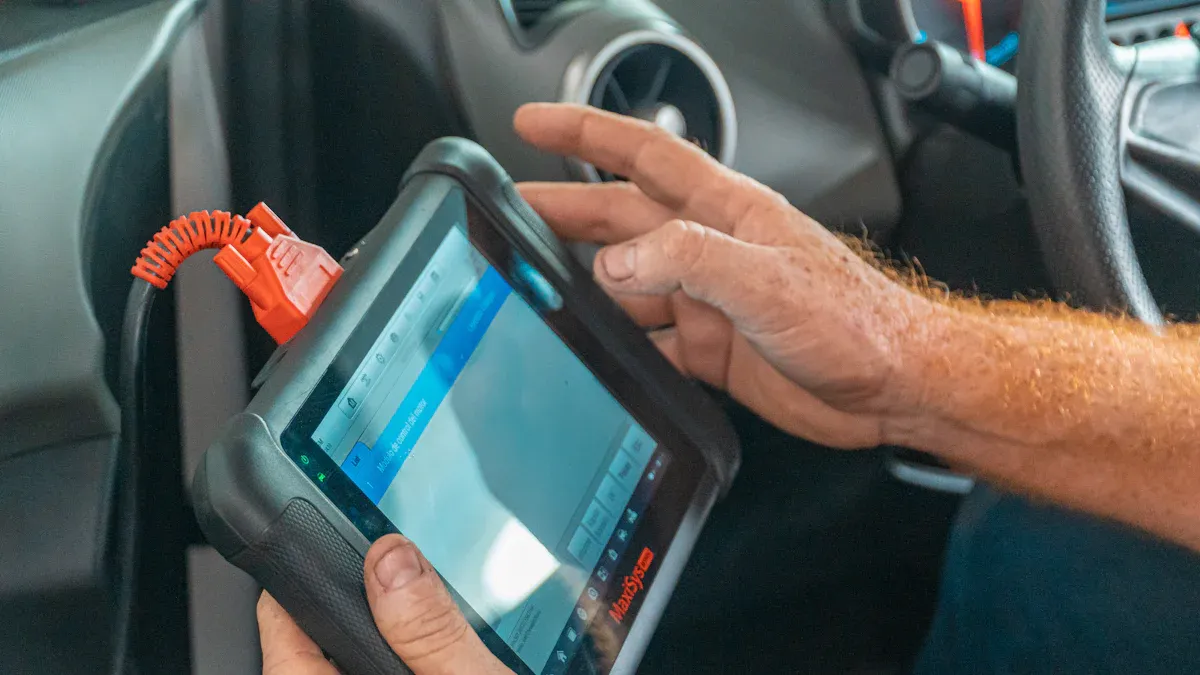
Before you start any work, you must disconnect your car's battery. This step keeps you safe from electric shock and prevents short circuits. Use a wrench to loosen the negative battery terminal. Remove the cable and set it aside. Never let your tools touch both battery terminals at the same time. Always double-check that the power is off before you move on.
⚠️ Safety Tip: Disconnecting the battery protects you and your car's electronics. Never skip this step.
Mounting and Routing
Pick a spot for your relay that stays dry and cool. Many people mount relays near the fuse box or along the firewall. Use a relay socket or bracket to hold the relay in place. Secure it with screws or zip ties. Make sure the relay does not move or rattle. Plan your wire routes before you start cutting. Keep wires away from hot engine parts and sharp edges. Use wire loom or split tubing to protect the wires. Route wires along existing harnesses when possible. This keeps your installation neat and safe.
Tip: Label each wire as you go. This helps you remember where each one connects.
Making Connections
Now you can start connecting the wires. Follow your wiring diagram closely. Use the correct wire gauge for each connection. Strip the ends of each wire. Use crimp connectors or solder joints for strong, reliable connections. Cover each joint with heat shrink tubing or electrical tape. Connect the wires to the relay pins:
- Attach the power wire to pin 30.
- Connect the ground wire to pin 85.
- Run the trigger wire from your switch to pin 86.
- Attach the output wire to pin 87 (or pin 87a if you use an SPDT relay).
Install a fuse on the power wire close to the battery. This fuse protects your system if something goes wrong. Double-check each connection before you move on.
✅ Checklist:
- All wires secure?
- Fuse installed?
- No bare wires showing?
- Connections match your diagram?
Testing and Troubleshooting
Reconnect the battery once you finish wiring. Test your new setup before you close everything up. Turn on the switch and check if your device works. Listen for a click from the relay. This sound means the relay is working. If your device does not turn on, check these things:
- Is the fuse blown?
- Are all wires connected to the right pins?
- Is the ground connection solid?
- Does the relay click when you flip the switch?
Use a multimeter to check for voltage at each pin. Compare your results to your wiring diagram. Fix any problems before you finish.
💡 Note: Always test your work before you put panels or covers back in place.
Mistakes to Avoid
Many people make the same mistakes when working with automotive relay wiring. You can avoid trouble by watching out for these errors:
- Skipping the battery disconnect step
- Using the wrong wire gauge
- Forgetting to install a fuse
- Making loose or weak connections
- Ignoring the wiring diagram
- Letting wires touch hot or moving parts
Take your time and double-check each step. Use your vehicle's schematics if you feel unsure. Careful work keeps your car safe and your upgrades reliable.
🚫 Common Error: Never twist wires together without a connector. Always use proper tools and parts for every connection.
When you upgrade your car's electrical system with proper relay wiring, your circuits are safer. Your car works better and the parts last longer. This helps stop overheating and other electrical problems. Always check your work two times and follow all safety steps. Use the right tools and parts for each connection.
🚗 Remember: If you are patient and careful, you can do this upgrade by yourself. Go slow, be safe, and enjoy what you have done!
FAQ
What size fuse should I use with my relay?
You should match the fuse size to your device's amp draw. Always use a fuse rated just above the device's maximum current. For example, use a 25-amp fuse for a 20-amp fan.
Tip: Place the fuse close to the battery for best protection.
Can I use any relay for any car accessory?
No, you need to choose a relay that matches your accessory's voltage and current needs. Check the amp rating on both the relay and your device. Using the wrong relay can cause failure or damage.
Why does my relay click but my device does not work?
A clicking relay means the coil works, but the output may not connect. Check your wiring, fuse, and ground. Make sure all connections are tight and correct. Test the relay with a multimeter if needed.
Do I need to use a relay socket?
Using a relay socket makes installation easier and safer. It helps you avoid loose wires and makes future replacements simple. You can wire a relay without a socket, but a socket gives better results.