


Choosing the right relay contact point makes a big difference in high-load switching. You get the best results by using strong materials like silver cadmium oxide or silver tin oxide, picking the right size, and ensuring a solid configuration. These choices help prevent arcing, melting, and wear. When you increase contact pressure and select harder materials, you lower the risk of failure by keeping contact temperature below softening points.
Continuous load current and switching current affect heat and damage risk.
High-performance relays, such as the G2RV, offer double the durability of standard relays.
Key Takeaways
Choose relay contact materials like silver tin oxide or silver cadmium oxide for strong performance and durability in high-load switching.
Match the contact size and surface area to your load to spread heat and reduce wear, ensuring longer relay life.
Use multiple contact points or twin-contact designs to lower resistance and save energy while improving reliability.
Prevent failures by switching at zero voltage, using arc suppression methods like snubber circuits and magnetic blowouts, and respecting relay ratings.
Derate relays for inductive and capacitive loads by selecting higher-rated contacts and using inrush current limiters to protect against damage.
Regularly inspect and maintain relay contacts by cleaning, checking resistance, and replacing worn parts to keep your system safe and reliable.
Always check relay voltage and current ratings, and never exceed them to avoid contact welding, melting, or early failure.
Proper wiring, grounding, and following manufacturer guidelines help ensure stable relay operation and extend contact life.
Relay Contact Factors
When you choose a relay contact for high-load switching, you need to look at three main factors: the material, the size and surface area, and the configuration. Each of these factors affects how well your relay works and how long it lasts.
Materials
The material you pick for your relay contact changes how it handles heat, resists wear, and deals with electrical arcs. Some materials work better for high-power loads, while others help meet environmental rules.
Silver Cadmium Oxide
Silver cadmium oxide stands out for its ability to handle high currents and resist arc erosion. You often see this material in offshore wind farms and medium to high voltage switchgear. It can last through many switching cycles and keeps working even when the load is heavy.
However, cadmium is toxic, so many countries now limit its use. Manufacturers are looking for safer options, but silver cadmium oxide still plays a big role in places where you need top performance.
Silver Tin Oxide
Silver tin oxide gives you strong arc-quenching power and works well in medium voltage circuit breakers. This material does not contain cadmium, so it meets strict environmental rules like REACH and RoHS. You will find it in North America and Europe, where safety and eco-friendliness matter. Silver tin oxide can handle over 10,000 mechanical operations, making it a good choice for relays that switch often.
Other Alloys
You can also choose from other alloys, each with its own strengths:
|
Contact Material |
Key Performance Characteristics |
Typical Applications / Regions |
Environmental & Regulatory Notes |
|---|---|---|---|
|
Silver-Nickel |
High thermal stability, low contact resistance |
Vacuum interrupters (Europe, North America) |
Good for high current, cadmium-free |
|
Silver-Indium Oxide |
High breakdown voltage, good for low-voltage switches |
Europe |
Cadmium-free, meets EU rules |
|
Silver-Graphite |
Low friction, strong arc resistance |
High-voltage transmission, data centers |
Good for sliding contacts |
|
Silver-Zinc Oxide |
Fine grain, good weld resistance |
Automotive relays (Japan) |
Cost-effective |
|
Silver-Tungsten |
Strong arc ablation resistance |
Photovoltaic disconnects (China) |
High-current use |
|
Silver-Copper |
Lower cost, reduced erosion resistance |
Industrial motor starters (South America, Africa) |
Thinner coatings allowed |
You should match the alloy to your application. For example, silver-nickel works well when you need high thermal stability, while silver-graphite is best for sliding contacts.
Tip: Always check if your relay contact material meets local environmental rules before you choose.
Size and Surface Area
The size and surface area of the relay contact affect how much current it can carry and how much heat it can handle. Larger contacts spread out the electrical load, which lowers the risk of overheating and melting. If you use a small contact for a big load, you may see faster wear and higher resistance. Research from Omron shows that you need the right contact force to keep resistance low. If you use a twin-contact setup, you can reach low resistance with less force than a single-contact setup. This means you can use a smaller relay or a weaker coil and still get good performance.
Configuration
How you set up your relay contact also matters. You can use single or multiple points, and you can choose between relays and contactors.
Single vs. Multiple Points
A single-point contact is simple and works for small loads. For high-power switching, you get better results with multiple points, like double-break or twin-contact designs. These setups lower contact resistance and spread out the heat. Twin-contact relays can reach the same low resistance as single-contact relays but need less total force. This helps you save space and energy.
Contactors vs. Relays
Contactors are special relays made for high-current loads. They use strong contacts and extra arc-quenching features, such as magnetic blowout coils. These features help contactors handle big loads safely and last longer. Some contactors also have overload heaters to protect motors from too much current. The design standards, like IEC or NEMA, change the size and heat handling of the contactor. You should pick a contactor when you need to switch large motors or heavy equipment.
Note: Always check the contact current rating, resistance, and electrical life when you choose a relay contact configuration. These numbers tell you how much load your relay can handle and how long it will last.
Failure Prevention

When you work with high-load switching, you face several common failure mechanisms. These include wear and erosion, melting and welding, and arcing. You can prevent these problems by making smart choices about relay contact materials, sizes, and configurations. You also need to use the right switching techniques and settings.
Wear and Erosion
Wear and erosion happen every time you switch a load. Each operation causes a small amount of material to leave the contact surface. Over time, this leads to higher resistance and possible failure. You can slow down wear by choosing materials like silver tin oxide, which resists arc erosion. Larger contact surfaces also help spread the load and reduce hot spots. If you synchronize the relay contact operation with the AC waveform, you can cut down on inrush currents and arc intensity. For example, switching incandescent lamps near zero voltage lets the current rise slowly, which reduces contact erosion. Studies show that these timing methods can increase relay life by up to ten times.
Tip: Use twin-contact or double-break designs to lower the force needed for good contact. This reduces wear and helps your relay last longer.
Melting and Welding
Melting and welding are serious risks in high-load switching. When a relay contact welds shut, it can no longer open the circuit. This can cause equipment damage or even fires. The risk of welding goes up if you switch at the peak of the AC voltage or if you use the wrong contact material. Benchmark tests show that silver cadmium oxide and silver nickel contacts have a high tendency to weld under stress, while silver tin oxide resists welding even during tough tests.
|
Contact Material |
Welding Tendency |
Contact Resistance Change |
Contact Bounce Occurrence |
|---|---|---|---|
|
AgCdO |
High welding incidence (all trials welded) |
No reliable post-test resistance values due to welding |
4 out of 8 tests showed bounce |
|
AgNi |
High welding incidence (3 out of 4 trials welded) |
Resistance values mostly unavailable due to welding |
7 out of 8 tests showed bounce |
|
AgSnO2 |
Resistant to welding (no welding in tests) |
Some increase in contact resistance after trials |
5 out of 8 tests showed bounce |
|
AgSnO2 P |
Resistant to welding |
Stable contact resistance |
6 out of 8 tests showed bounce |
You can lower the risk of welding by using relay contacts made from silver tin oxide and by switching at zero voltage. Paralleling contacts increases the thermal mass, which helps prevent melting, but it does not increase the gap between contacts. Always check the contact ratings and avoid exceeding them.
Arcing
Arcing happens when you open or close a circuit under load. The arc forms a high-temperature plasma that can damage the contact surface. You can reduce arcing by using arc suppression techniques, such as snubber circuits or magnetic blowouts.
Synchronizing the contact operation with the AC waveform also helps. Breaking the contact just before the current crosses zero reduces arc intensity and contact wear. Research from TE Connectivity shows that these methods can extend relay life and allow you to switch higher loads safely.
You should also consider derating for inductive loads. Inductive loads, like motors, create higher voltage spikes when you open the circuit. By choosing a relay contact rated above your expected load, you give yourself a safety margin. Adjusting relay settings for peak and off-peak periods, as shown in recent studies, helps prevent failures by matching relay performance to real-world conditions.
Note: Always match your relay contact choice and settings to your specific load type and switching needs. This will help you avoid common failure mechanisms and keep your system running safely.
Arc Suppression
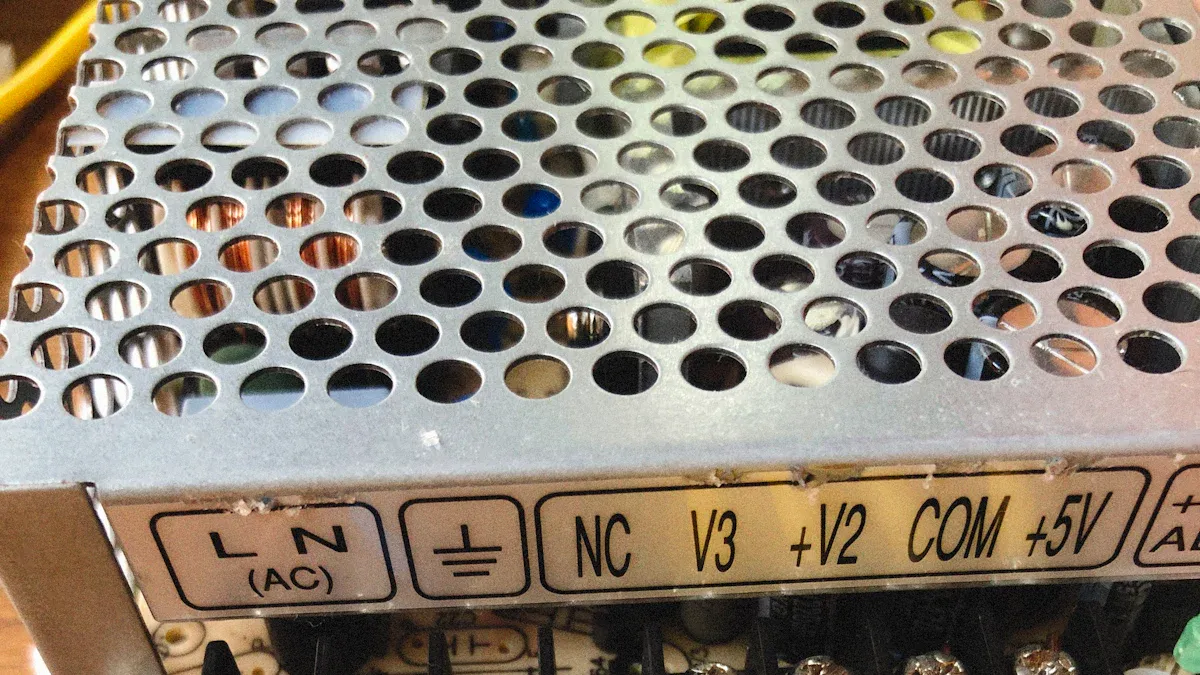
When you switch high loads, electrical arcs can damage your relay contacts and shorten their life. Arc suppression techniques help you control these arcs, making your system safer and more reliable. You can use several methods to reduce arc intensity and protect your equipment.
Snubber Circuits
Snubber circuits use a resistor and a capacitor (RC) in parallel with the contacts. This setup absorbs the energy from the arc and limits voltage spikes. You can see the benefits of snubber circuits in many real-world tests:
Engineers tested relay contacts with and without RC snubber circuits. They found that snubber circuits cut arc duration and amplitude. For example, arcs that lasted several milliseconds dropped to just microseconds.
Without arc suppression, arcs showed higher voltage and lasted longer. When snubber circuits were added, the arcs became weaker and shorter.
Industry leaders like Tyco Electronics and Agilent Technologies report that snubber circuits improve relay contact life and arc suppression.
Case studies show that snubber circuits work well with different loads, such as heaters and transformers. In every case, the arc reduced when a snubber circuit was used.
Research compared snubber circuits to electronic arc suppressors. Both methods helped, but RC snubbers proved practical and effective for power relay systems.
Tip: You should always consider adding a snubber circuit when switching inductive or high-power loads. This simple addition can extend the life of your relay contacts.
Magnetic Blowouts
Magnetic blowouts use a magnetic field to push the arc away from the contact points. This action stretches the arc, making it easier to extinguish. You can choose between polarized and non-polarized magnetic blowouts:
Polarized magnetic blowouts align with the current flow. They provide the best arc displacement and give the longest electrical cycle life.
Non-polarized blowouts work in both current directions but offer about half the cycle life of polarized designs.
Some designs fill the contact chamber with inert gas. This gas makes it harder for the arc to travel, which helps put out the arc faster.
Double-opening contacts increase the distance the arc must cross. This feature also helps quench the arc and reduces wear.
Tests show that polarized magnetic blowouts can greatly extend relay life in high-load DC environments.
Note: Magnetic blowouts are especially useful when you need to switch large DC currents. They help keep your system running longer and safer.
Contact Gap
The contact gap is the distance between the open contacts. A larger gap makes it harder for an arc to jump across. You should check the gap size when you select a relay for high-load switching. If the gap is too small, arcs can form more easily and cause damage. Some relays use double-break or twin-contact designs to increase the effective gap. This design spreads the arc energy and helps prevent contact welding.
A wider contact gap lowers the risk of arc re-ignition.
Double-break contacts split the arc into two paths, making it easier to extinguish.
Proper gap size helps your relay last longer and reduces maintenance needs.
Tip: Always check the contact gap in your relay's datasheet. A larger gap can make a big difference in arc suppression and relay life.
Load Considerations
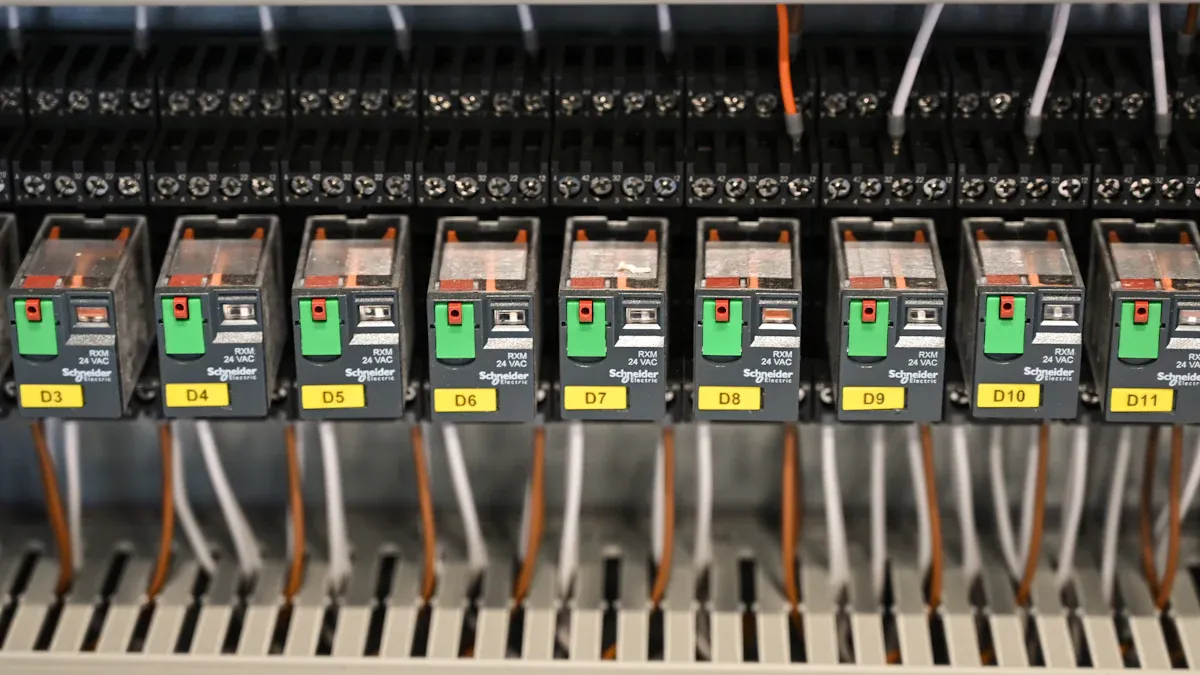
When you choose a relay for high-load switching, you need to think about the type of electrical load. Each load-inductive, capacitive, or resistive-affects how your relay contact performs and how long it lasts. You can improve safety and reliability by matching your relay contact to the load type.
Inductive Loads
Inductive loads include motors, transformers, and solenoids. These devices store energy in magnetic fields. When you open the circuit, the stored energy can cause a voltage spike. This spike can create a strong arc across the relay contact, which may lead to faster wear or even welding.
You should always derate your relay for inductive loads. This means you pick a relay with a higher current and voltage rating than your actual load. Derating gives you a safety margin and helps prevent failures. Adaptive relay strategies help you handle changing conditions, especially in power grids with renewable energy or distributed generation. Here are some findings from recent studies:
Simulation studies show that adaptive relay strategies improve fault clearing times and system stability.
Adaptive relays adjust to changes in the network, such as new power sources or changing fault currents.
These strategies help prevent mis-coordination between different types of relays, keeping your system safe.
Regular updates and testing of relay settings keep protection reliable, even as your network changes.
Tip: Always check your relay's datasheet for recommended derating values when switching inductive loads.
Capacitive Loads
Capacitive loads include devices like power factor correction banks and long cable runs. These loads can cause very high inrush currents when you close the circuit. The inrush can damage the relay contact if you do not take special steps.
You can use zero-cross synchronization to protect your relay. This technique switches the relay at the point where the voltage crosses zero. Switching at this moment reduces inrush current and helps your relay last longer. Here are some important points:
Zero-cross switching extends relay life for resistive, inductive, and especially capacitive loads.
Capacitive loads create high inrush currents, but you can reduce this by timing the relay operation to the voltage waveform.
Synchronizing the relay helps keep contact resistance low and improves self-cleaning.
The effects of inrush and switching can be complex, so you should check with relay engineers for the best advice.
Note: Always consider high inrush currents when choosing a relay for capacitive loads.
Resistive Loads
Resistive loads include heaters, incandescent lamps, and simple electrical circuits. These loads draw a steady current with no sudden spikes. Relay contacts usually last longer with resistive loads, but you still need to pick the right material and design.
The table below shows how different relay contacts perform with resistive and inductive loads:
|
Load Type |
Contact Material(s) |
Test Conditions |
Number of Operations |
Observations on Durability and Contact Resistance |
|---|---|---|---|---|
|
Low Load |
AgNi0.15, AgSnO2 |
230VAC / 1mA resistive load |
1 million |
Contact resistance stayed below 50mOhm |
|
Intermediate Load |
AgNi0.15, AgSnO2 |
230VAC / 15mA inductive load |
3 million |
Stable resistance, some erosion possible |
|
Low Load |
AgNi0.15, AgSnO2 |
5VDC / 10mA resistive load |
800,000 |
Resistance stable below 50mOhm |
|
Low Load |
Gold-based alloys |
Dry circuit (~0.08 V) |
Not specified |
Clean contacts needed for minimum load |
You may notice that relay contacts can develop higher resistance over time, especially at very low currents. This happens because small arcs are not strong enough to clean the contact surface. Using the right material and switching at higher currents can help keep contacts clean and reliable.
Tip: For resistive loads, choose relay contacts with proven durability and consider environmental factors like humidity or dust.
Relay Contact Ratings
Choosing the right relay contact ratings is key to safe and reliable high-load switching. You must always respect both voltage and current ratings to avoid damage, arcing, or early failure.
Voltage and Current
You need to match the relay's voltage and current ratings to your application. If you exceed these ratings, you risk welding the contacts or causing dangerous arcs. Here are some important points to remember:
The voltage rating must be equal to or higher than your load voltage. This prevents breakdown and keeps the relay working safely.
Current ratings cover both steady-state and surge (inrush) currents. For example, a lamp or motor can draw much more current when starting than during normal operation.
AC circuits are easier on relay contacts because the voltage crosses zero, which helps stop arcs. DC circuits keep a constant voltage, so arcs last longer and cause more wear.
Environmental factors like temperature, humidity, and vibration can change how well your relay works.
Isolation between the control and load circuits protects sensitive electronics and keeps your system safe.
Tip: Always check both the coil and contact ratings. They can be different for each relay type.
|
Condition |
Load (Voltage/Current) |
Contact Opening Speed (m/s) |
Electrical Durability (Number of Operations) |
|---|---|---|---|
|
Principle Model with Diode |
440 V / 60 A |
0.15 |
2,000 |
|
Principle Model without Diode |
440 V / 60 A |
0.48 |
50,000 |
|
Prototype with Improved Spring |
440 V / 60 A |
0.45 |
50,000 |
This table shows that design changes, like removing a diode or improving the spring, can increase the speed at which contacts open and boost relay life.
Power Rating Limits
You must keep your relay within its power rating limits. If you switch loads that draw too much power, the contacts can overheat, erode, or weld together. Testing shows that using devices like NTC thermistors can limit inrush current, especially with capacitive loads. When engineers added NTCs, relays lasted longer and showed less damage. Without NTCs, inrush current increased by over 50%, causing early failure.
Relays with NTCs stayed within their rated performance even after many cycles.
Limiting inrush current helps prevent contact welding and extends relay life.
These methods work well in tough environments, such as military or aerospace systems.
Note: Always use current-limiting devices if your load has high inrush currents.
Paralleling Contacts
Sometimes you may want to parallel relay contacts to handle higher loads. This method increases the thermal mass, so the contacts can absorb more heat. However, paralleling does not increase the gap between contacts. If an arc forms, it can still jump across the same distance.
Paralleling helps share the load and reduces stress on each contact.
It does not improve the ability to break the circuit or stop arcing.
You must still respect the voltage rating and ensure the relay can open safely.
Alert: Never rely on paralleling alone for arc suppression. Always check the relay's ratings and use proper arc suppression methods.
Practical Tips
Sizing and Derating
You should always size your relay contact based on the actual load and the type of current. Never exceed the relay's voltage or current ratings. Exceeding these limits can cause immediate failure, as shown in many case studies. High inrush currents from devices like motors or transformers can damage contacts quickly. Use soft start circuits or inrush current limiters to protect your relay. Always check the derating curves in the datasheet, especially for DC loads. If you ignore these curves, you risk contact melting or welding during switching.
Here is a quick checklist for sizing and derating:
Confirm the load type (resistive, inductive, or capacitive).
Check the relay's voltage and current ratings.
Apply derating for inductive or capacitive loads.
Use inrush current limiters for loads with high starting currents.
Select the correct contact material for your application.
Never exceed the relay's specified limits.
Tip: Treat relay ratings as absolute. Even a short overload can cause permanent damage.
Wiring
Proper wiring ensures reliable relay operation and long life. Always use secure and well-insulated terminations. Tighten terminal screws firmly to prevent loose connections. Avoid forcing extra wires into terminal blocks. Use crimped or bootlace ferrules for better contact, not solder, unless the terminal is designed for it. Good grounding is important. Route grounding wires separately from power cables to reduce noise and improve safety. Label all wires clearly using standard color codes and durable labels. This makes future maintenance easier and faster.
Use shielded or twisted-pair cables to reduce electrical noise.
Match wire metals to connector metals to avoid unwanted voltage offsets.
Mount relays properly on PCBs to prevent early failure.
Keep relay coil drive circuits clean and stable for best performance.
Note: Snubber circuits help prevent unwanted relay operation due to voltage spikes, especially with inductive loads.
Maintenance
Regular maintenance keeps your relay contact working well and extends its life. Clean contacts with approved cleaners to maintain good conductivity. Tighten all electrical connections during inspections. Watch for signs of wear, such as pitting, welding, or burn marks. Replace relays that show damage or reach their service interval. Keep detailed records of inspections, tests, and repairs. This helps you spot patterns and plan preventive maintenance. Train your team on safe handling and troubleshooting. Good training reduces mistakes and improves reliability.
Maintenance Checklist:
Inspect relay contacts for wear or damage.
Clean contacts as recommended by the manufacturer.
Measure contact resistance to detect early problems.
Check that load currents match relay specifications.
Use arc suppression methods for high-load or DC switching.
Ensure proper ventilation and thermal management.
Update maintenance records after each service.
Alert: Early signs of trouble include unusual noises, delayed switching, or visible corrosion. Address these issues right away to avoid bigger failures.
You can boost reliability in high-load switching by choosing the right relay contact. Pick strong materials and use the best configuration for your needs. Always use arc suppression methods and respect the ratings listed in the datasheet. Follow the checklist and keep up with regular maintenance. These steps help you prevent failures and keep your equipment safe.
FAQ
What is the best material for high-load relay contacts?
You get the best results with silver tin oxide or silver cadmium oxide. Silver tin oxide works well for most high-power needs and meets environmental rules. Silver cadmium oxide handles heavy loads but faces restrictions due to toxicity.
How do I prevent relay contact welding?
You can prevent welding by choosing the right contact material, such as silver tin oxide. Switch at zero voltage when possible. Use arc suppression methods like snubber circuits. Always respect the relay's current and voltage ratings.
Why does contact size matter in relays?
Larger contacts spread heat and current better. This lowers the risk of overheating and melting. You get longer relay life and fewer failures when you match contact size to your load.
Can I use the same relay for AC and DC loads?
You should not use the same relay for both. DC loads create longer arcs, which wear contacts faster. Always check the relay's datasheet for AC and DC ratings before use.
What is derating, and why is it important?
Derating means choosing a relay with higher ratings than your actual load. This gives you a safety margin. You avoid early failures, especially with inductive or capacitive loads.
How often should I inspect relay contacts?
You should inspect relay contacts during regular maintenance. Look for signs of wear, pitting, or discoloration. Replace damaged relays right away to keep your system safe.
Do I need arc suppression for all loads?
You need arc suppression most with inductive or high-power loads. Snubber circuits and magnetic blowouts help protect contacts. For small resistive loads, arc suppression may not be necessary.
Can I parallel relay contacts to handle more current?
You can parallel contacts to share current and reduce heat. This does not increase the gap between contacts. You still need proper arc suppression and must respect voltage ratings.